Glass Transition Temperature (Tg)
The temperature at which a coating's polymer network shifts from hard and glassy to soft and rubbery — and why it sets service limits, chemical resistance and cure quality.
Key takeaways
- The glass transition temperature (Tg) is the temperature range over which an amorphous polymer changes from a hard, glassy state to a softer, rubbery state.
- Above Tg, coatings lose stiffness, swell more and become more permeable, so chemical resistance and hardness fall sharply.
- Tg rises with crosslink density, chain rigidity and degree of cure, and falls when water or plasticizers are absorbed.
- Tg is measured by DSC, DMA or TMA; values differ by method, so always compare results obtained the same way.
Every organic coating binder has a temperature at which its molecular segments gain enough energy to move cooperatively. Below that point the film is glassy — stiff and relatively impermeable. Above it the film becomes rubbery. This change, the glass transition, is not a melting point and does not involve a phase change; it is a gradual shift in mobility over a temperature range, conventionally summarized by a single number, the Tg.
For protective coatings, Tg is one of the most useful single indicators of performance. It links formulation, cure, service temperature and chemical resistance, and is a common tool in quality control and failure investigations.
What Tg means in practice
Below Tg, the polymer chains in the network are essentially frozen, apart from small local motions. The film is hard and has relatively little free volume for molecules such as water, solvents or chemicals to move through. As temperature passes through Tg:
- Stiffness drops, often by one to several orders of magnitude for crosslinked coatings.
- The coefficient of thermal expansion increases, increasing thermal stress at interfaces.
- Permeability and diffusion rates increase, so chemicals penetrate faster.
- Hardness and abrasion behavior change, and the film can become tacky or mark easily under load.
Elastomeric coatings such as many polyureas are designed with soft-segment Tg values well below the service temperature so that they stay flexible, while tank linings are designed with a Tg well above it so that they stay rigid and resistant.
What determines Tg
Chemical structure
Rigid aromatic rings and bulky groups restrict motion and raise Tg; flexible aliphatic chains and ether linkages lower it. Epoxy novolacs and phenolics tend toward high Tg values, while flexibilized epoxies and polyether-based urethanes and polyureas sit much lower.
Crosslink density and degree of cure
Each crosslink reduces chain mobility, so Tg increases as cure proceeds. The relationship between crosslink density and Tg is why Tg is widely used as a measure of how fully a coating has cured.
Cure temperature and vitrification
During cure, the developing Tg rises toward the cure temperature. When it approaches that temperature the network vitrifies — it becomes glassy — and reaction slows dramatically because reactive groups can no longer find one another. As a result, the Tg of an ambient-cured coating often plateaus somewhat above the temperature at which it cured. Heating later can restart the reaction and raise Tg further, a process called post-cure.
Plasticization by water and chemicals
Absorbed water, solvents and some chemicals act as plasticizers, lowering Tg. This is why “wet Tg” after immersion is often lower than “dry Tg” measured on a freshly cured film, and why a lining can soften in hot water service even though its dry Tg appears adequate.
Tg is not a sharp line. Different test methods and definitions — onset, midpoint, peak of a damping curve — can give values that differ by many degrees for the same film. Always record the method, heating rate and definition used.
How Tg is measured
| Method | What it detects | Common standards | Notes |
|---|---|---|---|
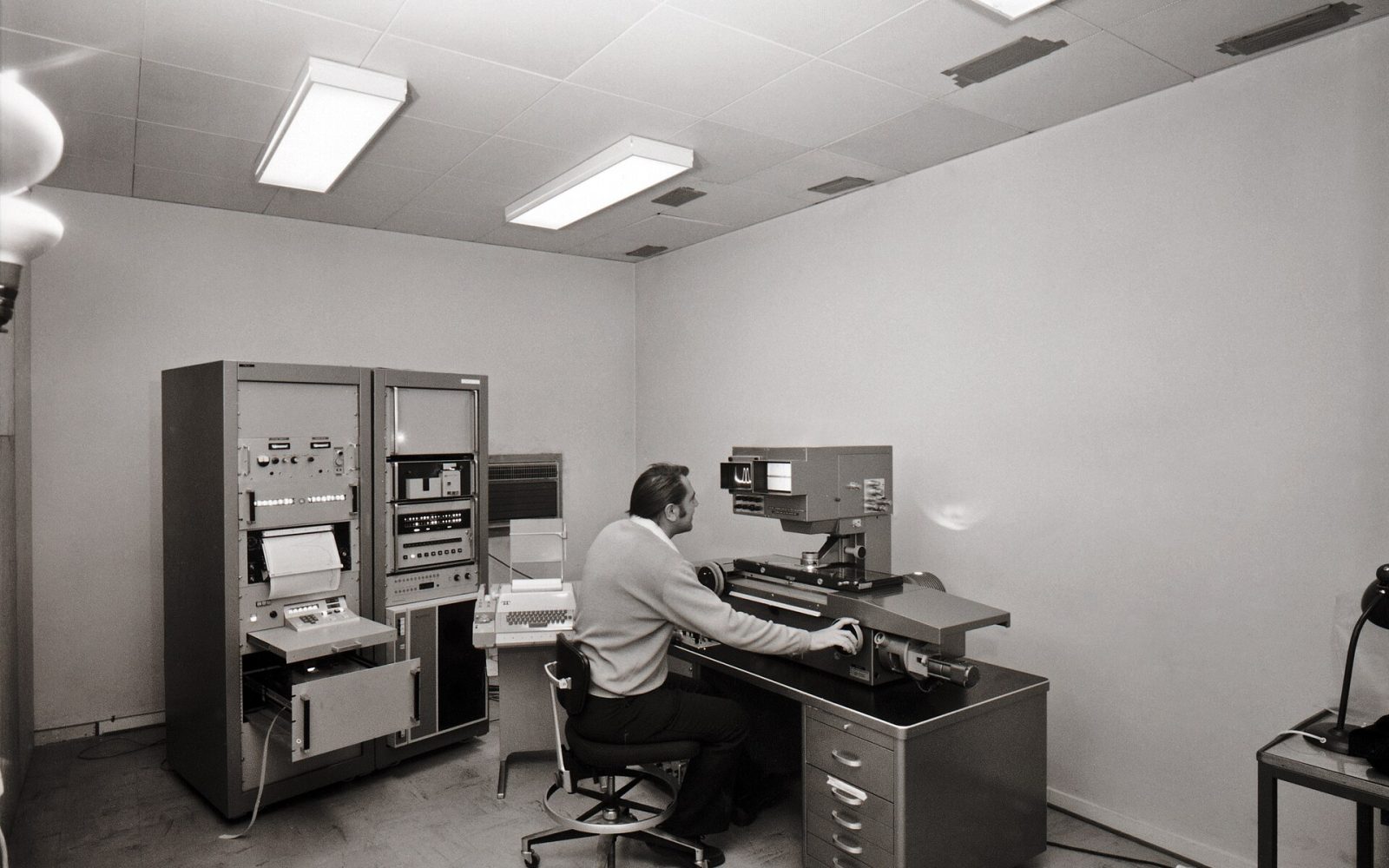
| Differential scanning calorimetry (DSC) | Step change in heat capacity | ASTM E1356, ASTM D3418, ISO 11357-2 | Small samples; also shows residual cure exotherm |
| Dynamic mechanical analysis (DMA) | Drop in storage modulus; peak in loss modulus or tan δ | ASTM E1640 | Most sensitive; tan δ peak usually reads higher than DSC |
| Thermomechanical analysis (TMA) | Change in expansion or penetration | Method-specific practice | Useful on thin films and for expansion data |
In DSC, a sample is heated at a controlled rate and the instrument records heat flow. The glass transition appears as a step in the baseline. An exothermic peak above Tg on the first heating run indicates residual, unreacted material — evidence of incomplete cure. A second heating run after the first scan often shows a higher Tg, and the difference between runs is sometimes used as a measure of how far the original cure progressed.
Service temperature and design implications
A widely used rule of thumb is to keep the maximum service temperature comfortably below the coating’s Tg, especially in immersion, because properties deteriorate as the transition is approached. How large a margin is needed depends on the coating, the chemicals involved and whether wet or dry Tg is considered; follow the temperature limits on the product data sheet, which reflect the manufacturer’s testing.
- Tank and process linings in hot service are often formulated or post-cured for higher Tg; see storage tank linings.
- Floors exposed to hot-water washdown or thermal shock need systems whose Tg and toughness suit those conditions.
- Coatings near ambient Tg may soften on hot, sunny days and pick up dirt or deform under load.
Putting a lining into hot service before it has fully cured can be risky. The low Tg of an undercured film may sit near or below the operating temperature, so the lining softens and absorbs chemicals before cure can complete. Follow the manufacturer’s cure schedule and any recommended force-cure.
Using Tg in quality control and investigations
Because Tg tracks cure, it is a practical laboratory check. Comparing the Tg of field samples with a properly cured reference can reveal off-ratio mixing, cold cure or contamination. Large scatter between samples suggests mixing problems; consistently low Tg with a residual exotherm suggests insufficient cure temperature. These checks complement field methods described in testing coating cure.
Frequently asked questions
Is Tg the same as the maximum service temperature?
No. Service limits are set by the manufacturer from performance testing and are usually well below Tg, particularly for immersion.
Why do DSC and DMA give different Tg values?
They detect different physical responses and use different definitions. DMA tan δ peaks typically read higher than DSC midpoints. Compare values only when obtained by the same method.
Can Tg go down over time?
Yes. Water absorption, chemical exposure and some forms of degradation can lower it. Conversely, slow continued cure or heat exposure can raise it.
Educational reference. Coating performance varies by formulation. Always follow the manufacturer’s product data sheet, safety data sheet and your project specification.