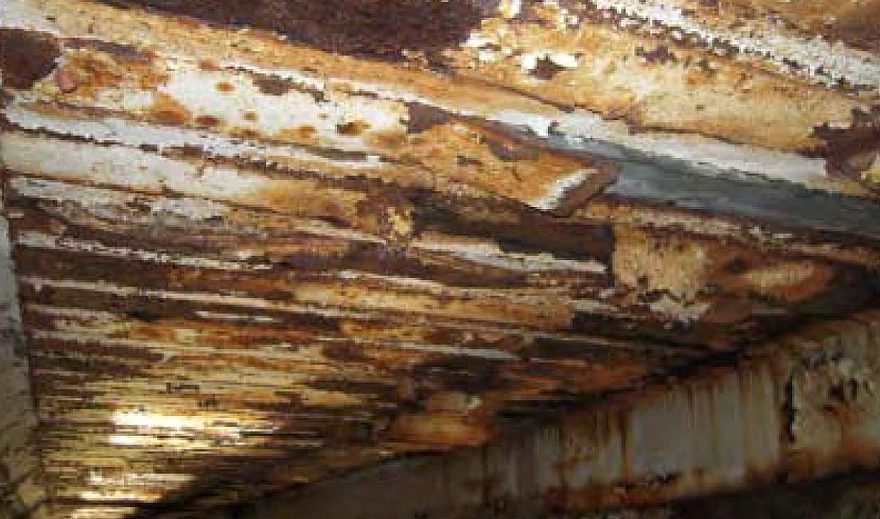
Microbiologically Influenced Corrosion (MIC)
Bacteria, archaea and fungi living in biofilms can turn mild environments into aggressive ones. MIC causes severe pitting in pipelines, tanks, sprinkler systems and sewers.

Key takeaways
- MIC is corrosion initiated or accelerated by the activity of microorganisms, usually living in biofilms on metal surfaces.
- Microbes do not create a new type of corrosion; they change local chemistry — oxygen, pH, sulfides, acids — in ways that drive aggressive localized attack.
- Stagnant or low-flow water, deposits and nutrients are the classic risk factors.
- Diagnosis requires several lines of evidence, and control relies on design, cleaning, biocides, coatings and cathodic protection together.
Microorganisms are present in almost all natural and industrial waters, soils and fuels. Most of the time they are harmless to metals. Under the right conditions, however, communities of bacteria, archaea and fungi establish themselves on wetted surfaces and create local environments that accelerate corrosion dramatically. Microbiologically influenced corrosion (MIC) has been linked to failures in oil and gas production, water systems, fire sprinklers, fuel storage, marine structures and sewers.
How microbes influence corrosion
MIC follows the same electrochemistry described in corrosion science basics. What microbes change is the local environment at the metal surface.
Biofilms
Microorganisms attach to surfaces and secrete extracellular polymeric substances, forming a slimy biofilm. Within it, oxygen is consumed near the surface, conditions become anaerobic, and different species live in layers. The biofilm also traps nutrients, corrosion products and debris, creating sheltered zones much like a crevice.
Main mechanisms
- Differential aeration. Patchy biofilms and deposits create oxygen-depleted anodes beside oxygen-rich cathodes.
- Acid production. Some organisms produce organic acids or, in the case of sulfur-oxidizing bacteria, sulfuric acid.
- Sulfide production. Sulfate-reducing microorganisms generate hydrogen sulfide, forming iron sulfide films that can act as cathodes and stimulate attack.
- Metal deposition and redox changes. Iron- and manganese-oxidizing bacteria form deposits that concentrate chlorides and create under-deposit cells.
- Direct electron uptake. Research indicates that certain microbes can draw electrons directly from the metal, accelerating dissolution.
Organisms commonly involved
| Group | Typical conditions | Corrosion effect |
|---|---|---|
| Sulfate-reducing bacteria and archaea (SRB/SRA) | Anaerobic water, sediments, soils, under deposits | Hydrogen sulfide, iron sulfides, deep pitting of steel |
| Acid-producing bacteria (APB) | Anaerobic or low-oxygen systems with organic nutrients | Local acidification, support other organisms |
| Iron- and manganese-oxidizing bacteria | Aerated fresh water, piping, wells | Tubercles and under-deposit pitting |
| Sulfur-oxidizing bacteria | Moist surfaces exposed to hydrogen sulfide gas | Sulfuric acid attack on concrete and steel |
| Methanogenic archaea | Anaerobic oil, gas and water systems | Linked to accelerated corrosion in some systems |
| Fungi and yeasts | Fuel–water interfaces, damp environments | Organic acids, sludge, tank bottom pitting |
These organisms usually act as consortia. Identifying a single species rarely explains a failure on its own.
Where MIC occurs
- Oil and gas systems — produced water, water injection lines and tank bottoms, especially where solids accumulate.
- Hydrotest water — lines left filled with untreated water after hydrostatic testing can suffer rapid MIC.
- Fire sprinkler systems — stagnant water and trapped air in steel piping are a well-known setting for pinhole leaks.
- Fuel tanks — microbes grow at the water layer beneath fuel, attacking tank bottoms.
- Cooling water and potable water systems — deposits, low flow and dead legs promote biofilms.
- Sewers and wastewater structures — sulfur-oxidizing bacteria convert hydrogen sulfide into sulfuric acid on crowns and walls; see sewer and manhole rehabilitation.
- Buried and marine structures — anaerobic soils and sediments favor sulfate reducers.
Diagnosing MIC
MIC is easy to suspect and harder to prove. Microbes are present almost everywhere, so finding them does not confirm that they caused the corrosion. Investigators combine several lines of evidence:
- Operating history. Stagnation, low flow, water contamination, temperature and treatment records.
- Microbiological testing. Culture-based methods, ATP measurements and DNA-based techniques such as qPCR and sequencing estimate numbers and types of organisms in water, solids and surface samples.
- Chemistry. Water analysis and corrosion product analysis, such as the presence of iron sulfides.
- Morphology. Clustered pits, tubercles and pits with terraced or undercut shapes are suggestive, though not unique to MIC.
- Metallurgy and mechanism. Ruling out other causes such as oxygen ingress, galvanic coupling or erosion.
Collect samples as soon as a failure is exposed. Biofilms and corrosion products change quickly once they are exposed to air or allowed to dry, which can make later microbiological results misleading.
Preventing and controlling MIC
Design and operation
- Avoid dead legs, low points and stagnant zones; maintain flow where practical.
- Drain and dry systems after hydrotesting, or treat test water appropriately.
- Remove water from fuel tanks and keep tank bottoms clean.
- Clean mechanically, for example by pigging pipelines, to disrupt biofilms and remove deposits.
Chemical treatment
Oxidizing biocides such as chlorine compounds and non-oxidizing biocides are used to control microbial populations. Biofilms protect organisms, so treatment works best when combined with cleaning, and programs need monitoring to remain effective.
Coatings and linings
Coatings protect by separating the metal from the biofilm and electrolyte. Tank bottoms, pipe interiors and concrete in sewer environments are commonly protected with epoxy, novolac, polyurea, polyurethane and other linings chosen for the service. Because MIC attacks small exposed areas aggressively, lining quality matters: thorough surface preparation, correct thickness and holiday testing are essential. Guidance on lining selection is covered in storage tank linings and water and wastewater coatings.
Cathodic protection
On buried and submerged structures, cathodic protection helps control MIC at coating defects, although the protection criteria applied where sulfate reducers are active are often more conservative than standard criteria.
Sewer and wastewater structures can contain toxic hydrogen sulfide and are frequently permit-required confined spaces. Follow the employer’s safety program, gas monitoring requirements and local regulations before entry.
Frequently asked questions
Can stainless steel suffer from MIC?
Yes. MIC has caused pitting in stainless steels, often at welds and heat-affected zones in untreated or stagnant water systems.
Does a positive bacteria test prove MIC?
No. Microbes are widespread, so a positive test alone is not proof. MIC is confirmed when microbiological, chemical, morphological and operational evidence all point the same way.
Do coatings themselves get attacked by microbes?
Some coatings, particularly those with biodegradable components, can support microbial growth or degrade. Linings for MIC-prone service are selected for chemical resistance and low permeability, and some products include biocidal additives.
Educational reference. Coating performance varies by formulation. Always follow the manufacturer’s product data sheet, safety data sheet and your project specification.