Phenolic & Epoxy-Phenolic Linings
Phenolic and epoxy-phenolic linings form very dense, heat- and solvent-resistant films, used inside tanks, tubulars, rail cars and containers where few other coatings survive.
Key takeaways
- Phenolic coatings are based on phenol-formaldehyde resins and usually need baking at high temperature to cure fully.
- Properly cured, they resist solvents, many acids, hot water and steam better than most organic coatings.
- Straight phenolics are brittle and have limited alkali resistance; blending with epoxy improves flexibility and adhesion.
- Application is thin-coat and multi-stage, so these linings are mostly shop-applied by specialists.
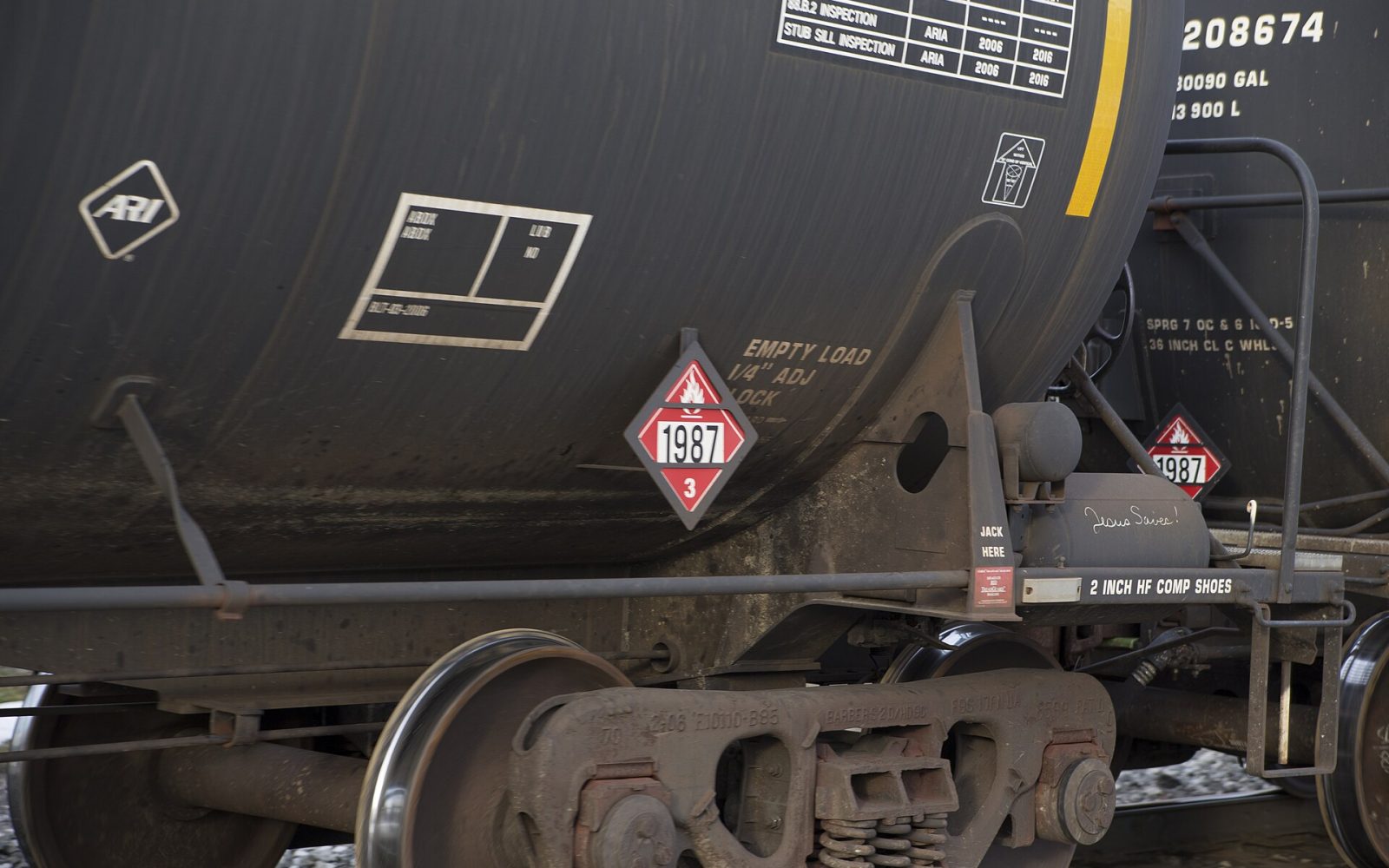
Phenolic resins were among the first synthetic polymers used in coatings, and they remain important where a lining must handle hot solvents, acidic process streams, steam cleaning or demanding cargo changes. Typical uses include rail tank cars, process vessels, heat-exchanger components, internal coatings for oilfield tubing, drums and pails.
The family includes straight (baked) phenolics, epoxy-phenolics, in which a phenolic resin cross-links an epoxy, and a range of ambient-cure products marketed as phenolic epoxies. They differ significantly in how they are applied and what they resist.
Phenolic resin chemistry
Phenolic resins are produced by reacting phenol with formaldehyde. Two broad types result. Resoles are made with excess formaldehyde and contain reactive methylol groups, so they cross-link on their own when heated. Novolacs are made with excess phenol and need a separate cross-linker. Coating linings mostly use resoles.
During baking, the resin condenses into a highly cross-linked aromatic network, releasing water and small amounts of other volatiles. That network is very dense and chemically inert, which explains the excellent solvent and acid resistance — and also the brittleness. Because volatiles are released during cure, films must be built in thin coats with staged heating so they can escape without blistering.
Epoxy-phenolics
In an epoxy-phenolic, a high molecular weight epoxy resin is cross-linked by a phenolic resin, usually with heat. The epoxy contributes adhesion and flexibility, while the phenolic contributes chemical and temperature resistance. Epoxy-phenolics are widely used as internal coatings for food and beverage cans and for drums, and as heavy-duty tank linings.
Types compared
| Lining type | Cure | Typical total DFT | Strengths | Weaknesses |
|---|---|---|---|---|
| Straight baked phenolic | Staged bake, high final temperature | Commonly 4–8 mils (100–200 µm) | Solvents, acids, hot water, product purity | Brittle; weak in strong alkali |
| Baked epoxy-phenolic | Heat cure | Commonly 4–10 mils (100–250 µm) | Better flexibility and adhesion; broad resistance | Requires ovens or heated enclosures |
| Ambient-cure “phenolic epoxy” | Amine cure; force cure optional | Commonly 8–12 mils (200–300 µm) | Field-applicable; hot water and crude service | Lower resistance than baked phenolics |
Thickness and bake schedules vary widely between products. Follow the manufacturer’s product data sheet and application instructions exactly; these linings leave little room for improvisation.
Performance and typical uses
Fully cured baked phenolics are known for resisting a wide range of solvents (including many aromatics, ketones and alcohols), non-oxidizing acids, hot water and steam. Their hard, smooth surface is easy to clean, which supports frequent product changes in rail cars and tanks. Common uses include:
- Rail tank car and process vessel linings for solvents and chemicals — see rail car coatings
- Internal coatings for oil country tubulars and flowlines, often shop-applied as part of pipeline and tubular coating programs
- Heat exchanger tube sheets and channels, and hot-water tanks
- Drums, pails and containers
Their weaknesses are equally important. Straight phenolics perform poorly in strong alkalis and strong oxidizers, and their brittleness makes them vulnerable to impact, flexing and thermal shock. Where alkali or impact resistance matters, epoxy-phenolics or novolac epoxies may be a better fit.
Choosing between phenolic types
Selection usually comes down to the service and the practicalities of cure. Where the lining will see hot solvents, frequent cargo changes or steam cleaning, and the item can go into an oven, a baked phenolic or baked epoxy-phenolic is often the strongest option. Where the vessel is too large to bake, an ambient-cure phenolic epoxy — sometimes with a force cure using heaters inside an insulated enclosure — offers a practical compromise. The decision should always be checked against the manufacturer’s chemical resistance chart for the actual chemical, concentration and temperature, not just the general family.
Advantages and limitations
Advantages
- Exceptional resistance to many solvents and acids
- Good performance in hot water and steam-cleaning service
- Dense, smooth film suited to product purity and cleaning
- Thin films reduce weight in tubulars and small vessels
Limitations
- Most need high-temperature baking, limiting field use
- Brittle; susceptible to impact and flexing damage
- Poor resistance to strong alkalis (straight phenolics)
- Exacting multi-coat process with tight controls
- Difficult to repair in the field
Application and baking process
Baked phenolic linings demand very clean, well-profiled steel, typically abrasive blasted to SSPC-SP 5/NACE No. 1 with a fine, sharp profile, because a thin film cannot cover peaks. A typical sequence:
- Prepare the surface. Abrasive blast to the specified cleanliness and profile, remove dust and test for soluble salts.
- Apply thin coats. Spray each coat thin and uniform, often around 1–2 mils (25–50 µm), to let volatiles escape.
- Intermediate bake. Partially cure each coat with a short bake before applying the next.
- Repeat. Build to the specified total thickness over several coats.
- Final bake. Ramp to the final cure temperature and hold for the specified time, commonly in the range of about 350–450 °F (175–230 °C) depending on product.
- Inspect. Verify thickness, cure and continuity before service.
Fully cured phenolic linings often darken to a characteristic amber or reddish-brown. Color change is a useful visual cue but not a substitute for the cure tests named in the specification, such as solvent rub resistance.
Continuity is especially important because thin films have little margin; low-voltage wet sponge testing is common for films of this thickness — see holiday testing. Damaged areas are usually repaired with a compatible ambient-cure epoxy rather than a field-baked phenolic.
Frequently asked questions
Can phenolic linings be applied in the field?
Baked phenolics generally require shop conditions or a carefully controlled heated enclosure. Ambient-cure phenolic epoxies are designed for field application, sometimes with a force cure.
Why are phenolic linings applied in so many thin coats?
The cure releases water and other volatiles. Thin coats with intermediate bakes let these escape without blistering or porosity.
Are phenolic linings suitable for caustic soda?
Straight phenolics generally are not recommended for strong alkalis. Check the manufacturer’s chemical resistance chart; an epoxy-based lining is often the better choice.
Educational reference. Coating performance varies by formulation. Always follow the manufacturer’s product data sheet, safety data sheet and your project specification.