Wood Deck & Siding Coatings
Stains, paints and water repellents for exterior decks and wood siding: how opacity, resin type and preparation decide whether a finish weathers gracefully or peels.
Key takeaways
- Sunlight degrades the surface layer of wood within weeks, so even a perfect finish fails if it is applied to gray, weathered fibers.
- Horizontal decks are far harsher than vertical siding; penetrating finishes that wear away are usually preferred on decks over film-forming paints.
- Opacity drives both appearance and durability: more pigment means more UV protection, but film-forming finishes can peel.
- Clean, dry, sound wood and coating all six sides of new boards where possible matter more than brand choice.
Exterior wood is beautiful, renewable and easy to work, but it is also hygroscopic, dimensionally unstable and vulnerable to ultraviolet light and fungi. Coatings for decks and siding have two jobs: shield the wood surface from UV and liquid water, and allow the wood to move and dry without the coating cracking or peeling. Getting this balance right depends on where the wood is, how it is oriented and what the owner is willing to maintain.
This article focuses on the exterior deck and siding market. For the underlying science of wood as a substrate, see coating wood.
Why exterior wood finishes fail
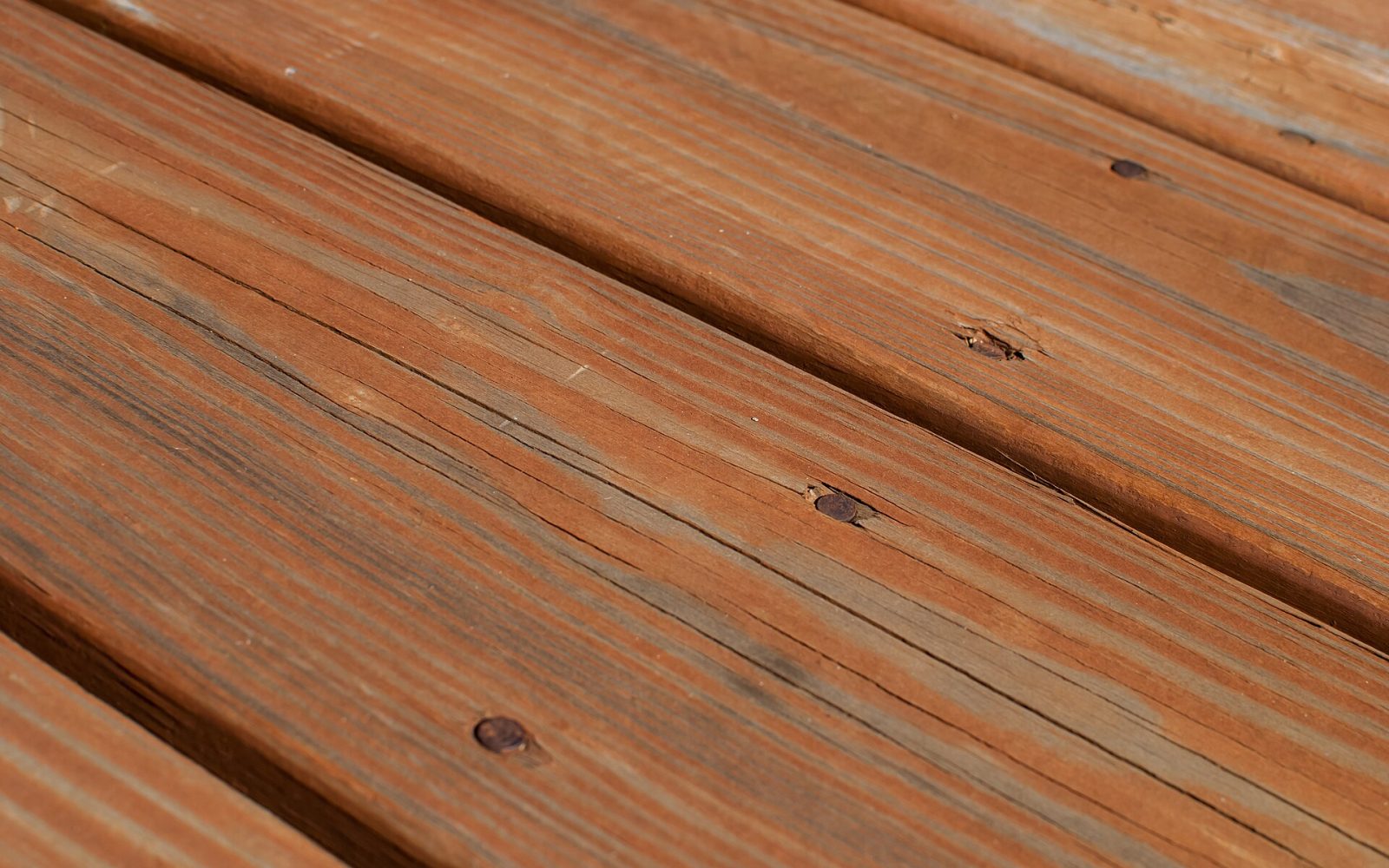
Ultraviolet radiation breaks down lignin, the natural polymer that binds wood cells together. Within weeks of exposure, the outermost fibers loosen and are washed away by rain, leaving the familiar silver-gray surface. Any finish applied over that weakened layer is bonded to fibers that are themselves detaching, which is why “weathered” boards peel early.
Moisture is the second driver. Wood swells when wet and shrinks when dry, stressing any rigid film. Water also feeds mildew and decay fungi, and on decks it collects on flat surfaces, in checks and at end grain. Horizontal surfaces receive more direct sun, more standing water, foot traffic and abrasion, so a deck finish that lasts two years may last several times longer on the vertical siding of the same house.
Finish types by opacity
| Finish | Appearance | UV protection | Failure mode | Best fit |
|---|---|---|---|---|
| Clear water repellent / toner | Natural wood, little color | Low | Fades and grays quickly | Owners willing to recoat often |
| Semi-transparent stain | Grain visible, tinted | Moderate | Wears away gradually | Decks, rough-sawn siding |
| Semi-solid stain | Grain partly visible | Moderate–good | Wears, may form thin film | Siding, fences |
| Solid-color stain | Opaque, texture visible | Good | Can peel on decks | Siding, older decks with mixed color |
| Primer + exterior paint | Fully opaque | Excellent | Cracks or peels if moisture gets behind | Siding and trim |
Thick, textured “deck resurfacer” coatings that promise to fill cracks in old decks form a heavy film over a moving, absorbent substrate. Results vary widely, and when they fail, removal is difficult. Treat them cautiously and follow the manufacturer’s preparation requirements to the letter.
Oil, alkyd and waterborne finishes
- Penetrating oil and alkyd-modified stains soak into the wood, highlight grain and wear away rather than peel. They are easy to refresh but can support mildew growth and darken over time. See alkyd coatings.
- Waterborne acrylic stains and paints offer good color retention, flexibility, low odor and easy cleanup. Most film-forming siding finishes today are 100% acrylic. See acrylic coatings.
- Hybrid (oil-modified waterborne) products aim to combine penetration with the color retention of acrylics.
Many jurisdictions limit VOC content in architectural coatings, which has pushed the market strongly toward waterborne products. Paint selection for the rest of the building is covered in architectural paints.
Preparing decks and siding
- Let new treated lumber dry. Pressure-treated wood is often delivered wet. Wait until it accepts water readily (water droplets soak in rather than bead) or meets the moisture limit on the product label, commonly below about 15%.
- Clean. Use a wood cleaner (often sodium percarbonate based) to remove dirt, mildew and gray fibers; use a stripper if an old film finish must come off.
- Brighten. An oxalic acid brightener neutralizes cleaners, removes tannin and iron stains and restores color.
- Rinse gently. Low-pressure rinsing avoids furring and gouging the wood; aggressive pressure washing raises fibers that later fail.
- Sand where needed. Light sanding removes raised grain and mill glaze, the smooth compressed surface on some new planed boards that limits penetration.
- Dry and test. Allow at least the drying time on the label, then check absorption before coating.
For new siding and decking, seal or prime all six sides of each board, especially cut ends, before installation. End grain absorbs water many times faster than face grain, and back-priming siding reduces cupping, extractive staining and paint peeling.
Application tips
Apply stains in thin coats with a brush, pad or roller and back-brush to work material into the wood; puddles left on the surface stay tacky or form a film that peels. Work a few boards at a time along their full length to avoid lap marks. Most penetrating stains specify one or two coats applied wet-on-wet; excess that does not absorb should be wiped off. For paints, use a quality exterior primer, then two topcoats, with techniques from brush and roller application. Avoid coating in direct hot sun, before rain, or when dew is likely before the film dries.
Rags soaked with oil-based stains can self-heat and ignite. Lay them flat to dry outdoors or store them in a sealed, water-filled metal container, as directed on the label.
Common problems and maintenance
- Peeling on decks — usually a film-forming finish on a horizontal surface, a coating over weathered wood or moisture from below.
- Extractive bleeding — reddish-brown stains from cedar and redwood tannins; use a stain-blocking primer. See bleeding and staining.
- Mildew — dark spots that return after cleaning unless a mildewcide-containing finish is used and the area dries well.
- Dark rings or black stains — iron from fasteners reacting with tannins; use stainless or coated fasteners and treat with oxalic acid.
Plan maintenance before it is needed: decks with penetrating stain typically need refreshing every one to three years, while well-applied paint on vertical siding commonly lasts much longer. Recoating before the finish fails completely is far cheaper than stripping.
Frequently asked questions
Should I paint or stain my deck?
Most professionals recommend penetrating or semi-transparent stains for deck surfaces because they wear rather than peel. Paint and solid stains perform better on railings and vertical surfaces.
How long should I wait to stain new pressure-treated lumber?
Until it is dry enough to absorb water, which can take weeks to months depending on climate and how wet it was delivered. Some products allow earlier application, so check the label.
Can I put a water-based stain over an oil-based one?
Sometimes, once the old finish has weathered and is cleaned, but compatibility varies. Test a small area or strip the old finish for best results.
Educational reference. Coating performance varies by formulation. Always follow the manufacturer’s product data sheet, safety data sheet and your project specification.