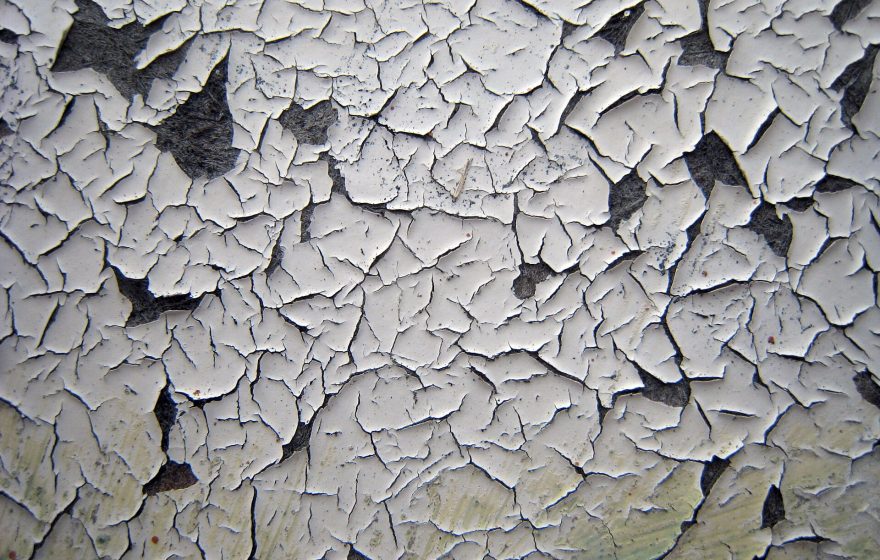
Wrinkling
Why a coating surface puckers into ridges and furrows while the film beneath stays soft — and how film build, heat, solvents and recoat timing cause and prevent it.
Key takeaways
- Wrinkling is a pattern of ridges and furrows that forms when the top of a coating film dries and expands or shrinks differently from the still-soft material beneath.
- The classic cause is an oxidatively curing coating, such as an alkyd, applied too thick or dried in heat or sun, so a surface skin forms over wet paint.
- A related defect, lifting, occurs when strong solvents in a new coat swell an underlying coat that is not fully cured or not solvent resistant.
- Repair means removing or sanding the wrinkled film back to a sound, smooth surface; prevention is mostly film-build and environmental control.
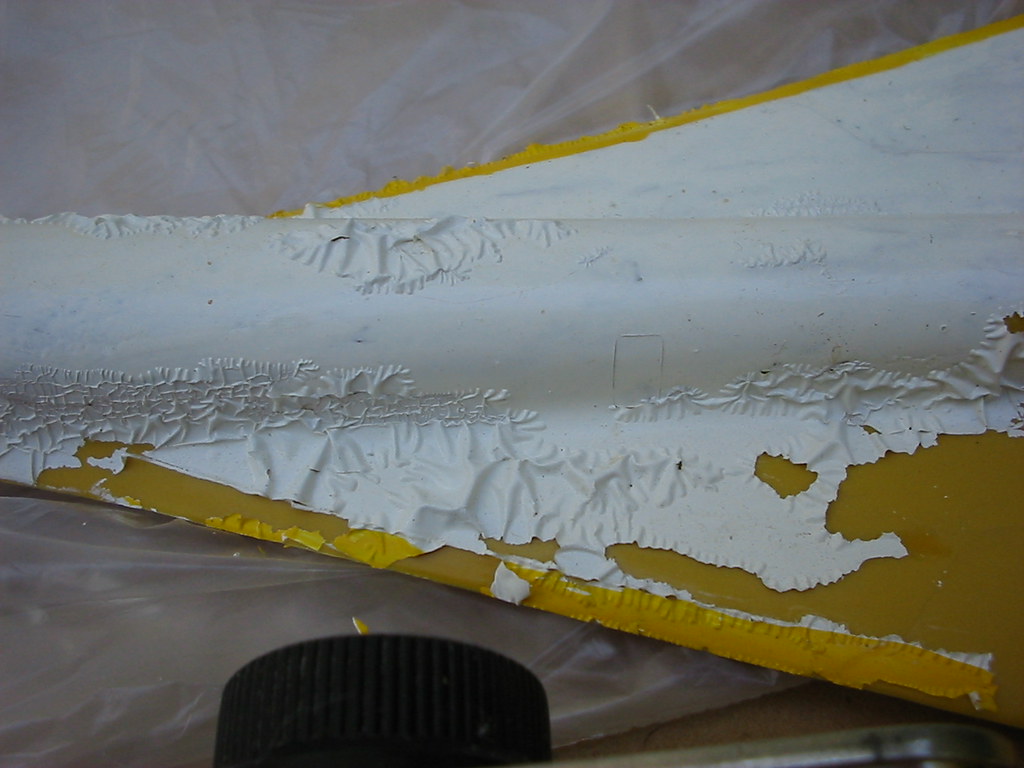
Wrinkling, sometimes called shriveling or crinkling, is a surface defect in which the coating develops a pattern of small ridges and valleys, similar to the skin on cooling custard. It can affect a small area where a run accumulated or an entire surface coated in hot sun. While some industrial finishes are formulated to wrinkle deliberately for texture, unintended wrinkling is a defect: it traps dirt, looks poor, and the soft, uneven film beneath may not cure properly or provide uniform protection.
What wrinkling looks like
- Fine to coarse ridges in a random, crazy-paving or roughly parallel pattern, sometimes looking like a dried riverbed in relief.
- Worst in thick areas: runs, sags, puddles, inside corners and overlaps.
- A soft or tacky film under a firm skin if probed with a fingernail or knife soon after application.
- Sudden appearance — wrinkles often develop within hours of application, or when the coated item is exposed to heat or a new coat.
Wrinkling should not be confused with orange peel, which is a regular dimpled texture from poor atomization or leveling, or with mud cracking, which is an open network of cracks in an over-thick, highly filled film.
Causes of wrinkling
Uneven through-cure in thick films
Alkyds and drying oils cure by reacting with atmospheric oxygen, a process catalyzed by metallic driers. Oxygen is plentiful at the surface, so the top cures first. If the film is thick, the surface forms a crosslinked skin while the lower layer remains liquid. As the skin continues to react and change volume over the mobile layer, it buckles. Excess surface driers, cobalt in particular, make this more likely.
Heat and sunlight during drying
Applying coatings to hot steel, in direct sun or in heated spaces accelerates surface drying and widens the gap between surface and through-cure. Force-drying or baking too soon after application has the same effect. See coating in hot weather.
Recoating too soon or with aggressive solvents (lifting)
When a coat containing strong solvents is applied over a film that is dry to touch but not fully cured, or over a solvent-sensitive coating, the solvents penetrate and swell the lower layer. It expands, wrinkles and may lift away from the substrate. This is common when a two-component topcoat is applied over a fresh alkyd, or when a conventional lacquer is sprayed over an oil-based enamel. Respecting the manufacturer’s recoat windows avoids most cases.
Other contributors
- Incorrect thinner or excessive slow solvent that keeps the lower film soft.
- High humidity or cold slowing through-dry while the surface still skins.
- Contaminants such as oils that interfere with uniform cure.
- Incompatible systems, for example alkyds over a still-soft bituminous coating.
Two-component epoxies and urethanes cure chemically throughout the film and rarely wrinkle from thickness alone. When they do wrinkle, suspect lifting of an underlying coat, incorrect mixing or contamination rather than oxidative skinning.
Diagnosing wrinkling
A quick investigation usually identifies the cause:
- Measure thickness. Compare wet or dry film thickness in wrinkled and smooth areas; wrinkled zones are usually thicker.
- Cut into the film. A knife cut or cross-section shows whether the wrinkle is confined to the top coat or involves swelling of lower coats.
- Check records. Review application temperatures, surface temperature, sun exposure, recoat intervals and thinners used.
- Test solvent sensitivity. A solvent rub on the lower coat can show whether it is susceptible to the topcoat’s solvents.
- Look at the pattern. Wrinkles following runs and corners suggest film build; uniform wrinkling over sunny faces suggests heat.
| Cause | Clues | How to check | Prevention |
|---|---|---|---|
| Excess film thickness | Wrinkles in sags, corners, overlaps | WFT/DFT in wrinkled vs. smooth areas | Apply multiple thin coats within spec |
| Heat or direct sun | Wrinkling on sunny or heated faces | Surface temperature records | Coat in shade or cooler hours |
| Recoat too soon | Lower coat soft, swollen | Recoat interval vs. data sheet | Follow recoat windows |
| Solvent-sensitive undercoat | Lifting immediately after topcoat | Solvent rub on undercoat | Use compatible systems; test patch |
| Wrong or excess thinner | Slow-drying, soft film | Thinner type and amount used | Thin only as the data sheet allows |
Repair
Wrinkled coating seldom recovers on its own. Once the film has fully hardened — which may take longer than normal because the lower layer is thick — the usual approach is:
- Small areas: sand or abrade the wrinkles flat, feather the edges and recoat with a correctly applied coat of the same or a compatible product.
- Large areas or lifting: remove the affected coating entirely by scraping, power tools, chemical stripping or blasting, then reapply the system.
- Before recoating, confirm the underlying film is hard and solvent resistant; otherwise the same failure will recur.
Sanding wrinkles while the lower film is still soft just tears and smears it. Probe with a knife first; if the coating gums up, wait or strip rather than sand.
Prevention
- Control film build. Apply within the data sheet’s wet film thickness range and use a wet film gauge as you go. Several thin coats are safer than one heavy coat with oxidative products.
- Manage temperature. Avoid hot surfaces and direct sun during application and early drying.
- Respect recoat intervals and check compatibility before overcoating, especially when switching to a coating with stronger solvents.
- Use the specified thinner in the permitted amount.
- Do a test patch when overcoating an unknown existing coating.
Frequently asked questions
Why do some paints wrinkle on purpose?
Wrinkle finishes are formulated with surface-drying catalysts and baked to create a uniform decorative texture that hides surface imperfections. The same mechanism is a defect when it is not intended.
Can I paint over wrinkled paint?
Not successfully without preparation. The ridges will telegraph through and the soft layer beneath may continue to move. Sand smooth or remove first.
Is wrinkling the same as lifting?
They are closely related. Lifting specifically refers to an undercoat swelling and wrinkling because of solvents in the coat applied over it, and it may detach from the substrate.
Educational reference. Coating performance varies by formulation. Always follow the manufacturer’s product data sheet, safety data sheet and your project specification.