Mud Cracking, Checking & Cracking
How to tell mud cracking, checking, crazing, alligatoring and through-film cracking apart, what causes each, and how to repair and prevent them.
Key takeaways
- Mud cracking is a network of cracks that forms as an over-thick, highly pigmented film shrinks during drying; inorganic zinc silicate primers are the classic example.
- Checking and crazing are fine surface cracks caused by aging and embrittlement, while full-depth cracking reaches the substrate and usually reflects stress, movement or loss of flexibility.
- Crack depth is the key diagnostic question: surface-only cracks can often be repaired by recoating, but cracks through the system generally require removal.
- Most mud cracking is preventable by controlling wet film thickness, especially at inside corners and welds where overspray accumulates.
Cracking covers a family of failures in which the coating film breaks apart. They range from cosmetic surface checking on an old alkyd to deep cracks in a tank lining that let the stored product reach the steel. The visual pattern, the depth of the cracks and when they appeared usually point clearly to the cause.
Types of cracking and what they look like
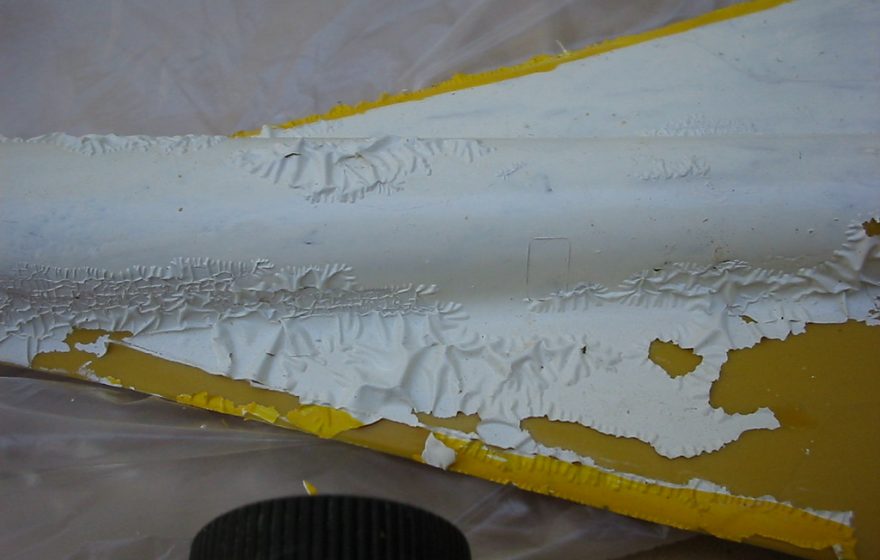
- Mud cracking: an irregular network of cracks, often through the full film, resembling dried mud. It appears during or soon after drying, concentrated where the film is thickest.
- Checking: fine, shallow cracks in the surface that do not reach the substrate. Patterns vary from random to crow’s-foot or grid-like.
- Crazing: a network of very fine hairline surface cracks, similar to checking but finer.
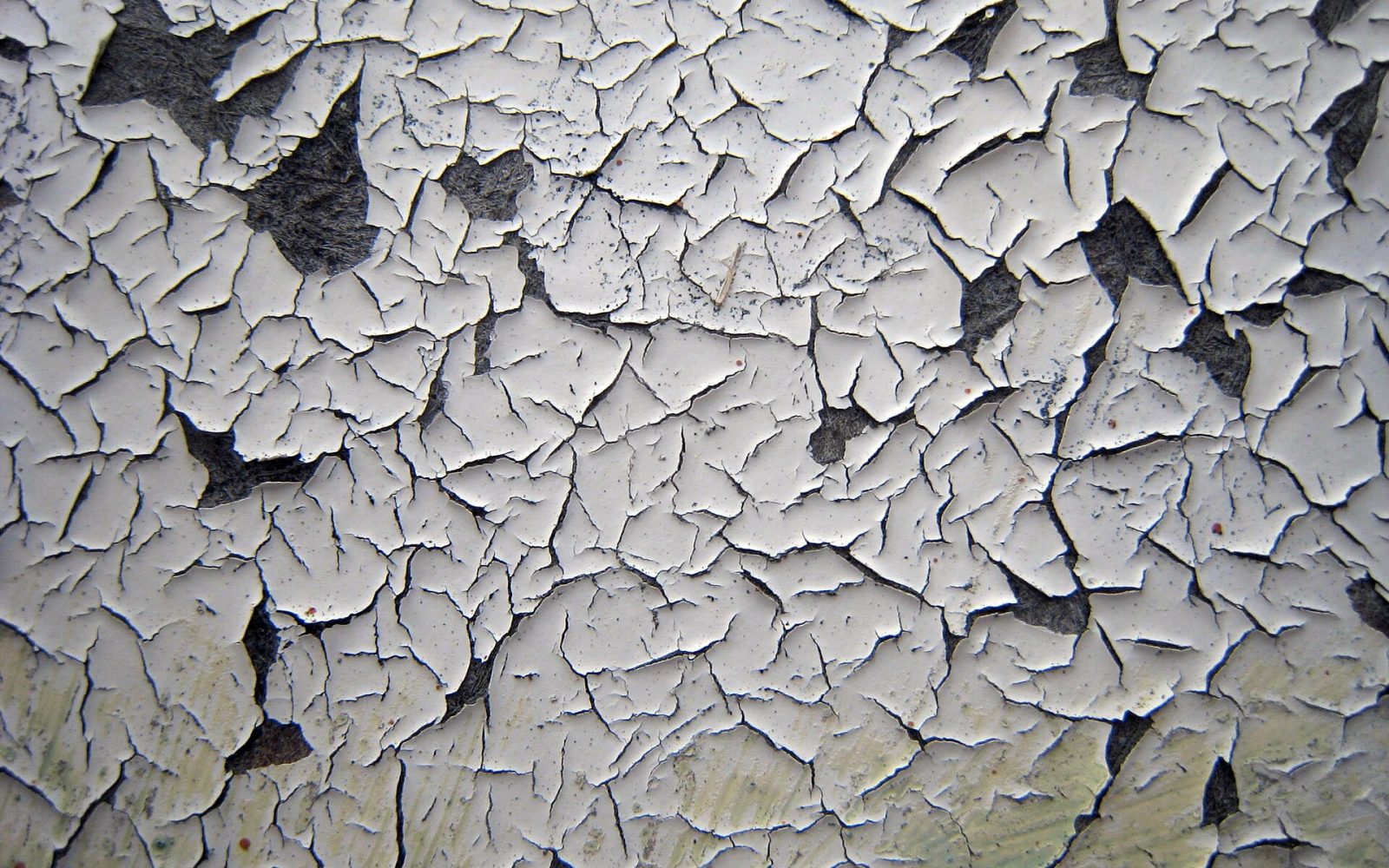
- Alligatoring: wide, deep cracks forming large “scales,” typically in aged oil-based coatings or where a hard coat was applied over a soft or incompletely dried one.
- Through-film cracking: individual cracks or networks that extend to the substrate, often following welds, edges, concrete cracks or joints.
ISO 4628-4 provides a scheme for rating the quantity and size of cracking and for recording whether cracks are limited to the topcoat, extend through it, or penetrate the whole system.
Root causes
Excessive thickness of highly pigmented coatings
As a coating dries it loses solvent or water and shrinks. In coatings with a high pigment loading and relatively little binder — such as inorganic zinc silicate zinc-rich primers, some waterborne coatings and high-build primers — a thick film develops shrinkage stress that its weak, partly dried structure cannot resist. The surface dries and shrinks first while the material below is still soft, and the film splits into a network of cracks. Inorganic zincs usually have a narrow thickness window, with a maximum DFT given on the data sheet; inside corners, welds and areas sprayed twice by overlapping passes are where mud cracking most often starts.
Fast drying conditions
High temperatures, wind and low humidity speed surface drying and steepen the difference between the skin and the body of the film, increasing the tendency to mud crack — particularly for waterborne coatings. See environmental conditions for coating.
Aging and embrittlement
Over years of exposure, UV and oxidation continue to crosslink and degrade some binders, especially oil-based and alkyd coatings. The surface becomes harder and less flexible than the film beneath it and cannot follow daily thermal movement, producing checking and, eventually, alligatoring.
Stress and substrate movement
Rigid coatings such as many epoxies have limited elongation. Thermal cycling, flexing of thin steel, vibration and movement of concrete cracks and joints can exceed the coating’s capacity to stretch. Concrete cracks frequently reflect straight through rigid floor coatings. Thick films of rigid materials also carry more internal stress from cure shrinkage, and differences in thermal expansion between coating and substrate add to it at low temperature.
Incompatible layers
A hard, fast-drying coat over a softer, more flexible or incompletely dried undercoat can crack as the layers move differently, producing alligator patterns.
How to diagnose
- Record pattern and timing. Note whether cracks appeared during cure (mud cracking, shrinkage) or after years of service (aging, fatigue), and whether they follow thick areas, welds, corners or concrete features.
- Magnify. Examine with a 10× or higher magnifier. Look for rust or underlying coats at the bottom of cracks.
- Determine depth. Cut a small V-groove across the cracks with a Tooke-type cutting gauge (ASTM D4138) or take samples for microscopic cross-section to see which layers are cracked.
- Measure film thickness. Survey DFT in cracked and uncracked areas following SSPC-PA 2 or ISO 19840. Mud-cracked areas commonly measure well above the data sheet maximum — see dry film thickness measurement.
- Map substrate features. On concrete, compare coating cracks with slab cracks and joints. On steel, check for flexing, vibration or thermal cycling.
- Review product and conditions. Check the coating’s elongation and temperature limits against service, and application records for temperature, wind and humidity.
On inorganic zinc, check inside corners and the toe of welds first. Overspray and repeated passes build film there, and that is where mud cracking almost always appears before anywhere else.
Causes, diagnostic clues and prevention
| Defect / cause | Typical clues | Confirming check | Prevention |
|---|---|---|---|
| Mud cracking from excess DFT | Crack network in thick areas, corners and welds soon after application | DFT survey vs. data sheet maximum | Wet film checks; avoid double passes |
| Fast surface drying | Cracking on hot, windy or sunny areas | Application records | Coat within the data sheet’s environmental limits |
| Aging and embrittlement | Shallow checking or crazing after years of exposure | Cross-section shows surface-only cracks | Durable, UV-stable finishes; timely maintenance |
| Substrate movement | Cracks follow concrete cracks, joints or flexing areas | Crack and joint mapping | Honor joints; flexible membranes over moving cracks |
| Rigid, thick coating | Cracks through film after thermal cycling | Depth check; product elongation data | Match elongation to service; stay within DFT limits |
| Hard over soft layers | Alligator pattern in topcoat | Cross-section; layer history | Compatible system; full drying between coats |
How to repair cracked coatings
- Mud-cracked zinc silicate: remove the cracked primer, typically by abrasive blasting back to sound coating or substrate, and reapply within the DFT range. Topcoating over mud-cracked zinc is not a reliable repair; the weak, cracked layer remains beneath.
- Surface checking or crazing: if cracks are confined to the topcoat and adhesion is sound, clean, sand to remove loose edges and recoat with a compatible, durable finish.
- Alligatoring: usually requires removal of the affected layers, because overcoating cannot stop the old film from moving.
- Through-film cracking on steel: remove the cracked coating, prepare the substrate and recoat with a system suited to the movement and temperature range.
- Concrete: rout and fill cracks with a suitable material (flexible for moving cracks), re-establish joints with sealant, then recoat.
Filling cracks in a coating with more of the same rigid coating rarely works if the underlying cause is movement. The crack will usually reappear in the same place.
How to prevent cracking
- Check wet film thickness frequently during application (ASTM D4414) and convert to DFT using the product’s volume solids.
- Train applicators to avoid excessive overlap and buildup in corners; use brush stripe coats where specified rather than extra spray passes.
- Apply within the data sheet’s temperature, humidity and wind limits.
- Select coatings with elongation and flexibility suited to substrate movement and the service temperature range.
- Honor concrete joints and treat moving cracks before coating.
- Allow each coat to dry as required before overcoating, and confirm system compatibility.
Frequently asked questions
What is the difference between checking and cracking?
Checking is shallow and confined to the surface of the film. Cracking extends deeper, often through one or more coats to the substrate.
Can mud-cracked inorganic zinc be topcoated?
It is not recommended. The cracked layer has poor cohesive strength, and topcoats applied over it are prone to failure. Removing and reapplying the primer is the usual remedy.
Why does my epoxy floor crack in straight lines?
Straight cracks usually follow cracks or saw-cut joints in the slab beneath. Rigid coatings cannot bridge moving cracks, so joints should be honored and moving cracks treated before coating.
Educational reference. Coating performance varies by formulation. Always follow the manufacturer’s product data sheet, safety data sheet and your project specification.