Water Vapor Transmission of Coating Films
How coating-film vapor transmission rate, permeance and permeability differ, and why test conditions must accompany a reported result.
Key takeaways
- Water vapor transmission describes movement through a film, not the moisture already present in a concrete slab.
- Transmission rate, permeance and permeability are related quantities, not interchangeable labels.
- A comparison needs the test method, film thickness, temperature and humidity conditions—not just a number.
Water vapor transmission is the passage of water in its gaseous state through a material. For a coating, the useful question is how the prepared film performs under a defined exposure. A description such as “breathable” leaves that question open unless it is supported by a measurement and its conditions.
Three quantities to distinguish
Water vapor transmission rate, often abbreviated WVTR, expresses the quantity passing through a unit area in a unit of time. Water vapor permeance relates that rate to the vapor-pressure difference across the specimen. Permeability additionally incorporates material thickness. The relationships explain why a result in mass per area per time cannot simply be relabeled as a result in perms. KTA’s laboratory explanation distinguishes these quantities and their calculations.
The specimen description matters as much as the unit. A free coating film, a coating on a porous support and a multilayer assembly are different test objects. When a report includes a substrate, retain that information rather than presenting the result as if the coating had been tested alone.
Coating-specific and broader test methods
ASTM D1653 addresses vapor transfer through organic coating films, including free films and coatings on porous substrates. It provides dry-cup and wet-cup approaches. ASTM cautions against expecting agreement between methods or conditions and states that transmission does not vary linearly with thickness, temperature or relative humidity.
ASTM E96/E96M has a broader material scope, including coatings, sheets, foams and building products. Its gravimetric methods use water or desiccant and a controlled difference in humidity across the specimen. The published scope requires the conditions to accompany the results. For classification or compliance, the relevant specification, code or manufacturer’s documentation may define those conditions.
These summaries identify the methods; they are not instructions for constructing a cup or running a compliant test. Specimen preparation, sealing, conditioning, measurements and reporting belong to the applicable complete method and laboratory procedure.
What a cup result represents
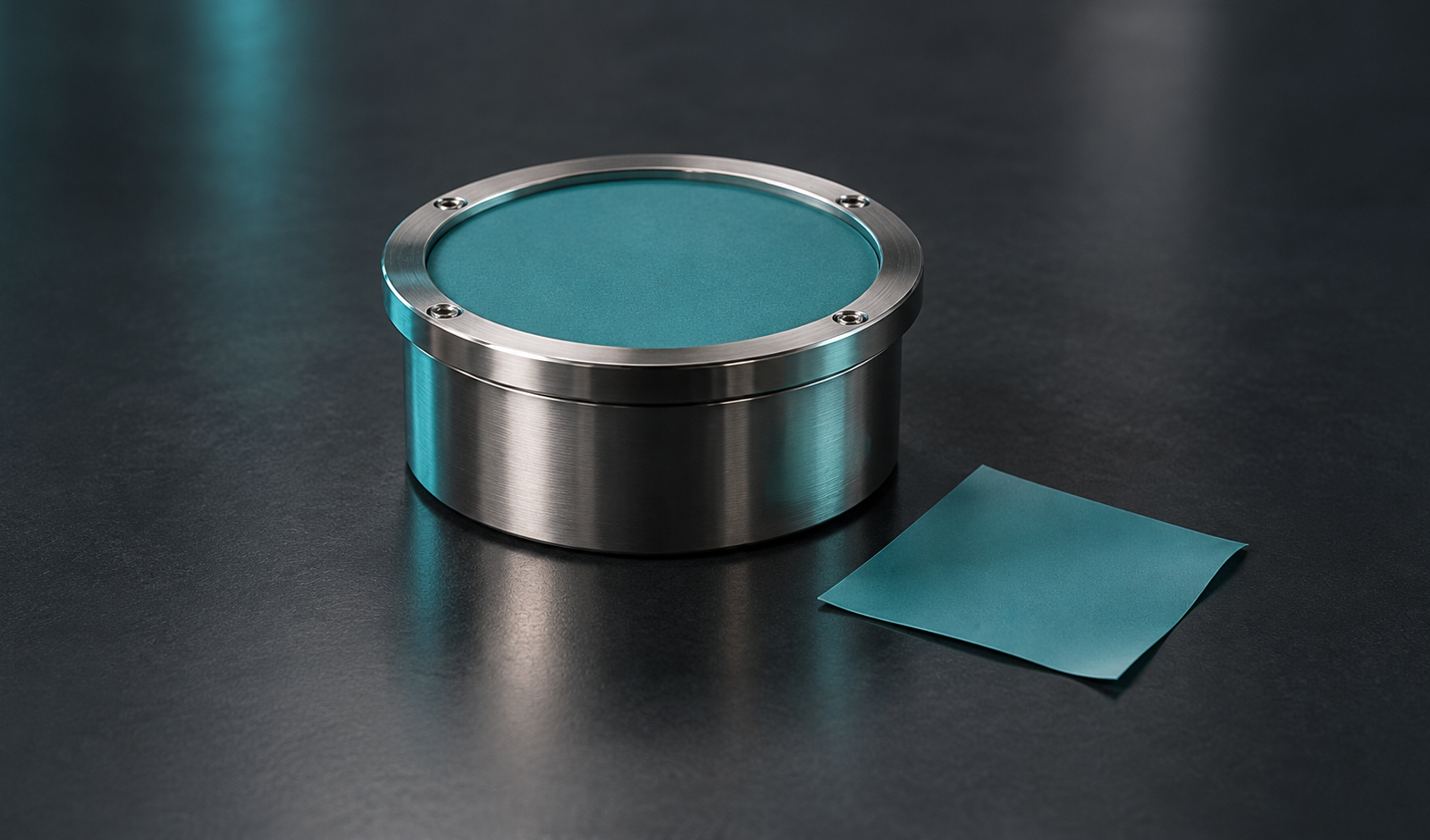
In the basic gravimetric concept, the specimen separates the cup contents from the surrounding atmosphere. Repeated mass measurements reveal transfer over time; the rate is related to the exposed area. Water-filled cups and desiccant-filled cups produce different moisture environments. A measured trend is therefore evidence from that arrangement, not a universal constant valid for every exposure. KTA’s discussion of cup measurements explains the mass-change basis.
For example, two supplier sheets may both display a permeance value while one describes a wet-cup result and the other a dry-cup result. The sensible conclusion is that the comparison is incomplete—not that the lower number automatically identifies the superior coating. ASTM E96/E96M explicitly cautions against predicting a result under different conditions from a single reported result.
Vapor control is only one moisture-control function
A vapor retarder limits diffusion; an air barrier addresses air movement. The U.S. Department of Energy treats these as distinct functions within an enclosure’s moisture-control strategy. Whether and where vapor resistance is needed depends on the construction and climate. A favorable coating permeance alone therefore does not establish that an entire wall assembly is suitable. DOE: air barriers and vapor barriers.
Likewise, this film property does not answer the substrate-readiness questions covered in concrete moisture testing. Do not substitute a coating’s laboratory vapor-transfer result for the required slab measurements or product-specific acceptance criteria.
Reading a report
A useful review keeps the product and specimen identity, film thickness, substrate or support, conditioning history, method designation, temperature, humidity conditions, result and units together. This is a reading aid, not a replacement for the method’s reporting requirements.
If any of those details are missing, request clarification before ranking products. Keep a laboratory property separate from a design decision: the report describes the specimen; the project team determines whether that evidence addresses the intended service.
Educational reference. Primary public technical references checked October 27, 2026. The original cover is a conceptual illustration, not a test record.
Educational reference. Coating performance varies by formulation. Always follow the manufacturer’s product data sheet, safety data sheet and your project specification.