Coating Asphalt Surfaces
How asphalt’s flexibility, heat sensitivity and oils shape coating choices — sealcoats, sport court surfacings, markings and colored or high-friction surfaces.
Key takeaways
- Asphalt pavement is a flexible, thermoplastic, oil-containing substrate: coatings for it must stay flexible, tolerate heat softening and resist bleed-through of asphalt oils.
- New asphalt needs time to cure and release volatile oils before most coatings; waiting periods of roughly 30 days or more are common, depending on the product and climate.
- Sealcoats, acrylic sport and decorative surfacings, pavement markings and colored high-friction or MMA surfacings are the main coating types used on asphalt.
- Rigid coatings and those containing strong solvents can crack, soften the binder or delaminate; use products designed specifically for asphalt.
Asphalt concrete — aggregate bound with bitumen — paves most of the world’s roads, parking lots, driveways, paths and sports courts. It is coated to protect the binder from oxidation and water, to add color and line markings, to improve skid resistance, and to create playing surfaces for tennis and other sports. Some industrial sites also coat asphalt areas for chemical or fuel resistance.
Unlike concrete, asphalt is not a rigid, alkaline mineral substrate. It is a viscoelastic material that softens in summer heat, stiffens in cold, moves under traffic and contains oils that can migrate into coatings. Those characteristics drive every decision about coating it.
How asphalt behaves as a substrate
- Thermoplastic binder. Bitumen softens as temperature rises. Dark pavement in sun can reach temperatures well above air temperature, so coatings must flex and not trap heat-related stress.
- Volatile oils. Fresh asphalt releases light oils as it cures. These can soften coatings, cause staining or prevent adhesion.
- Solvent sensitivity. Many solvents dissolve bitumen. Coatings containing aggressive solvents can soften the surface and bleed brown asphalt color into the film.
- Movement and cracking. Asphalt cracks from fatigue, thermal cycling and base failures; coatings cannot bridge structural cracks.
- Oxidation. Sun and air harden and gray the binder over time, causing raveling — loss of fine aggregate from the surface.
Coating types for asphalt
| Coating type | Purpose | Typical use | Notes |
|---|---|---|---|
| Asphalt emulsion sealcoat | Protect binder, restore black color | Parking lots, driveways | Usually renewed every few years |
| Coal tar emulsion sealcoat | Fuel and oil resistance | Parking lots, service areas | Restricted in some jurisdictions over PAH concerns |
| Acrylic surfacing systems | Color, texture, playability | Tennis and sport courts, paths | Built up in resurfacer and color coats |
| Pavement marking paints | Lines, symbols, wayfinding | Roads, parking lots | Waterborne acrylic most common |
| Thermoplastic and MMA markings | Durable markings, colored lanes | Crosswalks, bus and bike lanes | See MMA resin systems |
| High-friction surfacing | Skid resistance | Curves, approaches, ramps | Resin binder with hard, angular aggregate |
| Decorative and cool-pavement coatings | Color, pattern, solar reflectance | Plazas, playgrounds, streets | Usually modified acrylic or epoxy-modified acrylic |
Coal tar-based sealcoats contain polycyclic aromatic hydrocarbons (PAHs). Several US states and municipalities have restricted or banned their use, and many specifiers now default to asphalt emulsion or other alternatives. Check local regulations before specifying.
Surface preparation
- Let new asphalt cure. Wait the period the coating manufacturer requires — commonly in the range of several weeks to a few months — so volatile oils dissipate and the surface stabilizes.
- Repair the pavement. Fix base failures, potholes and alligator cracking with patching or full-depth repair. Coatings cannot fix structural defects.
- Treat cracks. Clean and fill cracks with a crack filler or sealant compatible with the coating; wide or active cracks will reflect through.
- Clean. Remove dirt, vegetation and loose material by sweeping, blowing and washing. Oil and fuel spots must be cleaned and primed with an oil-spot primer, or cut out if saturated.
- Level and correct drainage. On sport courts, flood the surface and mark birdbaths (areas holding water); fill with a patch binder or leveling course before surfacing.
- Dry. Allow the surface to dry fully before application.
Do a simple bleed-through check before coating a whole area of newer asphalt: apply a small patch of the coating and look for brown discoloration or softness after it dries. If oils are still migrating, wait longer or use a barrier primer the manufacturer recommends.
Application considerations
Weather governs most asphalt coating work (see environmental conditions for coating). Waterborne sealcoats and acrylic surfacings need dry weather and moderate temperatures — typically a minimum air and surface temperature around 50 °F (10 °C) and rising, with no rain expected for at least a day. Very hot pavement can make fast-drying coatings skin over and blister. Check temperature and dew point with the dew point calculator and follow the data sheet.
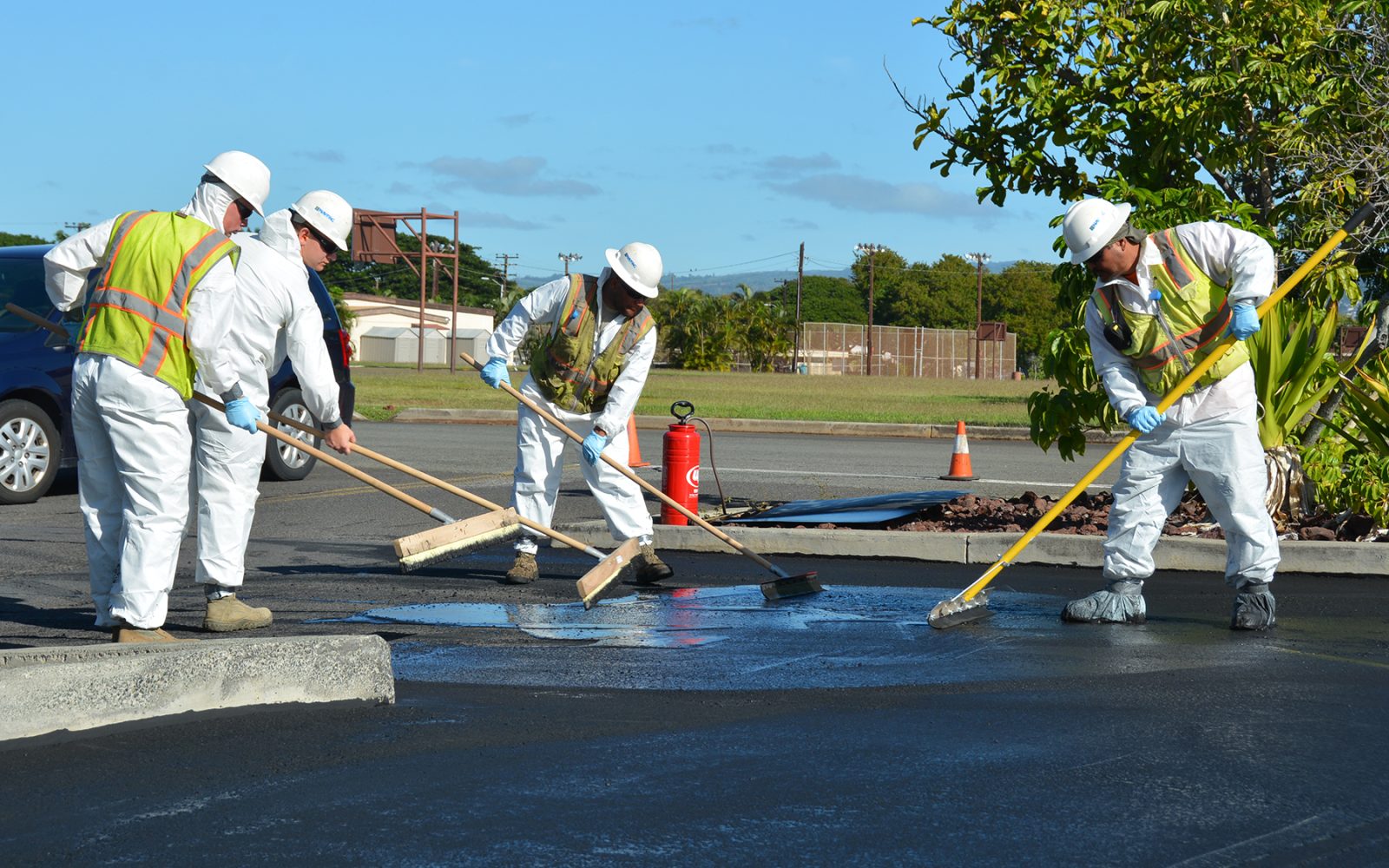
Application is typically by squeegee, brush, spray or specialized spreading equipment. Acrylic court systems are built in multiple thin coats — acrylic resurfacer (often sand-filled) followed by color coats — rather than one thick coat, to control cracking and texture. Sand content and broadcast aggregate control slip resistance; see anti-slip coatings.
Rigid coatings
Unmodified epoxies and other rigid, high-build systems are generally unsuitable over asphalt: the pavement flexes and softens, and the coating cracks or debonds. Where chemical resistance is required on a paved area, specifiers often choose concrete paving instead.
Maintenance and service life
Asphalt coatings are maintenance coatings: sealcoats and markings wear under traffic and UV and are renewed periodically. Over-application of sealcoat (too many coats too often) can build up a brittle layer that cracks and peels. Sport surfaces are typically recoated every several years depending on use and climate. Inspect annually for cracks, raveling, worn markings and drainage problems, and fold the results into a maintenance plan.
Frequently asked questions
How long should new asphalt cure before sealcoating?
Commonly about a month or more, depending on climate and the product. Follow the sealcoat manufacturer’s guidance.
Can I paint asphalt with epoxy?
Rigid epoxies usually crack or debond on flexible asphalt. Use coatings designed for asphalt, such as acrylic or modified-acrylic systems.
Why is my new coating turning brown?
Oils from the asphalt are bleeding into the coating, usually because the pavement was too new or the coating contains solvents that soften the binder.
Will sealcoat fix cracks?
No. Cracks need to be cleaned and filled separately, and structural failures repaired before any coating.
Educational reference. Coating performance varies by formulation. Always follow the manufacturer’s product data sheet, safety data sheet and your project specification.