Anti-Slip Coatings
Textured floor and deck coatings that use aggregate and resin to keep traction when surfaces are wet, oily or icy — balanced against cleanability and wear.
Key takeaways
- Slip resistance comes from surface texture that penetrates the film of water, oil or other contaminant between shoe and floor.
- Aggregate type, particle size and loading determine traction, cleanability and how long the texture lasts.
- Broadcast aggregate gives the most aggressive and durable texture; mixed-in additives suit lighter-duty and pedestrian areas.
- Slip resistance should be specified and measured with a recognized method, then re-checked as floors wear.
Slips and falls are among the most common workplace and public injuries, and many happen on smooth surfaces that become wet, greasy or icy. A glossy epoxy floor or painted steel deck can be perfectly safe when clean and dry yet dangerous with a thin film of water. Anti-slip coatings, also called non-skid or slip-resistant coatings, add controlled texture to the walking surface so that traction remains acceptable under the contaminants that are actually present.
Anti-slip textures appear on factory and warehouse floors, commercial kitchens, ramps and stairs, pool decks, ship decks, loading docks, pedestrian bridges and parking structures. They are rarely a product category of their own; instead, aggregate is incorporated into floor, deck or traffic coating systems.
How slip resistance works
On a dry surface, friction between sole and floor is usually high. Water, oil, food soils, dust and ice act as lubricants: when a foot lands, the contaminant forms a thin squeeze film that can separate sole from floor. Texture gives the contaminant somewhere to go and creates peaks that contact the sole directly. The more viscous the contaminant (oil, grease, fats), the larger and sharper the texture generally needs to be.
Slip risk also depends on footwear, foot traffic patterns, slope, lighting, cleaning and human behavior. A coating is one part of slip control, alongside drainage, matting, housekeeping and footwear policies.
Aggregates and texture options
| Aggregate | Characteristics | Typical use |
|---|---|---|
| Silica (quartz) sand | Economical, rounded to sub-angular, moderate hardness | General industrial floors, broadcast systems |
| Aluminum oxide | Very hard, angular, long wear life | Heavy traffic, ramps, forklift routes, stair nosings |
| Polymer grit (polypropylene, polyethylene) | Soft, lightweight, mixes into coatings, gentler underfoot | Pedestrian areas, garages, barefoot areas |
| Glass beads | Rounded, less aggressive; reflective | Light pedestrian, line striping |
| Garnet and other mineral grits | Hard and angular | Marine and industrial non-skid decks |
Particle size is usually expressed as a mesh range. Finer grits produce a subtle texture that is easier to clean; coarser grits give stronger traction for oily or sloped areas but hold more dirt and are harder on knees, mops and wheels. Many manufacturers publish multiple texture profiles (light, medium, heavy) for the same system.
Broadcast versus additive methods
Broadcast
Aggregate is scattered into a wet coat, either lightly or to refusal (until no wet resin shows), and then locked in with a grout or topcoat. The topcoat thickness controls the final texture: a thin topcoat leaves sharp peaks, a heavier one rounds them for easier cleaning. Methods are covered in broadcast flooring systems.
Additive (mixed-in)
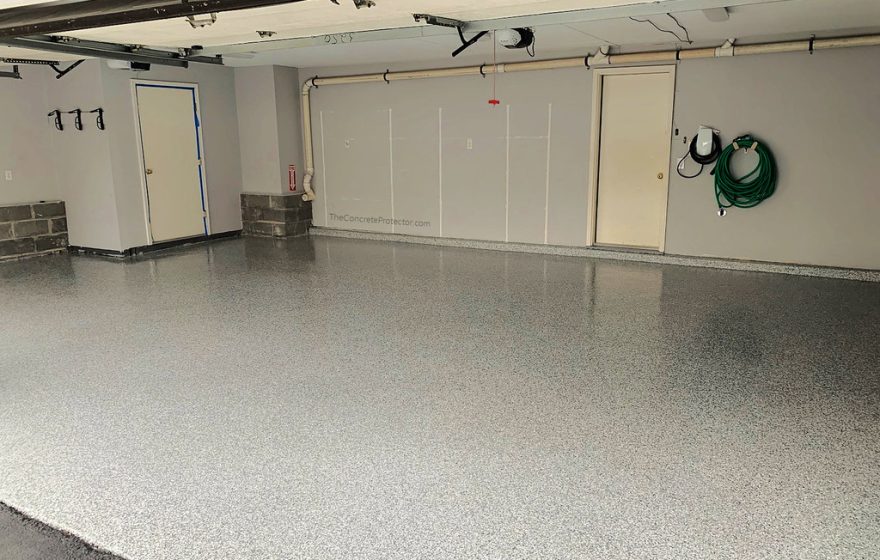
Fine aggregate or polymer grit is stirred into the coating and rolled on. This is simple and suited to DIY and maintenance work, but aggregate can settle in the pail and distribute unevenly, and texture is limited by what the roller can carry. Constant stirring and back-rolling in one direction help.
Factory-textured and shaker-applied products
Pre-textured coatings, non-skid deck paints and shaker-applied grit over a wet coat are common on steel decks, stair treads and small areas.
Build a sample board for the owner using the actual resin, aggregate and topcoat thickness. Have them walk on it wet, clean it with their own mop and chemicals, and sign off. It is the most effective way to align expectations on grip versus cleanability.
Common coating systems
- Epoxy and urethane flooring — the most common base for industrial anti-slip floors; see concrete floor coatings.
- Urethane cement and MMA — used in wet processing areas and cold environments where texture must survive hot washdowns or fast return to service; see food and beverage facility coatings.
- Polyaspartic and aliphatic urethanes — UV-stable textured topcoats for exterior walkways and pool decks; see polyaspartic coatings.
- Traffic membranes — aggregate-filled wear coats on parking decks; see parking deck traffic coatings.
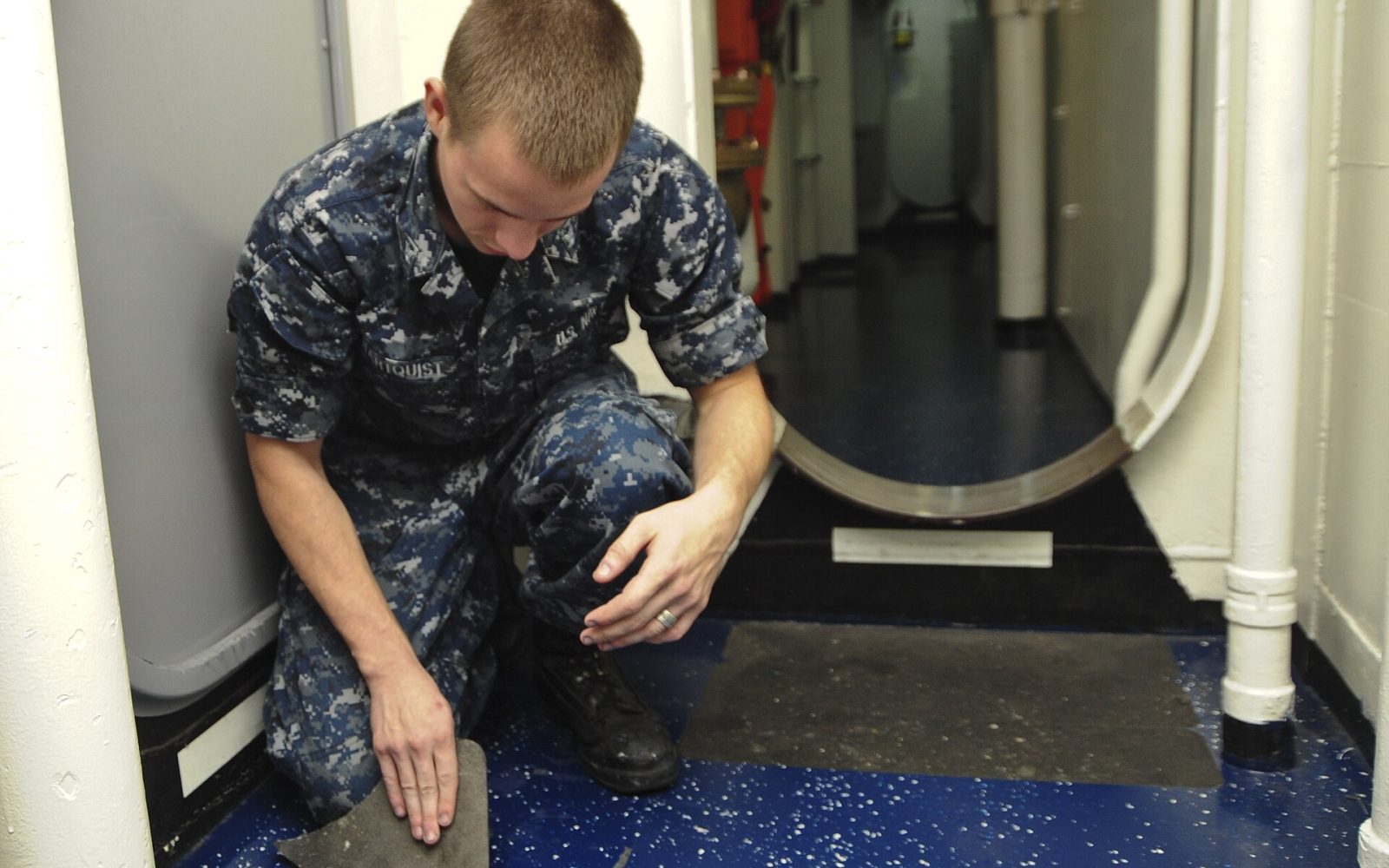
- Marine non-skid — textured epoxy or urethane deck coatings on ships and offshore platforms; see marine and offshore coatings.
Measuring slip resistance
No single test captures every slip scenario, and results from different methods are not directly interchangeable. Common approaches include:
- ANSI A326.3, which measures dynamic coefficient of friction (DCOF) on hard surface flooring, typically with a tribometer, and has been widely adopted in North America.
- The pendulum test, widely used in the UK, Europe and Australia, which reports a pendulum test value (PTV) on wet or dry surfaces. UK HSE guidance treats wet PTV values of 36 and above as indicating low slip potential.
- ASTM D2047, a laboratory static friction test originally developed for polish-coated floors.
Specify the method, the contaminant condition (dry, water, oil) and the acceptance value, and test both at installation and periodically, because texture wears and coatings can become polished. In the United States, OSHA’s walking-working surfaces rules (29 CFR 1910 Subpart D) require employers to keep walking surfaces free of hazards such as slippery conditions, and local codes may add requirements.
Cleaning and maintenance
Textured floors trap soil. If cleaning is inadequate, grime fills the texture and traction drops — sometimes below that of a clean smooth floor. Use deck brushes or auto-scrubbers with brush heads suited to textured surfaces, and avoid film-forming floor polishes unless they are rated slip-resistant.
Inspect high-traffic lanes, ramps, stair nosings and turning areas regularly. When peaks wear smooth, a fresh textured topcoat can usually be applied over the cleaned and abraded existing system within the manufacturer’s recoat guidance.
Frequently asked questions
Can I add sand to any floor paint?
Only use aggregates approved by the coating manufacturer. Unsuitable or damp sand can cause poor adhesion, uneven texture and rapid wear.
Which aggregate lasts longest?
Aluminum oxide is generally the hardest and most durable common choice, which is why it is favored on ramps, stairs and forklift routes.
Is a textured floor harder to clean?
Yes, to a degree. Finer texture and a heavier topcoat over broadcast aggregate improve cleanability, but every gain in cleanability usually costs some traction.
Educational reference. Coating performance varies by formulation. Always follow the manufacturer’s product data sheet, safety data sheet and your project specification.