Environmental Monitoring Instruments
The instruments inspectors use to measure air temperature, humidity, dew point, surface temperature and wind before and during coating work — how they work, their pitfalls and how to use them well.
Key takeaways
- Coating work depends on five measurements: air temperature, relative humidity, dew point, surface temperature and, for spraying, wind speed.
- Sling psychrometers, digital hygrometers and combined dew point meters all derive dew point; the surface temperature must then be compared with it.
- Most specifications require the surface to be at least 5 °F (3 °C) above the dew point, plus product-specific temperature and humidity limits from the data sheet.
- Readings are only as good as the instrument’s calibration, the location where they are taken and how often they are repeated.
Applying coating to a surface that is too cold, too humid or wet with invisible condensation is one of the most common causes of early failure. The rules themselves — dew point margins, minimum temperatures, humidity limits — are covered in environmental conditions for coating. This article focuses on the instruments used to check those conditions and how to get reliable readings from them.
What gets measured and why
- Air (dry-bulb) temperature — affects solvent evaporation, viscosity and cure.
- Relative humidity (RH) — the amount of water vapour in the air as a percentage of what it could hold at that temperature. Some coatings have maximum or minimum RH limits.
- Dew point — the temperature at which water vapour condenses. Calculated from air temperature and RH.
- Surface temperature — the temperature of the steel or concrete itself, which can be well above or below air temperature.
- Wind speed — affects overspray, dry spray and evaporation during spray application.
The critical comparison is surface temperature versus dew point. If the surface is at or near the dew point, a film of moisture can form that is too thin to see but enough to cause flash rust on blasted steel or poor adhesion of the coating. ISO 8502-4 gives guidance on estimating the probability of condensation before coating.
Humidity and dew point instruments
Sling and powered psychrometers
A sling psychrometer holds two thermometers, one with a wetted wick on its bulb. Whirled through the air, the wet bulb cools by evaporation; the drier the air, the bigger the difference between wet- and dry-bulb readings. RH and dew point are then found with psychrometric tables or charts. ASTM E337 covers measuring humidity with a psychrometer. Powered (fan-aspirated) versions draw air across the bulbs with a motor instead of whirling.
Psychrometers need no batteries or electronic calibration, but they require clean distilled water on the wick, enough whirling to reach a stable wet-bulb reading, and care to avoid breathing on or touching the bulbs. They are less reliable near or below freezing.
Electronic hygrometers and dew point meters
Electronic instruments use a capacitive or resistive humidity sensor and a temperature sensor to calculate RH and dew point directly. Most modern inspection gauges combine this with a surface temperature probe and display the difference between surface temperature and dew point, often with an alarm. Many store readings with time stamps and transfer them to reporting software.
They are fast and convenient but need periodic calibration against a reference, time to stabilize when moved between very different environments, and protection from contamination of the humidity sensor by solvents or dust.
Surface thermometers
- Magnetic dial thermometers clip onto steel and are inexpensive, but they respond slowly and can be affected by sun or wind on the dial body.
- Contact probes (thermocouple or thermistor) give quick, accurate readings when held firmly on the surface.
- Infrared (non-contact) thermometers are fast and reach awkward areas, but their accuracy depends on the surface’s emissivity. Bright blasted or galvanized steel can read low; check against a contact probe and set emissivity where possible.
Steel temperature varies across a structure. Shaded faces, the waterline of a tank, the interior of a hollow section and steel in contact with cold product are often far colder than sunlit surfaces. Measure where condensation is most likely, not just where it is convenient.
Choosing instruments
| Instrument | Measures | Strengths | Watch points |
|---|---|---|---|
| Sling psychrometer | Dry/wet bulb → RH, dew point | No electronics; reference method | Technique-sensitive; slow; poor near freezing |
| Digital dew point meter | Air temp, RH, dew point, surface temp | Fast, logs data, alarms | Needs calibration and stabilization time |
| Magnetic surface thermometer | Surface temperature | Cheap, simple | Slow response; ferrous surfaces only |
| Infrared thermometer | Surface temperature | Fast, non-contact | Emissivity errors on shiny metal |
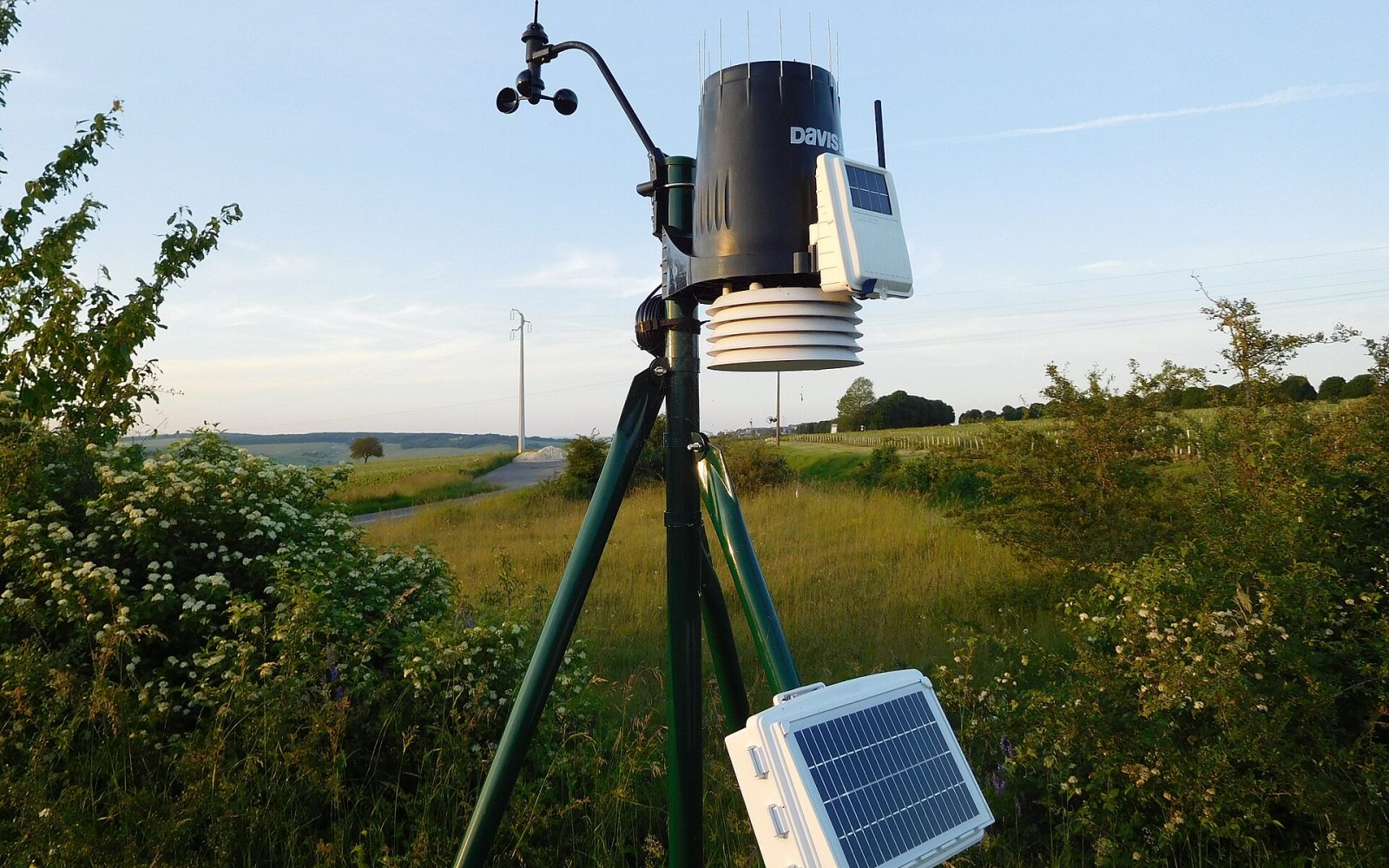
| Anemometer | Wind speed | Quick spray-condition check | Gusts vary; measure at work height |
| Data logger | Continuous temp, RH, dew point | Records overnight and cure periods | Placement and download discipline |
Good monitoring practice
- Verify the instrument. Check calibration certificates and do a field check against a second instrument or psychrometer periodically.
- Acclimatize. Let electronic sensors stabilize when moving from a warm vehicle to a cold site, or into a tank.
- Measure at the work. Take readings in the actual work area, inside enclosures or tanks where the work is done, not at the site office.
- Measure often. Read conditions before surface preparation, before each coat and at intervals during work — more often when the weather is changing, near sunset or overnight.
- Record everything. Log time, location, all readings and whether work proceeded in the daily inspection report.
Use data loggers inside enclosures and tanks during cure. Conditions overnight, when nobody is on site, often explain blush, poor cure or flash rust that daytime spot readings miss. Logged data also show whether dehumidification and heating held conditions within limits.
Related measurements
Environmental instruments are often paired with other checks. On concrete, in-situ RH probes and moisture meters assess moisture in the slab — see concrete moisture testing. Wet-film gauges and DFT gauges check application. For quick calculations, online dew point calculators can confirm instrument readings or plan around forecasts.
Frequently asked questions
Is a sling psychrometer more accurate than a digital meter?
A correctly used psychrometer is a reliable reference, but it is technique-sensitive. A calibrated digital meter is usually at least as accurate in practice and far more convenient. Many inspectors carry both.
How often should I take readings?
Follow the specification. As a minimum, most inspectors record conditions before each operation and at regular intervals during the shift, increasing frequency when conditions are close to limits or changing.
Can I use a weather app instead?
No. Forecasts and nearby weather stations do not reflect conditions at the surface being coated. Use them for planning only, and measure on site.
Educational reference. Coating performance varies by formulation. Always follow the manufacturer’s product data sheet, safety data sheet and your project specification.