Daily Coating Inspection Reports
What a daily coating inspection report should record — conditions, prep, materials, film thickness, hold points and nonconformances — and how to write one that stands up later.

Key takeaways
- A daily inspection report is the contemporaneous record of conditions, work performed, measurements and nonconformances for one shift or day.
- Good reports record facts and readings with times, locations and instrument identities, not opinions.
- Environmental data, surface preparation results, batch numbers, film thickness and hold-point sign-offs are the core content.
- Reports often become the primary evidence in warranty claims and failure investigations, so completeness matters more than polish.
On any coating project where quality matters, someone — a contractor’s quality control inspector, an owner’s third-party inspector, or both — writes a daily report. It documents what was done, under what conditions, with which materials, and whether the work met the specification. Months or years later, when a coating fails or a payment is disputed, those reports are often the only reliable record of what happened.
This article covers what a daily report should contain and how to write one that stands up to scrutiny. For what to check at each stage, see the coating inspection checklist.
Why daily reports matter
- Quality verification. They show that hold points were inspected and accepted before work proceeded.
- Communication. Owners, engineers and manufacturers’ representatives rely on them to follow progress without being on site.
- Traceability. Batch numbers and locations allow suspect material to be traced to specific areas.
- Dispute resolution. Recorded conditions and instructions help settle disagreements about delays, extra work and responsibility for defects.
- Failure investigation. A failure investigation usually begins by reviewing application records.
What to record
Most owners, inspection firms and quality control plans prescribe a form, but the content is broadly similar:
| Section | What to record | Why it matters |
|---|---|---|
| Project header | Project, date, shift, inspector, contractor, crew size | Identifies the record |
| Environmental conditions | Air and surface temperature, RH, dew point, spread, wind; time of each reading | Proves work occurred within limits |
| Surface preparation | Standard achieved, profile, salts, dust, compressed-air checks | Most failures trace back to prep |
| Materials | Product, components, batch numbers, expiry, storage temperature | Traceability if material is suspect |
| Mixing and thinning | Mix ratio, induction time, thinner type and amount, pot-life start | Mixing errors cause cure failures |
| Application | Areas, method, equipment, start/finish times, wet film readings | Links work to location and time |
| Film thickness | DFT readings or summary per area and coat | Acceptance against specification |
| Tests and hold points | Holiday, adhesion, cure tests; who accepted what, when | Evidence of approval to proceed |
| Nonconformances | Description, location, instruction given, follow-up | Shows defects were found and closed |
| Instruments | Make, serial number, calibration verification | Makes readings defensible |
Environmental readings
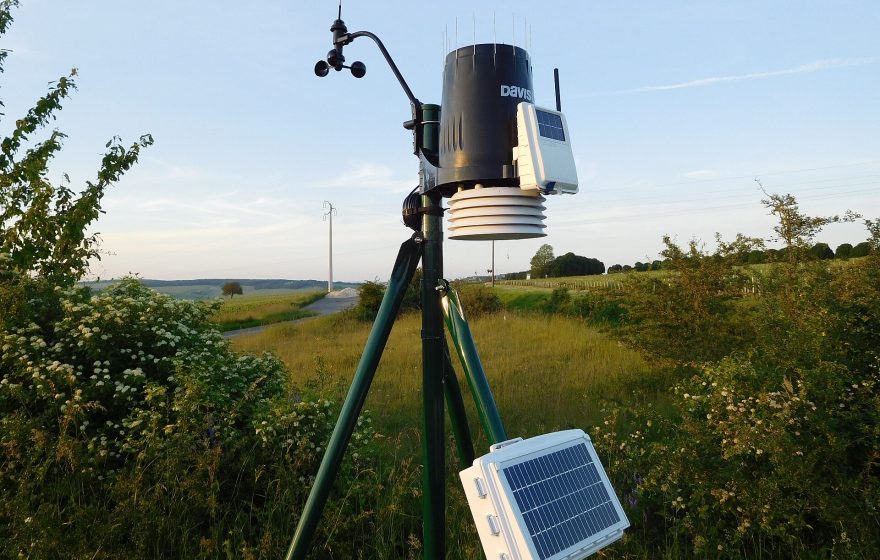
Record readings before work starts, at regular intervals during the shift — many specifications require every few hours — and whenever conditions change noticeably. Note the location of each reading, especially surface temperature on the coldest or shaded areas. Many specifications require the surface to be at least 5 °F (3 °C) above the dew point. See environmental monitoring instruments for equipment and data loggers.
Measurements
Record individual readings or a statistical summary as the specification requires. For DFT, state the method (for example, gauge type and SSPC-PA 2 sampling), the number of spot measurements and the minimum, maximum and average. Attach logger exports and gauge downloads where possible.
Writing a defensible report
- Write it the same day. Contemporaneous notes carry far more weight than reconstructions written later.
- Be specific about location. Use gridlines, elevations, tank course numbers or drawing references, not “the north side.”
- Record facts, not conclusions. Write “surface temperature 41 °F (5 °C), dew point 39 °F (4 °C) at 06:30, spray start delayed,” not “too cold to paint.”
- Fill every field. Mark items not applicable as “N/A” rather than leaving blanks, which can suggest a check was skipped.
- Record instructions. Note who gave what direction, to whom and at what time, including verbal instructions.
- Correct properly. On paper, strike through errors with a single line and initial them; on electronic systems, use audit-trailed revisions.
- Sign and distribute. Sign and date the report and send it to the agreed recipients promptly.
Take dated, located photographs of each hold point — prepared surface, profile tape, stripe coat, finished coat — and reference photo numbers in the report. A photo log turns a description into evidence.
Recording nonconformances
A nonconformance entry should describe what was found, where, which requirement it violates, who was notified, and what corrective action was agreed. Follow-up entries close the loop by recording the re-inspection result. An open nonconformance that never reappears in later reports is a common weakness found during audits and disputes.
Keep tone neutral. The inspector’s role is to report against the specification, not to assign blame or speculate about causes in the daily record. Analysis belongs in separate correspondence or an investigation report.
Never record readings you did not take or copy values from a previous day. Fabricated or “typical” data can invalidate an entire set of records and expose the inspector to serious professional and legal consequences.
Paper vs. electronic reporting
Electronic inspection apps and connected gauges now handle much daily reporting. They time-stamp entries, import gauge data automatically, attach photographs and produce consistent formats. Paper forms remain common on smaller jobs and as a backup.
- Electronic benefits: fewer transcription errors, searchable records, immediate distribution, built-in completeness checks.
- Electronic risks: data loss without backups, devices failing in harsh conditions, and auto-filled fields carrying forward stale data.
Whatever the format, agree at the pre-job conference on the form, distribution list, signature authority and record retention period.
Frequently asked questions
Who writes the daily inspection report?
Usually the contractor’s QC inspector and, on many projects, a separate owner’s quality assurance inspector. Each keeps an independent record.
How long should daily reports be kept?
At least through the warranty period, and often longer as required by contract or the owner’s records policy.
Should the report include weather when no coating was applied?
Yes. Record conditions and the reason no work was done, because weather delays affect schedules and claims.
Can the contractor see the owner’s inspection reports?
That depends on the contract. Many owners share them so nonconformances can be corrected promptly.
Educational reference. Coating performance varies by formulation. Always follow the manufacturer’s product data sheet, safety data sheet and your project specification.