Coating Waste & Disposal
How to identify, segregate, store and dispose of leftover coatings, solvents, spent abrasive, paint debris, rags and containers — and how to generate less waste in the first place.
Key takeaways
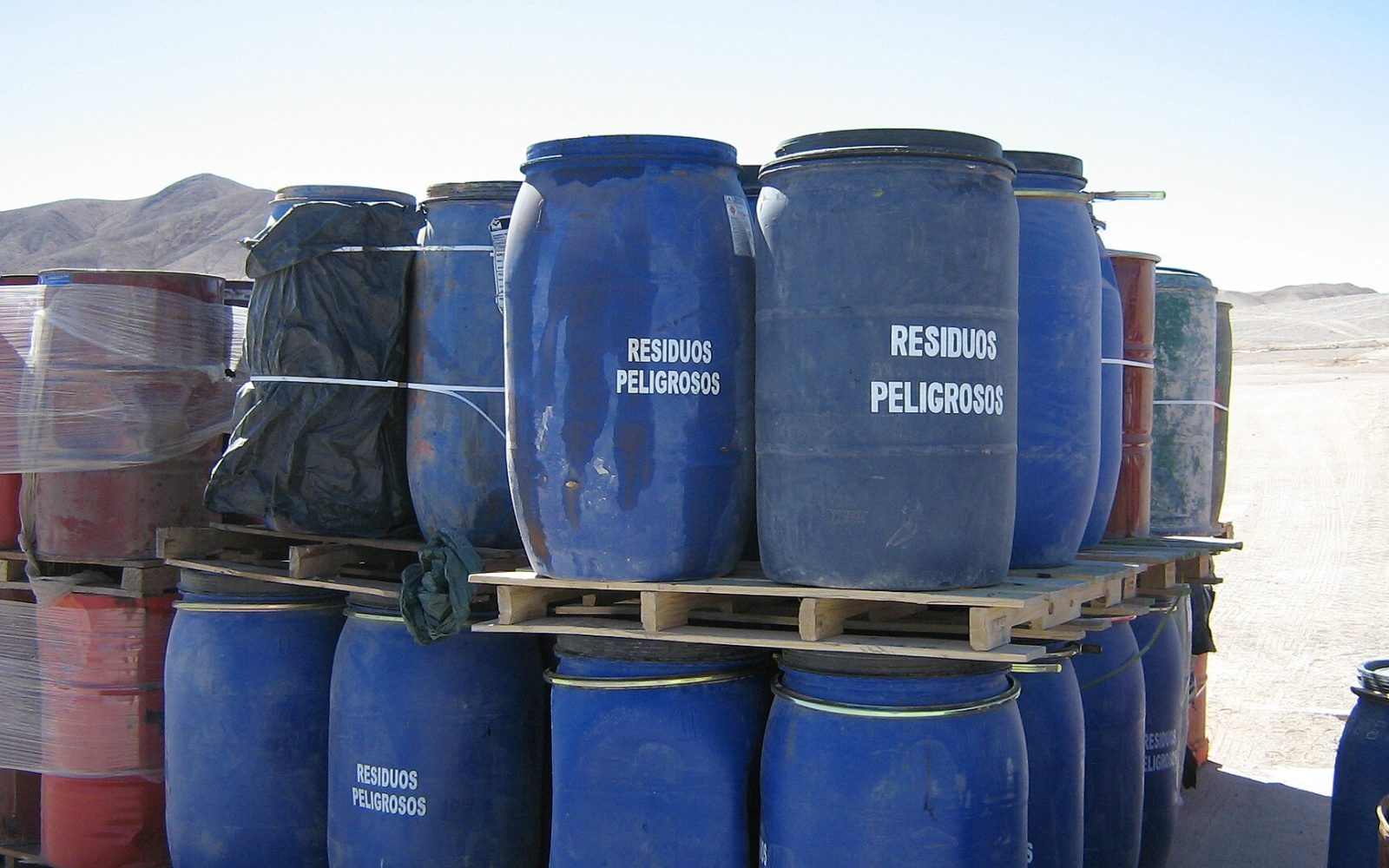
- Many coating wastes — leftover solvent-borne paint, thinners, cleaning solvent and lead-contaminated debris — can be regulated hazardous waste.
- The generator is responsible for characterizing each waste stream, using SDS information, process knowledge and, where needed, laboratory testing.
- Segregate, label and close containers; never pour coating waste down drains or onto the ground, and do not evaporate solvents as a disposal method.
- The cheapest waste is waste never created: mix only what can be applied within pot life and order quantities carefully.
Every coating project produces waste: partial cans, mixed material that has passed its pot life, dirty thinner, spent abrasive mixed with old paint, used filters, rags, masking and disposable PPE. Handled carelessly, these wastes can start fires, contaminate soil and water, expose workers and the public, and generate significant fines. Handled well, they are a predictable line item.
This article outlines general principles using the US Resource Conservation and Recovery Act (RCRA) framework as an example. Other countries have comparable systems — such as the EU Waste Framework Directive and its List of Waste — and state, provincial and local rules can be stricter. Always confirm requirements with your environmental regulator or a qualified waste contractor, and follow Section 13 of each product’s safety data sheet.
Common coating waste streams
| Waste stream | Typical concerns | Common handling |
|---|---|---|
| Leftover liquid solvent-borne coating | Ignitability, toxic ingredients | Use up, return, or manage as hazardous waste |
| Spent thinner and cleaning solvent | Ignitability; some are listed spent solvents | Collect in closed containers; recycle or dispose via licensed facility |
| Unused two-component material | Reactive liquids; heat when mixed in mass | Where permitted, mix small quantities and cure to a solid before disposal |
| Spent abrasive and paint debris | Lead, chromium, cadmium and other metals | Test (e.g. TCLP); manage as hazardous if it fails |
| Rags, filters, masking, disposable PPE | Ignitability; spontaneous combustion with drying oils | Closed metal containers; characterize like the material they contain |
| Wash water and waterjetting effluent | Paint solids, metals, pH, biocides | Capture and treat or dispose per local discharge rules |
| Empty containers and aerosol cans | Residues, pressurized contents | Meet “empty” criteria before recycling; aerosols may be universal waste |
Characterizing waste
Under RCRA, a solid waste is hazardous if it is specifically listed or if it exhibits a hazardous characteristic. Several are directly relevant to coating work:
- Ignitability (D001). Liquids with a flash point below 60 °C (140 °F), which includes many solvent-borne paints, thinners and cleaners.
- Corrosivity (D002). Strongly acidic or alkaline wastes, such as some strippers and cleaners.
- Toxicity characteristic (D004–D043). Determined by the Toxicity Characteristic Leaching Procedure (TCLP). Paint debris and spent abrasive from lead paint removal often fail for lead (D008); chromium (D007) and cadmium (D006) also turn up in older coatings.
- Listed spent solvents. Certain spent solvents used for cleaning or degreasing — including some common aromatic, ketone and ester solvents — are F-listed wastes.
Characterization can rely on knowledge of the materials and process, supported by SDS data, but debris and abrasive from old structures usually need representative sampling and laboratory analysis. Keep the results; they support the waste profile and protect you if questions arise later.
Generator status and site rules
US federal rules set requirements according to how much hazardous waste a site generates per calendar month:
- Very small quantity generator (VSQG) — 100 kg (about 220 lb) or less.
- Small quantity generator (SQG) — more than 100 kg but less than 1,000 kg (about 2,200 lb).
- Large quantity generator (LQG) — 1,000 kg or more.
Status drives accumulation time limits, container and labeling rules, training, contingency planning and manifest requirements. On field projects, the owner of the structure and the contractor should agree in the contract and the pre-job conference who is the generator, who signs manifests and where waste will be stored.
Leaving solvent-soaked rags or open thinner buckets to “air out” is not a disposal method. It releases VOCs, creates a fire hazard and, for hazardous waste, can amount to unpermitted treatment. Keep containers closed except when adding or removing waste.
Good practice for storage and disposal
- Plan waste in the bid. Identify expected streams, testing and disposal costs before pricing the job.
- Segregate at the source. Keep solvents, waterborne waste, cured solids, abrasive and debris separate; mixing can turn non-hazardous waste into hazardous waste.
- Use proper containers. Compatible, closed, in good condition and labeled with contents, hazards and start date.
- Store safely. Protect from weather, provide secondary containment for liquids, keep away from ignition sources and drains.
- Use licensed contractors. Ship hazardous waste only with authorized transporters to permitted facilities, with the required manifests.
- Keep records. Retain test results, manifests and disposal receipts for the period your regulations require.
Waste minimization
Reducing waste lowers cost and liability at the same time:
- Mix only what you can use. Respect pot life and induction time and break kits only where the manufacturer allows part-mixing.
- Use plural-component equipment on larger jobs; plural-component spray mixes at the gun, so unmixed material remains usable.
- Recycle abrasive where practical, as with steel grit in recovery systems, which also reduces debris volume.
- Recover solvent with on-site distillation or a solvent recycling service where permitted.
- Order accurately using coverage calculations from the coverage calculator, and return or donate unopened product where possible.
Label a dedicated container for every waste stream before work starts. Crews segregate waste reliably when the right container is within reach; they mix waste when it is not.
Frequently asked questions
Is cured epoxy or polyurethane hazardous waste?
Fully cured two-component coatings are often non-hazardous solid waste, which is why curing small leftovers is a common practice. Rules vary, however, so confirm with your local regulator and the SDS, and never cure large masses at once because the reaction can generate dangerous heat.
When is a paint can “empty”?
US federal rules define an empty container by how much residue remains after all practicable removal. Containers meeting the definition can often be recycled; those that do not must be managed according to their contents.
Can waterborne paint wash water go down the drain?
Not without permission. Many sewer authorities restrict or prohibit it, and it should never go to storm drains. Settle and separate solids where allowed, and follow local discharge rules.
Educational reference. Coating performance varies by formulation. Always follow the manufacturer’s product data sheet, safety data sheet and your project specification.