Lead Paint Hazards
Why lead-based paint on older steel and buildings is a serious occupational and environmental hazard, how exposure happens, and the rules and controls that govern work that disturbs it.

Key takeaways
- Lead pigments were widely used in primers and finishes for much of the twentieth century, so many older bridges, tanks, industrial structures and homes still carry lead-containing coatings.
- Intact lead paint is a limited hazard; the danger comes when it is scraped, sanded, blasted, heated or cut, creating dust and fume.
- Lead is a cumulative toxin that affects the nervous system, blood, kidneys and reproduction; there is no known safe blood lead level for children.
- In the US, OSHA 29 CFR 1926.62 governs construction work involving lead, including exposure assessment, respirators, hygiene and medical surveillance.
Lead was once valued in coatings for good reason. Red lead primers were tolerant of poor surface preparation and inhibited corrosion well, and lead driers and pigments improved film performance in oil and alkyd paints. Those same coatings now sit on infrastructure that needs maintenance, and every repaint, demolition or repair that disturbs them can expose workers, the public and the environment to lead.
This article covers the hazard itself — where lead paint is found, how exposure happens and what rules apply. Removal techniques are covered in lead paint removal and enclosure design in blast containment.
Where lead paint is found
Lead-containing coatings are most likely on structures built or last painted before the 1980s, but age alone is not proof either way. Common locations include:
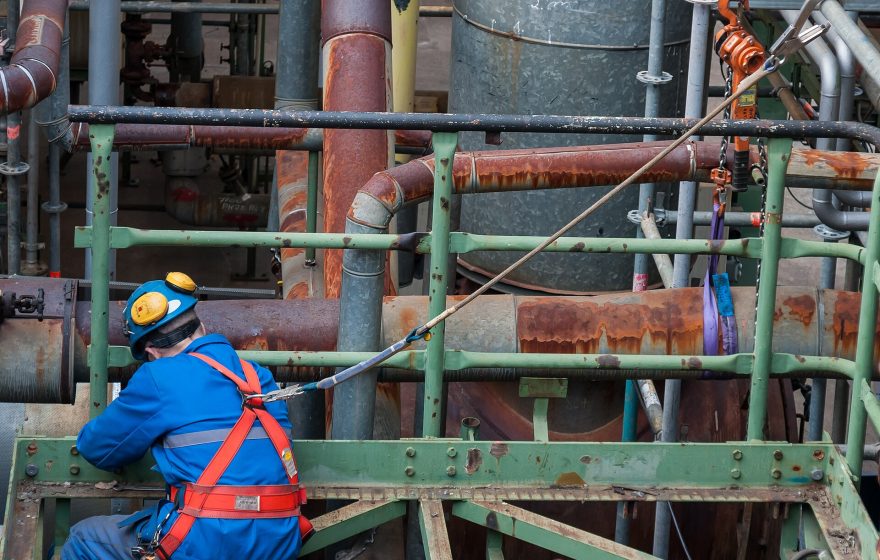
- Steel bridges and highway structures, where red lead and lead-alkyd systems were standard for decades (see structural steel and bridge coatings).
- Water tanks, industrial plants, ships and rail equipment.
- Housing and public buildings, particularly trim, windows, doors and porches. The US banned lead paint for residential and consumer use in 1978, and many other countries restricted it earlier or later.
- Some traffic and safety-marking paints, which used lead chromate pigments.
Old coatings may also contain other toxic metals, notably chromium (from chromate pigments) and cadmium, which carry their own exposure rules. Testing is the only way to know. Options include laboratory analysis of paint chips, portable X-ray fluorescence (XRF) analyzers operated by trained personnel, and, for some residential work, recognized chemical test kits.
How exposure happens
Lead enters the body mainly by inhalation of dust and fume and by ingestion of dust transferred from hands, clothing, food, drinks or cigarettes. Small particles and fume are the most readily absorbed. The amount generated depends heavily on the task:
| Task | Relative exposure potential | Why |
|---|---|---|
| Brushing over intact lead paint | Low | Little dust generated, though prep work may disturb it |
| Manual scraping and sanding | Moderate | Generates dust close to the breathing zone |
| Power tool cleaning without dust collection | High | Fine, high-velocity dust |
| Abrasive blasting | Very high | Large volumes of fine dust, often inside enclosures |
| Torch cutting, welding, burning | Very high | Heat creates lead fume that is easily inhaled |
OSHA’s lead in construction standard recognizes this pattern: until an exposure assessment shows otherwise, employers must provide interim protection for workers performing certain “trigger” tasks — including manual scraping and sanding, power tool cleaning, abrasive blasting, welding, cutting and torch burning — based on the exposures those tasks are presumed to create.
Health effects
Lead accumulates in the body, particularly in bone, and can be released back into the blood long after exposure stops. Recognized effects in adults include fatigue, headaches, abdominal pain, anemia, high blood pressure, kidney damage, nerve and brain effects, and reduced fertility in both men and women. Very high exposures can cause severe poisoning. Symptoms can be vague or absent even at harmful levels, which is why blood testing matters.
Children and the developing fetus are especially vulnerable, and public health agencies state that no safe blood lead level in children has been identified. This is why take-home lead — dust carried on clothing, shoes, tools and vehicles — is a serious concern for coating workers’ families.
Regulations and programs
Requirements vary by country and by type of work, but the following US rules illustrate the typical framework:
- OSHA 29 CFR 1926.62 (construction) and 29 CFR 1910.1025 (general industry). Both set a permissible exposure limit of 50 µg/m³ and an action level of 30 µg/m³ as 8-hour time-weighted averages, and require exposure assessment, engineering and work-practice controls, respirators where needed, hygiene facilities, training, and blood lead monitoring and medical surveillance.
- EPA Renovation, Repair and Painting (RRP) Rule. Applies to paid work disturbing paint in pre-1978 housing and child-occupied facilities, requiring certified firms, lead-safe work practices and cleaning verification.
- Environmental and waste rules. Paint debris and spent abrasive may be hazardous waste depending on leaching tests; see coating waste and disposal. Air and soil protection rules may also apply to outdoor removal.
Many occupational health organizations consider the blood lead triggers in older standards too high, and some jurisdictions have adopted or proposed lower values. Elsewhere, HSE in Great Britain and EU-OSHA guidance set comparable duties. Always check the current rules where you work.
Never dry sweep or blow down lead dust with compressed air. Use HEPA-filtered vacuums and wet cleaning methods. Dry sweeping and blowing put fine dust back in the air, where workers breathe it and it spreads beyond the work area.
Controls and hygiene practices
Effective lead programs combine several layers of control:
- Test first. Confirm whether lead (and other metals) is present before work is planned and priced.
- Choose lower-dust methods. Wet methods, vacuum-shrouded power tools, vacuum blasting, waterjetting or chemical stripping can reduce airborne lead compared with open dry blasting.
- Contain and ventilate. Enclosures with negative pressure and dust collection keep lead inside the work zone.
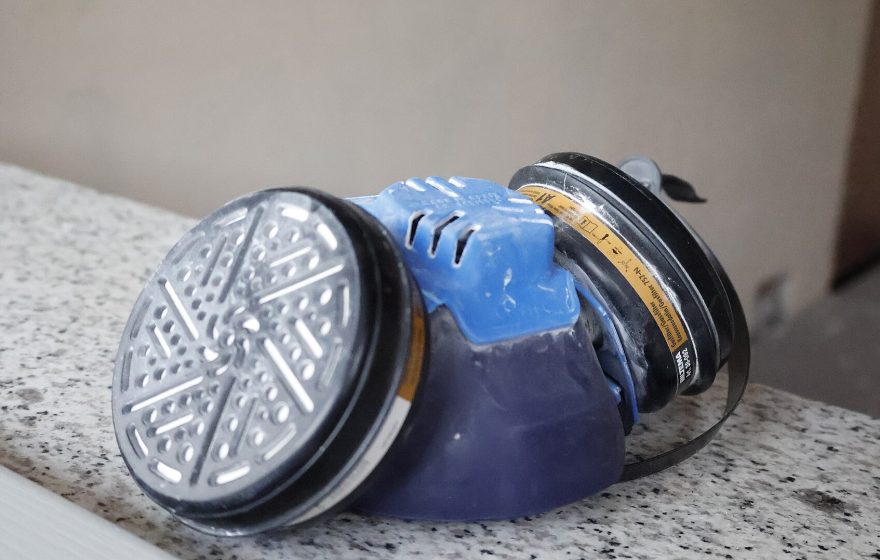
- Protect workers. Provide respirators selected for the measured or presumed exposure (see respiratory protection) and dedicated work clothing.
- Separate clean and dirty. Provide change areas, wash or shower facilities, and clean eating areas; do not allow eating, drinking or smoking in the work area.
- Keep lead at work. Launder or dispose of work clothing through the employer, never at home, and keep tools and vehicles clean.
- Monitor. Conduct air monitoring and blood lead testing as the applicable rules require.
Include lead testing in the coating condition assessment for any older structure. Finding lead after the contract is signed is one of the most expensive surprises a coating project can have.
Frequently asked questions
Is it safe to overcoat lead paint instead of removing it?
Overcoating or encapsulation can be a legitimate strategy when the existing coating is sound and compatible, because it avoids disturbing the lead. Any surface preparation for the overcoat, however, can still generate lead dust and must be treated as lead work.
How do I know if a worker has been exposed?
Blood lead testing is the standard measure, and air monitoring estimates exposure during tasks. Symptoms are unreliable. Follow the medical surveillance requirements of your local rules and your employer’s program.
Does a paper dust mask protect against lead?
A non-approved dust mask does not. Lead work requires respirators approved for particulates and selected for the expected exposure, used within a respiratory protection program that includes fit testing.
Educational reference. Coating performance varies by formulation. Always follow the manufacturer’s product data sheet, safety data sheet and your project specification.