Pre-Job Conferences
What a coating pre-job conference covers, who should attend, and how to use it to settle surface preparation, inspection, hold points and safety questions before work starts.
Key takeaways
- A pre-job conference brings owner, contractor, inspector and coating manufacturer together after award and before work starts to agree how the specification will be carried out.
- Its value lies in settling interpretations — surface preparation standards, acceptance criteria, test methods, hold points and repair procedures — while changes are still cheap.
- Safety, access, site rules and communication lines belong on the agenda alongside technical topics.
- Written, distributed minutes turn verbal agreements into project records.
Most disputes on coating projects begin with a difference in interpretation: what “near-white” looks like on this steel, how many DFT readings make a spot measurement, whether the inspector must be present before priming, or how damaged areas will be repaired. The pre-job conference — sometimes called a pre-construction or pre-coating meeting — exists to surface and settle those differences before the first blast nozzle opens.
Many specifications require one. Even when they do not, any project of meaningful size or complexity benefits from it.
Who should attend
| Participant | Role at the meeting |
|---|---|
| Owner or owner’s representative | Confirms scope, priorities, site rules and decision authority |
| Specifier or engineer | Explains intent and interprets the specification |
| General contractor (where applicable) | Coordinates schedule, access and other trades |
| Coating contractor — project manager and foreman | Presents work plan, procedures, QC plan and schedule |
| Contractor QC personnel | Confirms inspection methods, instruments and records |
| Owner’s QA or third-party inspector | Agrees acceptance criteria, hold points and notice periods |
| Coating manufacturer’s representative | Clarifies product requirements, mixing, recoat and cure, and warranty conditions |
| Safety representatives | Reviews permits, confined space, hot work and site-specific hazards |
The people who will actually do the work — the foreman and the inspector in the field — must be present. A meeting attended only by managers rarely changes what happens on site.
A typical agenda
- Introductions, contact list and lines of authority.
- Scope review: areas included and excluded, quantities, existing conditions.
- Schedule, work hours, outages and milestones.
- Submittals: product data, QC plan, procedures, qualifications.
- Surface preparation, application and inspection requirements.
- Environmental controls, containment and waste handling.
- Safety: site orientation, permits, confined spaces, PPE and emergency procedures.
- Communication: daily reporting, nonconformance handling, change procedures and requests for information.
- Close-out: final inspection, documentation and warranty registration.
Technical topics that must be settled
These are the points where interpretations most often differ. Each should be discussed and the agreed answer recorded:
- Surface preparation standard and visual references. Which SSPC/NACE or ISO 8501-1 grade applies and which photographic references will be used; see surface preparation standards.
- Surface profile. Range, measurement method and frequency.
- Soluble salts and dust. Test method, acceptance limit and remediation if limits are exceeded.
- Environmental limits. Dew point margin, humidity and temperature, and when readings are taken.
- Film thickness. Minimum and maximum DFT, and how compliance is judged under SSPC-PA 2; see DFT measurement.
- Product handling. Mixing, induction, pot life, thinning and recoat windows per the product data sheets.
- Reference areas or mock-ups. A prepared and coated area that everyone accepts as the standard for the job.
- Hold points. Which steps require inspector release, notice periods and what happens if the inspector is unavailable.
- Repairs. Procedures for low DFT, holidays, damage and test sites.
Conflicts between the specification and the data sheets — for example a specified DFT outside the manufacturer’s recommended range — should be identified and resolved in writing by the specifier, not by field improvisation.
Agree on a reference area early in the job. A physical, accepted sample of prepared and coated surface resolves more arguments than any written description of cleanliness or appearance.
Safety and site rules
Coating work brings specific hazards: isocyanates and solvents, abrasive blasting dust, work at height and, frequently, confined spaces. Review the contractor’s safety plan, permits required by the owner, ventilation and atmospheric monitoring for confined space coating, hot-work restrictions near flammable coatings, emergency response and site orientation. Everyone should leave the meeting knowing who can stop work for safety reasons — and that anyone may.
Running the meeting
- Circulate the agenda in advance. Include the specification sections, submittal status and a list of open questions.
- Review documents beforehand. Contractor and inspector should arrive having compared the specification, data sheets and QC plan.
- Work through the agenda in order. Record each decision, who owns each action and the due date.
- Use the inspection checklist as a prompt. Walk through each inspection stage to confirm methods and frequencies.
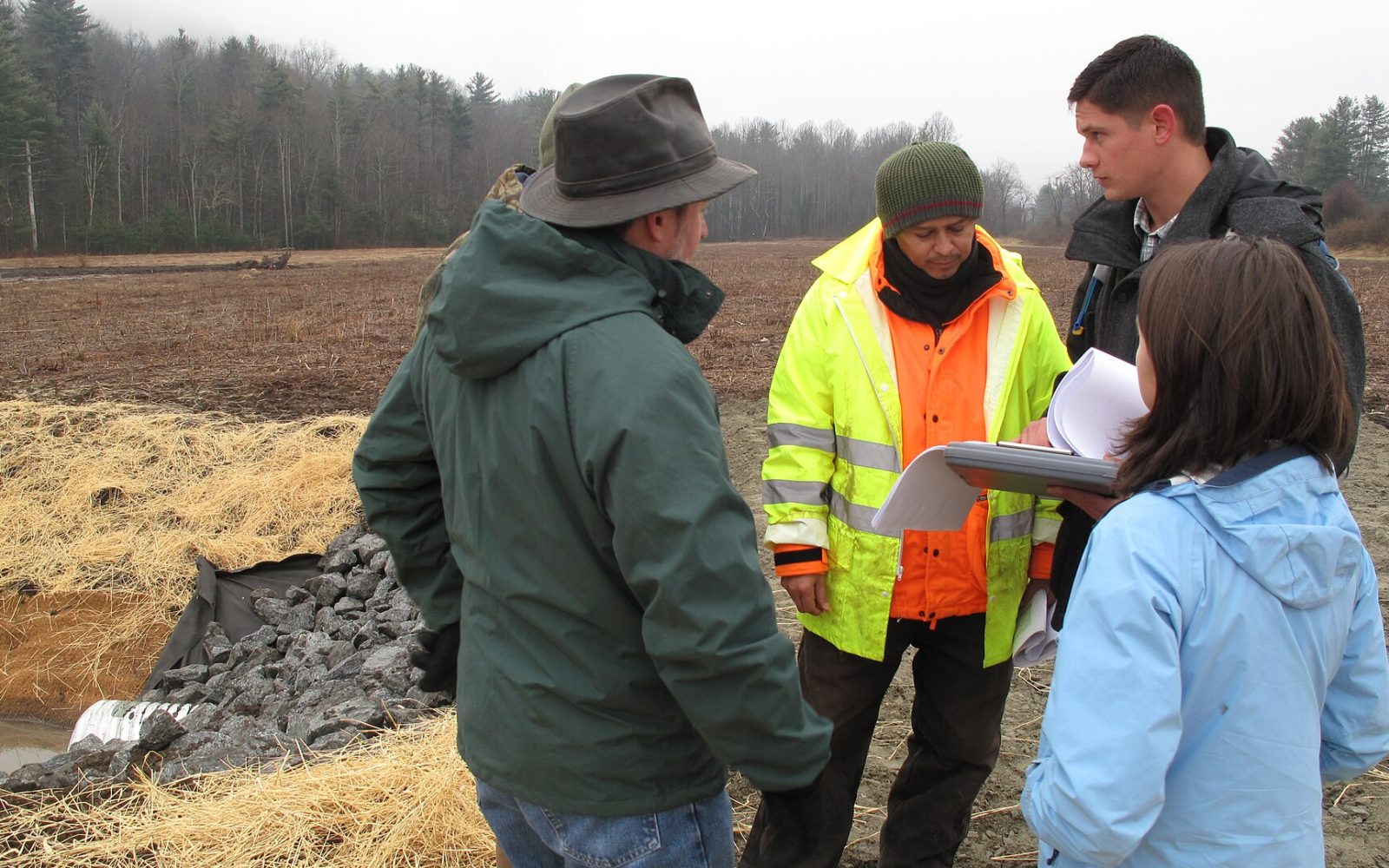
- Visit the site if possible. Look at access, laydown areas, existing conditions and difficult details together.
- Close with open items. List unresolved questions and how and when they will be answered.
Minutes and follow-through
Minutes should be written promptly, distributed to all attendees and corrected if anyone disagrees within a set period. Agreements that change or interpret the contract documents usually need formal confirmation through the contract’s change or clarification procedures; minutes alone may not be enough. Keep the minutes with the project’s quality control records, and revisit them at progress meetings.
A decision made verbally and never recorded is effectively no decision. When the original attendees move on, only the written record remains.
Frequently asked questions
Is a pre-job conference worth it on a small job?
Yes, scaled down. Even a short on-site meeting between owner, contractor and inspector to agree preparation, inspection and repairs prevents many problems.
Can the pre-job conference change the specification?
It can identify needed changes, but changes should be issued formally by the specifier or owner through the contract’s procedures.
Should the coating manufacturer attend?
On significant projects, yes. The manufacturer can resolve product questions immediately and confirm conditions for any warranty.
Educational reference. Coating performance varies by formulation. Always follow the manufacturer’s product data sheet, safety data sheet and your project specification.