Rail Car Coatings & Linings
Exterior coatings and interior linings for tank cars, hoppers, gondolas, boxcars and passenger rolling stock — chosen for cargo compatibility, abrasion, weather and regulatory compliance.
Key takeaways
- Rail cars need two distinct coating jobs: exterior protection against weather, abrasion and corrosion, and interior linings matched to the cargo.
- Tank car and covered hopper linings protect the car from corrosive lading and protect sensitive products such as food, plastics pellets and high-purity chemicals from contamination.
- Lining choice depends on the specific commodity, temperature and cleaning method; there is no universal lining.
- In North America, tank car linings and coatings fall within U.S. DOT tank car qualification rules and industry standards from the Association of American Railroads (AAR).
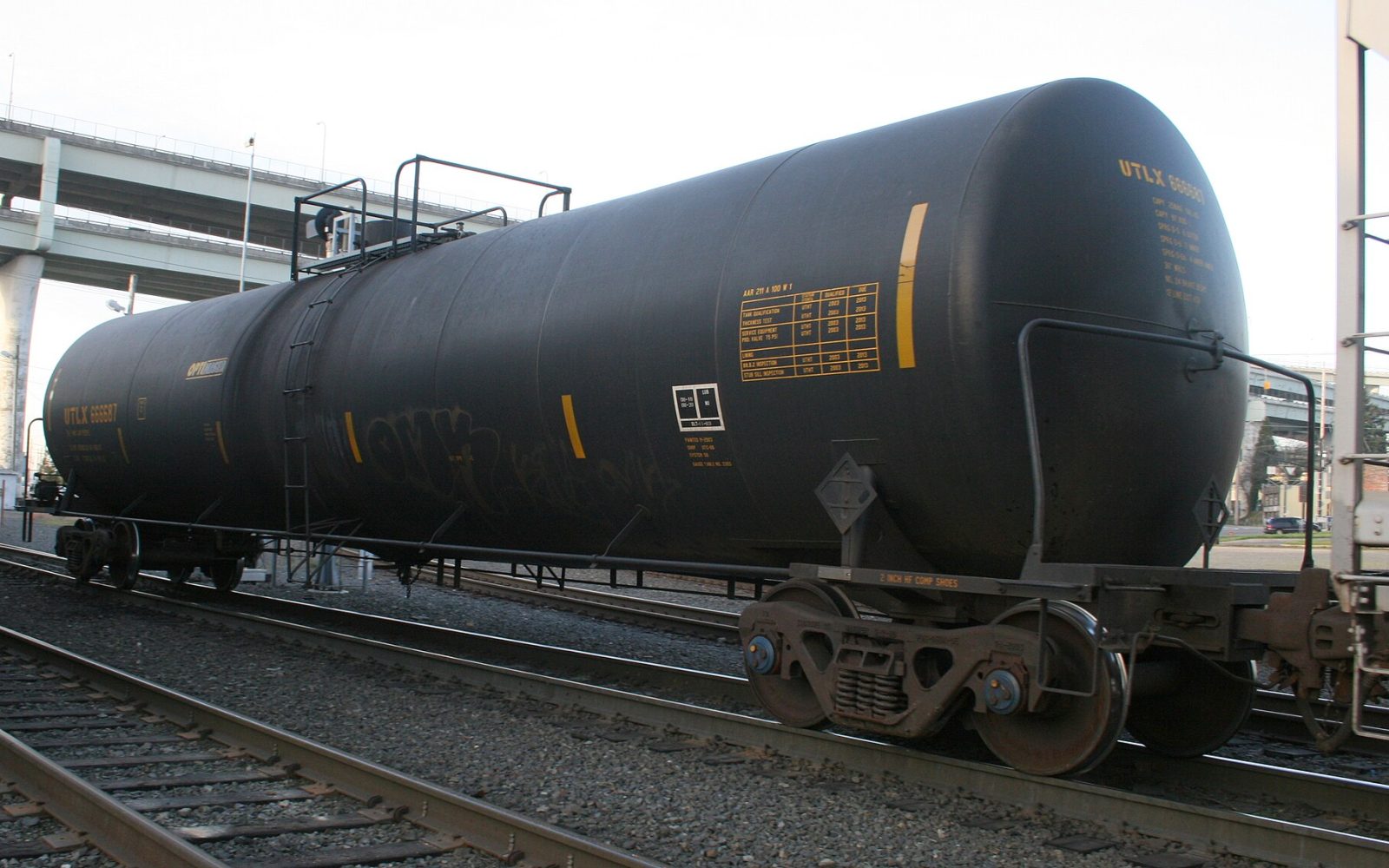
Rail car coatings cover a wide range of equipment: tank cars carrying acids, caustics, fuels and food products; covered hoppers for grain, sugar, plastic pellets and cement; open hoppers and gondolas for coal, aggregates and scrap; boxcars; and passenger rolling stock. Freight cars typically remain in service for decades and may be relined several times as their commodity assignments change. Coating work is done mainly in dedicated rail car shops with blast and paint booths, cure ovens and specialized handling equipment.
Tank car linings
A tank car lining has two purposes: preventing the lading from corroding the steel (or aluminum or stainless) tank, and preventing the tank from contaminating or discoloring the product. Common lining families include:
| Lining type | Typical service | Notes |
|---|---|---|
| Epoxy-phenolic and baked phenolic | Solvents, many chemicals, some food products | Usually heat-cured; excellent solvent resistance |
| Novolac epoxy | Acids, caustics, many chemicals | Higher crosslink density than standard epoxy |
| Amine-cured epoxy | Water, mild chemicals, some food-grade service | Versatile; check temperature and solvent limits |
| Rubber (natural or synthetic) | Hydrochloric acid and other aggressive acids | Sheet-applied and vulcanized; thick and resilient |
| Vinyl ester / polyester (often reinforced) | Strong acids and oxidizers | Thick, sometimes glass-flake or fabric-reinforced |
| Elastomeric polyurethane or polyurea | Abrasive or mildly corrosive bulk cargo | Used more in hoppers than in liquid tank cars |
For background on these resin families, see phenolic and epoxy-phenolic linings and novolac epoxy coatings. Selection is always made against the lining manufacturer’s chemical resistance data for the exact commodity, concentration and loading temperature, and many shipper and owner specifications require qualification testing — see chemical resistance testing.
Regulatory oversight
In the United States, tank car qualification and maintenance requirements in 49 CFR Part 180 include inspection of interior linings and coatings where the lading is corrosive to the tank, and the AAR Manual of Standards and Recommended Practices sets industry requirements for tank car construction and repair. Canada and other jurisdictions have comparable rules. Owners must document lining condition and ensure that the lining remains suitable for the commodity assigned.
Covered hoppers and food-grade linings
Covered hoppers carrying grain, flour, sugar, starch and plastic pellets use linings that are smooth, easy to clean and free from contamination. Food-contact linings are commonly formulated to comply with U.S. FDA 21 CFR 175.300 for resinous and polymeric coatings. Plastic pellet cars need very smooth, hard linings that resist abrasion and do not shed flakes that would contaminate the resin; any lining debris can cause defects in molded products.
Open hoppers and gondolas carrying coal, ore and aggregates face severe abrasion and acidic, wet conditions from sulfur-bearing coal. Interiors may be left bare, coated with abrasion-resistant epoxies or elastomeric linings, or built from aluminum or stainless steel.
Exterior coatings
Freight car exteriors are usually painted with economical, durable systems — often a high-solids epoxy primer with a polyurethane topcoat, or a single-coat direct-to-metal product — applied over blast-cleaned steel. Exteriors must carry reporting marks, capacity data and hazard placards, and take reflective sheeting, so stenciling and labeling are built into the process. Black or dark tank cars carrying temperature-sensitive products may receive light-colored or reflective coatings to reduce heat gain.
Passenger cars and locomotives use higher-gloss automotive-style or industrial polyurethane systems for appearance, together with anti-graffiti clearcoats in many fleets — see anti-graffiti coatings. Interior materials on passenger rolling stock must also meet fire performance requirements such as NFPA 130 in the United States or EN 45545-2 in Europe.
Surface preparation, application and cure
- Clean and decontaminate. Tanks are emptied, cleaned and certified safe for entry, then steam cleaned or washed to remove residues.
- Remove old lining. Old linings are removed by abrasive blasting, waterjetting or, for rubber, mechanical stripping.
- Blast clean. Linings typically require white or near-white metal (SSPC-SP 5 or SSPC-SP 10/NACE No. 2) with a specified angular profile and low soluble salts.
- Apply. Linings are usually sprayed in multiple coats with airless or plural-component equipment, with stripe coats at welds, nozzles and fittings.
- Cure. Many tank car linings are force-cured or baked in ovens to reach full chemical resistance.
- Inspect. Film thickness, cure and continuity are checked; immersion-grade linings are normally holiday tested to locate pinholes, for example following NACE SP0188.
Tank car interiors are permit-required confined spaces. Entry, blasting and lining work require atmospheric testing, ventilation, rescue planning and respiratory protection under the employer’s program and regulations such as OSHA 29 CFR 1910.146. See confined space coating work.
Inspection and service life
Linings are inspected at regular qualification intervals and when a car changes commodity. Inspectors look for blistering, cracking, disbondment, underfilm corrosion and chemical attack, and check whether residues of the previous cargo could contaminate the next. Local repairs are possible for some linings, but extensive damage usually means full removal and relining. Service life depends heavily on the commodity, loading temperature and cleaning practices — harsh steam cleaning or incompatible cleaning chemicals are a common cause of premature lining failure.
When a car is reassigned to a new commodity, treat the lining as a new selection decision. A lining that performed well for one product may be attacked, stained or permeated by the next.
Frequently asked questions
Do all tank cars have linings?
No. Many tank cars carry products that are compatible with bare carbon steel, while others are built from stainless steel or aluminum. Linings are used where the lading would corrode the tank or where product purity is critical.
How thick are tank car linings?
Thin-film baked phenolics may be only a few mils, while high-build epoxies and reinforced linings are much thicker, and rubber linings are measured in fractions of an inch. The lining specification governs.
Can a lined tank car be steam cleaned?
Only within the lining’s temperature and chemical limits. Check the lining manufacturer’s guidance before cleaning, because steam and hot caustic washes can damage some linings.
Educational reference. Coating performance varies by formulation. Always follow the manufacturer’s product data sheet, safety data sheet and your project specification.