Respiratory Protection for Coating Work
How to select, fit and maintain respirators for spraying, blasting and coating removal — from cartridge respirators to supplied air — within a compliant respiratory protection program.
Key takeaways
- Respirators are the last line of defense, used when ventilation, substitution and other controls cannot keep exposures low enough.
- In the US, required respirator use must be managed under a written program meeting OSHA 29 CFR 1910.134 — including medical evaluation, fit testing and training.
- Choose the respirator by hazard and concentration: particulate filters for dust and mist, chemical cartridges for vapors, and supplied air for high-hazard tasks such as abrasive blasting or spraying isocyanates.
- Tight-fitting respirators only work with a good face seal: fit test before use and at least annually, and perform a user seal check every time you put one on.
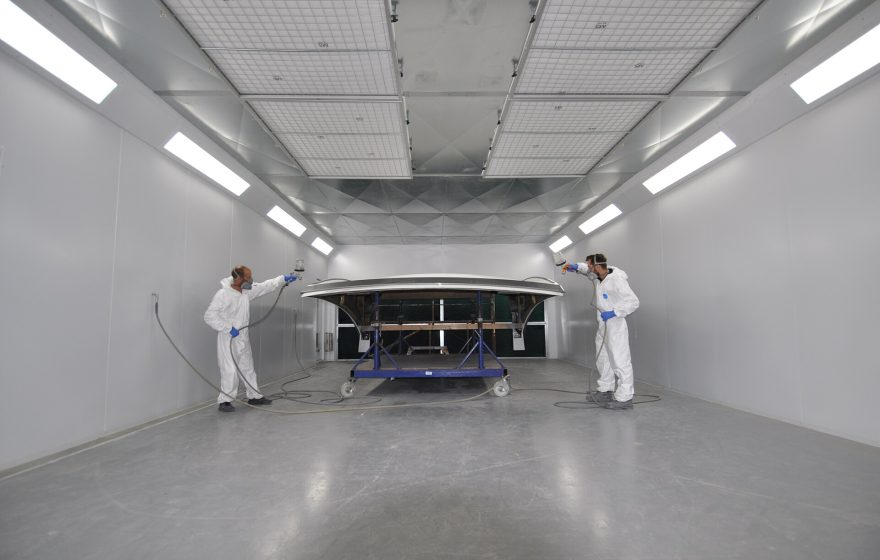
Coating work produces many airborne hazards: solvent vapors, spray mist, isocyanates, epoxy aerosols, metal-containing dust from old paint, and respirable crystalline silica from blasting and grinding. Respiratory protection is often essential on coating jobs, but it is only effective when the right device is selected, fitted, maintained and worn correctly every time.
This article summarizes general principles. Always follow the product Safety Data Sheet, your employer’s respiratory protection program and local regulations; requirements differ between countries.
Respirators and the hierarchy of controls
Occupational safety regulators including OSHA, HSE and EU-OSHA expect employers to control exposures first through elimination, substitution, engineering controls such as ventilation and enclosures, and administrative measures. Respirators are used when those measures are not feasible, are being installed, or do not reduce exposure enough on their own. In practice that covers most industrial spraying, blasting and confined-space coating.
The respiratory protection program
Under OSHA 29 CFR 1910.134 (which also applies to construction work), employers that require respirators must have a written program administered by a qualified person. Core elements include:
- Hazard assessment. Identify contaminants and estimate or measure exposure levels.
- Respirator selection. Use NIOSH-approved respirators suited to the hazard and concentration.
- Medical evaluation. Determine that each worker is medically able to wear the respirator before fit testing or use.
- Fit testing. Qualitative or quantitative fit testing of tight-fitting respirators before first use, whenever a different facepiece is used, and at least annually.
- Training. Teach why the respirator is needed, its limitations, how to put it on, check it, use it, maintain it and recognize when it is not working.
- Maintenance and care. Cleaning, inspection, storage, repair and a cartridge change schedule for gas and vapor hazards.
- Program evaluation. Regularly review whether the program is working, including feedback from wearers.
Types of respirators
| Respirator type | OSHA APF* | Typical coating uses |
|---|---|---|
| Filtering facepiece or half-mask air-purifying | 10 | Sanding, mixing, low-level vapor with cartridges |
| Full-facepiece air-purifying | 50 | Higher vapor or mist levels; adds eye protection |
| Loose-fitting PAPR (hood or helmet) | 25 | Spraying where vapor levels are moderate; facial hair |
| Full-facepiece PAPR | 1,000 | Lead and dust removal, high particulate levels |
| Supplied-air, full facepiece, pressure-demand or continuous flow | 1,000 | Isocyanate spraying, solvent-rich spraying, confined spaces |
| Self-contained breathing apparatus (SCBA), pressure-demand | 10,000 | Emergencies, rescue, IDLH atmospheres |
*Assigned protection factors (APFs) from OSHA 29 CFR 1910.134 Table 1. Some helmet/hood respirators may qualify for higher APFs only when the manufacturer has demonstrated performance at that level. The maximum use concentration is the APF multiplied by the exposure limit, and cartridge limits or IDLH conditions may lower it further.
Filters and cartridges
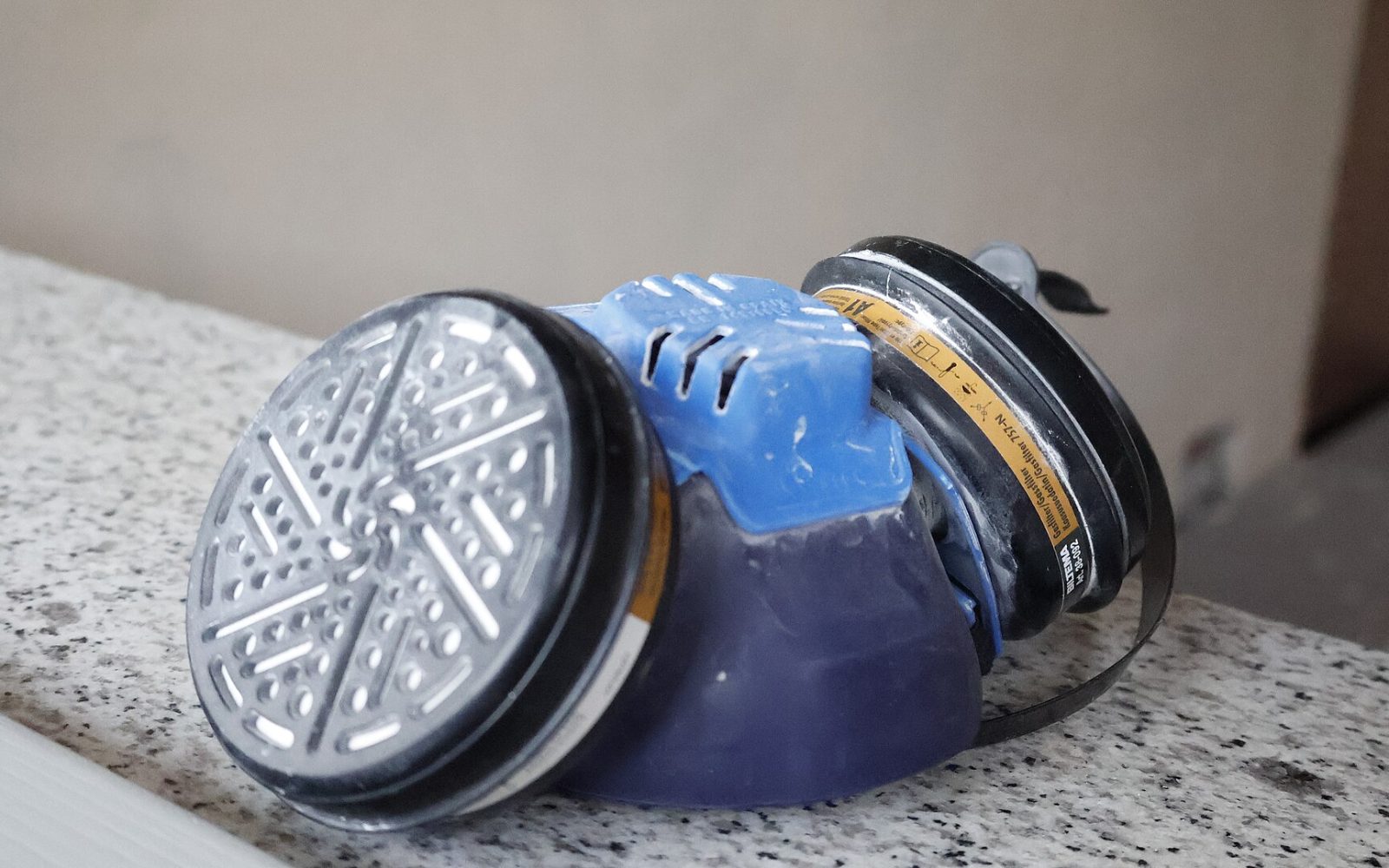
NIOSH particulate filters are rated N, R or P (oil resistance) and 95, 99 or 100 (filter efficiency in percent). Oil-based paint mists call for R or P filters. Organic vapor cartridges — commonly color-coded black — adsorb solvent vapors and are often combined with a particulate prefilter for spray mist. P100 filters are commonly magenta.
Chemical cartridges do not last indefinitely and many coating chemicals, including isocyanates, give little or no odor warning. OSHA requires a cartridge change schedule based on objective data unless the cartridge has an end-of-service-life indicator. Never rely on smell or taste to decide when to change cartridges.
Matching respirators to coating hazards
- Solvent-based coatings — organic vapor cartridges with particulate prefilters for brushing and light spraying; supplied air for heavy spraying or enclosed spaces.
- Isocyanate-containing coatings — supplied air is commonly recommended for spraying; see isocyanate safety.
- Abrasive blasting — NIOSH-approved abrasive-blasting supplied-air respirators (Type CE) are required for blast operators in the US. See crystalline silica and abrasive blasting.
- Lead and other toxic metals — particulate respirators chosen according to exposure assessment under rules such as 29 CFR 1926.62; see lead paint hazards.
- Confined spaces — oxygen-deficient or IDLH atmospheres require SCBA or supplied air with an escape bottle; see confined space coating work.
Supplied-air systems and breathing air quality
Supplied-air respirators deliver breathable air from a compressor or cylinders. OSHA requires compressed breathing air to meet at least Grade D quality as defined by the Compressed Gas Association, with limits on oxygen content, oil, carbon monoxide, carbon dioxide and odor. Key practices include:
- Locate compressor intakes in clean air, away from engine exhaust and blasting dust.
- Use suitable in-line filters and purification, and change them on schedule.
- For oil-lubricated compressors, provide a high-temperature alarm, a carbon monoxide alarm, or both; carbon monoxide in breathing air must not exceed 10 ppm.
- Use breathing-air couplings that cannot be connected to other air or gas lines.
Fit, seal checks and daily use
Tight-fitting respirators must seal against the skin. Facial hair, stubble, some eyewear and certain facial features can break the seal; OSHA does not permit tight-fitting respirators to be worn by people with facial hair that comes between the sealing surface and the face. Loose-fitting PAPRs or hoods are an option for workers who cannot achieve a seal.
Do a positive- and negative-pressure user seal check every time you put on a tight-fitting respirator. If you can smell or taste the coating, feel resistance increase sharply, or the respirator is damaged, leave the area and fix the problem before going back in.
Inspect respirators before each use, clean them after use, and store them away from contamination. Wearing a respirator only some of the time dramatically reduces its effective protection. Respirators are one part of overall PPE for coating applicators.
Frequently asked questions
Is a dust mask enough for painting?
No. Filtering facepieces stop particles but not solvent vapors. Vapor hazards need chemical cartridges or supplied air chosen by exposure assessment.
How often do I need a fit test?
Under OSHA rules, before first use, when changing respirator models or sizes, and at least annually, or when facial changes affect fit.
Can I wear a respirator with a beard?
Not a tight-fitting one if hair comes between the seal and the face. Loose-fitting PAPRs or supplied-air hoods are alternatives.
What is voluntary respirator use?
Use when not required by the employer. OSHA still requires the employer to provide basic information to wearers and, for voluntary use of respirators other than filtering facepieces, medical evaluation and cleaning and storage procedures.
Educational reference. Coating performance varies by formulation. Always follow the manufacturer’s product data sheet, safety data sheet and your project specification.