Drum Transfer Pumps
Drum transfer pumps move coating components from drums or totes to a proportioner or spray pump. In plural-component work they supply the A and B sides at steady pressure.
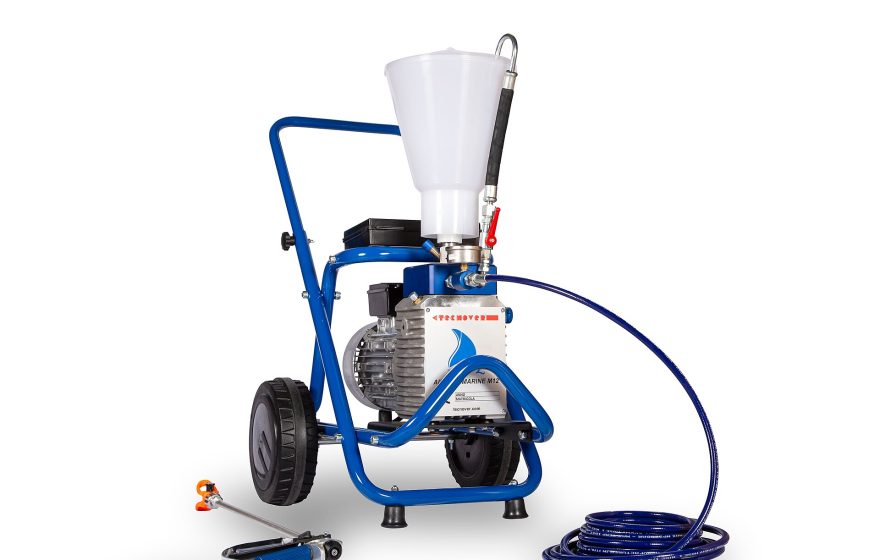
A drum transfer pump, also called a feed pump or supply pump, moves liquid coating material from its shipping container, usually a 55-gallon (208-liter) drum or a tote, to the spray equipment. In plural-component spray systems, two transfer pumps feed the A side (isocyanate) and B side (resin) to the proportioner at a steady inlet pressure. They are an easily overlooked part of the system, but many pressure and ratio problems begin with poor material feed.
Role in a plural-component system
A typical polyurea or foam setup follows this path:
- Drums of A and B components, conditioned to the required temperature.
- Transfer pumps in each drum, pushing material through supply hoses.
- Inlet strainers and gauges at the proportioner.
- Proportioner that meters and heats the components.
- Heated hoses and the impingement mix spray gun.
If a transfer pump cannot keep up, the proportioner starves on that side, causing cavitation and off-ratio material.
Pump types
Piston pumps
Air-operated piston pumps, often with a 2:1 or similar pressure ratio, are common for polyurea and foam drums. They provide positive displacement and handle moderately viscous materials. The pump tube is inserted through the drum bung.
Diaphragm pumps
Air-operated double-diaphragm pumps are versatile and tolerate abrasive or filled materials. They are often used for transferring solvents, resins and filled coatings.
Electric pumps
Electric drum pumps are used where compressed air is limited or for low-viscosity transfer.
Gear and progressive cavity pumps
These are used for very viscous materials and in fixed installations.
Ratios and pressures
The pump ratio describes how much the fluid pressure is multiplied relative to the air pressure supplied to the motor. A 2:1 pump supplied with 100 psi of air can deliver up to about 200 psi fluid pressure at stall. Proportioner manufacturers specify the inlet pressure range they need. Too low starves the proportioner; too high can push material past seals.
Drum accessories
Drum mixers and agitators
B-side resins in many polyurea and foam systems contain pigments, fillers or components that settle. The data sheet often calls for mixing before and during use. Air-driven drum agitators or mixers keep the resin uniform. Inadequate mixing is a common cause of color variation and off-spec film. A-side isocyanates are usually not mixed in the drum because mixing can introduce moisture.
Desiccant dryers
As material is pumped out, air enters the drum. With isocyanate drums, this air must be dried to prevent moisture contamination, which creates crystals and foaming. A desiccant dryer fitted to the drum vent or a nitrogen blanket protects the isocyanate. Replace desiccant when it changes color.
Drum heaters and blankets
Cold material is too viscous to pump and mix. Drum band heaters or insulated heating blankets bring material to the recommended temperature before spraying. Follow the manufacturer’s maximum temperature and avoid localized overheating.
Inlet strainers
Strainers at the proportioner inlet catch debris and gel particles. Check and clean them regularly.
Setup and operation
- Condition drums to the temperature range on the data sheet before setup.
- Mix the B side for the time and method specified.
- Insert pumps and seal the bung openings; fit desiccant dryers to the isocyanate drum.
- Set air pressure to give the inlet pressure the proportioner requires.
- Prime pumps and purge air from supply hoses.
- Monitor inlet gauges during spraying and change drums before they run empty.
- Keep drums upright and on level ground so pumps pick up material fully.
Troubleshooting
| Symptom | Possible cause |
|---|---|
| Low inlet pressure on one side | Cold or viscous material, low air supply, worn pump packings, clogged strainer |
| Pump cycling rapidly without output | Drum empty, suction leak, air in line |
| Pump stalls | Blockage, inlet valve closed, material too cold |
| Crystals in A-side strainer | Moisture contamination; check desiccant |
| Color or cure variation | B side not mixed adequately |
Pressure problems at the pump often show up as ratio problems at the gun; see proportioner troubleshooting.
Maintenance
- Keep pump packings lubricated with the correct throat seal liquid.
- Flush pumps when changing materials or ending a job, using the flushing fluid the manufacturer recommends.
- Store isocyanate pumps filled with material or a suitable fluid, not empty and exposed to air.
- Rebuild pumps on a schedule and keep spare seals on hand.
Safety
- Ground drums and pumps when transferring flammable solvents to prevent static discharge (see fire and explosion hazards).
- Release pressure before removing pumps or fittings.
- Use chemical-resistant gloves and eye protection when handling pumps covered with material.
- Lift and move drums with proper drum handling equipment.
Key terms
- Feed pump. The pump that delivers material from the drum to the proportioner inlet.
- Stick pump. A slender piston pump that inserts through the drum bung.
- Ratio of the pump. The pressure multiplication between air motor and fluid output.
- Desiccant dryer. A cartridge on the drum vent that dries incoming air to protect moisture-sensitive isocyanate.
- Agitator. A mixer that keeps pigmented or filled components uniform in the drum.
Frequently asked questions
Do I need a pump on both drums?
Yes, for most plural-component systems. Each side needs a positive feed to the proportioner.
Can I mix the A side?
Usually not. Mixing isocyanate can introduce moisture. Follow the material data sheet.
Why does my pump work in summer but not winter?
Cold material is thicker. Condition drums before spraying and keep them warm during use (see cold weather coating).
Related entries
- Plural-component spray
- Mixing and induction time
- Spray equipment maintenance
- Proportioner troubleshooting
- Heated hoses for plural-component spray (new)
- Polyurea spray rigs (new)
Educational reference. Coating performance varies by formulation. Always follow the manufacturer’s product data sheet, safety data sheet and your project specification.