Food & Beverage Facility Coatings
Seamless, cleanable floor, wall and ceiling systems that stand up to hot washdowns, sanitizers, food acids and constant traffic while supporting food safety programs.
Key takeaways
- Food and beverage plants need different coatings in different zones: wet processing, dry storage, freezers, packaging and wall and ceiling surfaces.
- Floors in wet processing areas face hot-water and steam washdown, thermal shock, food acids, fats, sanitizers and heavy traffic — conditions where urethane cement often outperforms epoxy.
- Hygiene depends on detailing as much as on chemistry: integral coves, sealed joints, correct slope to drains and no crevices for bacteria.
- Installation must be planned around short shutdowns and the risk of odor taint, which strongly influences material choice.
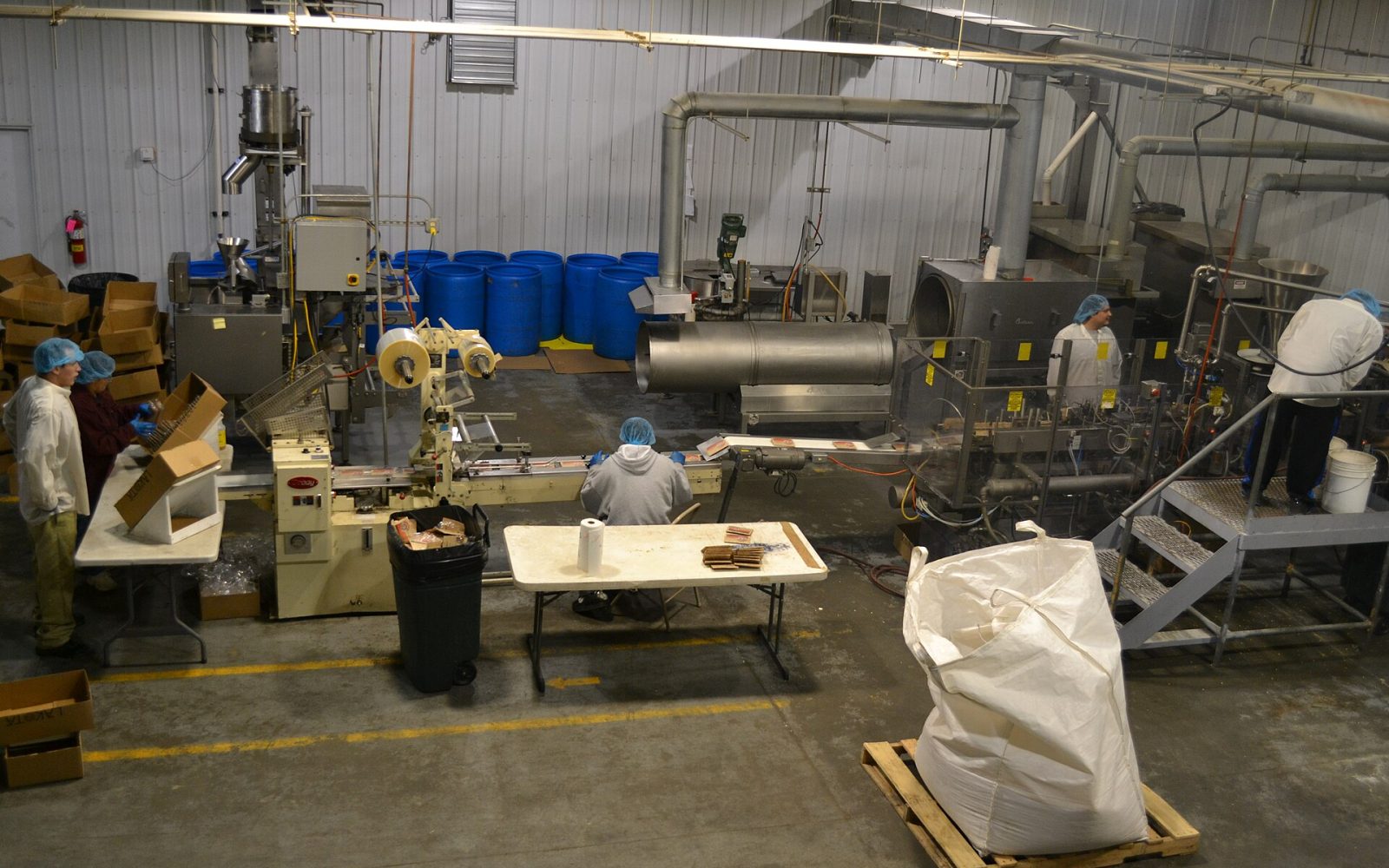
Food and beverage facility coatings protect the floors, walls, ceilings, drains and structural steel of meat and poultry plants, dairies, bakeries, breweries, wineries, beverage bottlers, confectionery plants and commercial kitchens. The surfaces must withstand aggressive daily cleaning and process spills while remaining smooth, seamless and easy to sanitize, so that coatings support rather than undermine food safety programs. A cracked or delaminated floor is not just a maintenance problem: it can harbor bacteria, trap water and lead to audit findings.
Plant zones and their exposures
| Zone | Main exposures | Common floor choices |
|---|---|---|
| Wet processing (meat, poultry, dairy) | Hot water, steam, blood, fats, lactic acid, sanitizers | Heavy-duty urethane cement, textured |
| Breweries and beverage | Hot caustic CIP solutions, sugars, organic acids, thermal shock | Urethane cement; chemical-resistant epoxy or vinyl ester in specific areas |
| Bakery and dry processing | Flour, oils, abrasion, cart traffic | Epoxy or urethane cement, often lighter textures |
| Freezers and coolers | Low temperature, condensation, forklift traffic | MMA or cold-cure systems where downtime is short |
| Warehouses and packaging | Abrasion, forklifts, light spills | Epoxy or polyaspartic systems |
| Commercial kitchens | Grease, hot water, overnight install windows | MMA or urethane cement |
See urethane cement flooring and MMA resin systems for chemistry details, and cold storage and freezer floors for low-temperature areas.
Selecting floor systems
The key questions are temperature, chemistry and downtime:
- Temperature and thermal shock. Standard epoxies have thermal expansion much higher than concrete and can crack or disbond under hot-water floods and steam cleaning. Urethane cement is generally preferred where hot water or steam regularly reaches the floor.
- Chemistry. Organic acids (lactic, acetic, citric), sugars, brines, blood and animal fats are aggressive to many coatings over time. Cleaning chemicals — chlorinated alkaline cleaners, quaternary ammonium compounds, peracetic acid and caustic CIP solutions — add to the exposure. Check resistance data at the actual concentration and temperature.
- Slip resistance. Wet, greasy floors need textured broadcast or troweled finishes. The texture must balance traction against cleanability; too coarse a texture holds soil.
- Downtime. Urethane cement usually needs around a day to return to service, epoxy longer, and MMA only hours.
Strong-smelling materials such as MMA can taint food, packaging and ingredients, even in adjacent rooms connected by drains or air handling. When using them, empty or seal off production and storage areas and coordinate with the plant’s quality team before work begins.
Hygienic detailing
Details at edges and transitions are where most sanitation problems start.
- Integral coves. Floor coatings should turn up walls, curbs and equipment plinths in a radiused cove, commonly about 4–6 in (100–150 mm) high, eliminating the floor–wall corner where debris collects.
- Drains. Trench and point drains should be stainless steel and set so the floor finishes flush, with the coating anchored into keyways around them.
- Slope. Floors must fall to drains without ponding; correcting slope is often part of the floor project.
- Joints. Moving joints are carried through the system and sealed with chemically resistant flexible sealants that are inspected and replaced as part of maintenance.
- Penetrations. Pipes, conduits and anchor bolts are sealed so water cannot travel beneath the coating.
Walls, ceilings and structural steel
Walls in processing rooms are typically finished with high-build epoxy, polyurethane or reinforced resin systems over concrete, block or board, or with prefinished panels. Masonry block needs filler coats to close pores before topcoating — see coating masonry and concrete block. Ceilings and overhead steel must resist condensation and must not flake into product, so coatings over steel need sound preparation and good adhesion. Mold-resistant formulations are common in humid rooms, though no coating replaces cleaning and ventilation.
Coatings that directly contact food, such as linings in process equipment or bins, are a separate category and are usually formulated to comply with U.S. FDA regulations such as 21 CFR 175.300. Floor and wall coatings are not food-contact surfaces in that sense, but they must still be cleanable, durable and suitable for the plant’s sanitation program.
Installation planning
- Survey and test. Map exposures, temperatures and traffic for each room. Test concrete for moisture and contamination — oil- and fat-soaked slabs are common in older plants.
- Plan phasing. Divide the work to fit shutdowns, holidays or weekend windows, with temporary barriers and dust control.
- Prepare thoroughly. Remove failed coatings and contaminated concrete by shot blasting, scarifying or grinding; see concrete surface preparation.
- Install and detail. Install keyways, coves and drain terminations along with the main floor system.
- Clean before restart. Allow full cure, then clean and sanitize per the plant’s procedures before food production resumes.
Involve the plant’s sanitation and quality teams in specification. They know which chemicals, temperatures and cleaning methods are actually used — often harsher than the design brief suggests.
Frequently asked questions
Is epoxy suitable for food plant floors?
Yes, in dry or moderate areas such as warehouses, packaging and some bakery zones. In wet processing areas with hot water, steam and thermal shock, urethane cement is generally more durable.
Do antimicrobial floor coatings make floors sanitary?
Some coatings contain additives intended to inhibit microbial growth on the coating itself, but they do not replace cleaning and sanitation. A seamless, intact floor with proper drainage matters far more.
How long does a food plant floor last?
Well-designed heavy-duty systems commonly last many years, but life depends on thickness, traffic, chemicals, temperature and joint and drain maintenance.
Educational reference. Coating performance varies by formulation. Always follow the manufacturer’s product data sheet, safety data sheet and your project specification.