Silicone High-Heat Coatings
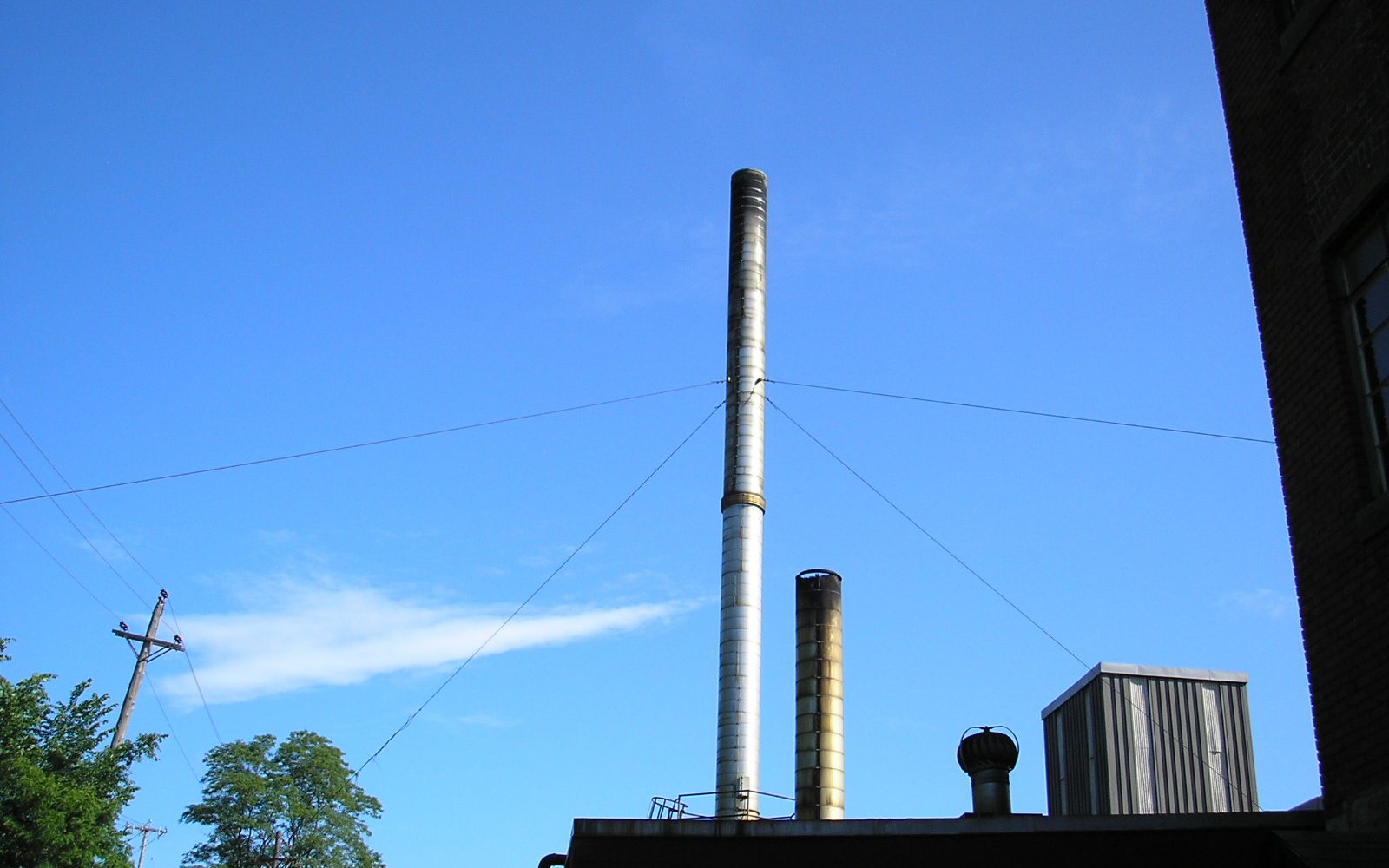
Silicone resin coatings protect stacks, exhausts, boilers and hot piping at temperatures that would char or blister ordinary organic paints.
Key takeaways
- Silicone coatings use a silicon–oxygen resin backbone that withstands far higher temperatures than carbon-based binders.
- Pigment choice largely sets the temperature limit: aluminum-pigmented silicones typically go highest, while colored grades are lower.
- Films must be thin. Excessive thickness is the most common cause of cracking and flaking on heat-up.
- Many silicones only develop full hardness after the first heat cycle, so handling and scheduling must allow for that.
Ordinary epoxies and urethanes soften, discolor and break down when steel runs hot for long periods. For surfaces such as boiler casings in power plants, stacks, flues, furnace exteriors, engine exhausts, mufflers, heat exchangers and hot process piping, specifiers turn to silicone-based heat-resistant coatings.
These coatings are not designed to be decorative or heavy-duty barrier films. Their job is to stay attached and provide a degree of corrosion protection while the steel cycles between ambient and high temperature, often for years.
How silicone resins work
Silicone resins have a backbone of alternating silicon and oxygen atoms (Si–O–Si) with organic groups, typically methyl and phenyl, attached to the silicon. The Si–O bond is considerably more stable than the carbon–carbon bonds in most organic resins, so the binder resists oxidation and thermal breakdown. Phenyl groups improve heat stability and compatibility with other resins; methyl groups add flexibility and hardness.
Many silicone coatings are solvent-borne and dry to handle by evaporation, but the resin only fully cross-links through condensation reactions at elevated temperature, often around 400 °F (205 °C) or above. Until then, the film can be soft and solvent-sensitive. Some newer formulations cure at ambient temperature through moisture-reactive alkoxy groups, giving a more robust film before start-up.
At very high temperatures, the organic side groups burn away, leaving a largely inorganic silica matrix bound together with the pigment. This is why aluminum flake, which fuses into a protective metal-silica layer, gives the highest temperature ratings.
Types and temperature ranges
| Type | Typical upper limit (dry heat) | Notes |
|---|---|---|
| Silicone-modified alkyd or acrylic | About 400–500 °F (205–260 °C) | Ambient cure; wider color range |
| Colored or black silicone | About 500–1,000 °F (260–540 °C) | Limit varies by pigment |
| Aluminum-pigmented silicone | About 1,000–1,200 °F (540–650 °C) | Highest rating; often over zinc silicate |
| Inert multipolymer or ceramic-filled hybrid | Often up to about 1,200 °F (650 °C) | Formulated for thermal cycling and use under insulation |
These figures are typical ranges for continuous dry heat. Each product data sheet states its own limits, including any peak temperature, and whether it is suitable for cyclic or insulated service. For filled high-temperature systems, see ceramic and ceramic-filled coatings.
Primers and system design
Silicone coatings can be applied directly to blast-cleaned steel or over a compatible primer. The most common high-temperature primer is inorganic zinc silicate, which tolerates heat to roughly 750 °F (400 °C) and adds galvanic protection during shutdowns and humid periods. Above that range, many specifiers apply the silicone direct to steel. Organic primers such as standard epoxies are generally unsuitable where temperatures exceed their ratings.
Surface preparation is typically abrasive blasting to SSPC-SP 10/NACE No. 2 near-white metal or better, with a modest, sharp profile. Thin silicone films cannot cover heavy rust, mill scale or old paint, which will fail as soon as the substrate heats.
Corrosion under insulation
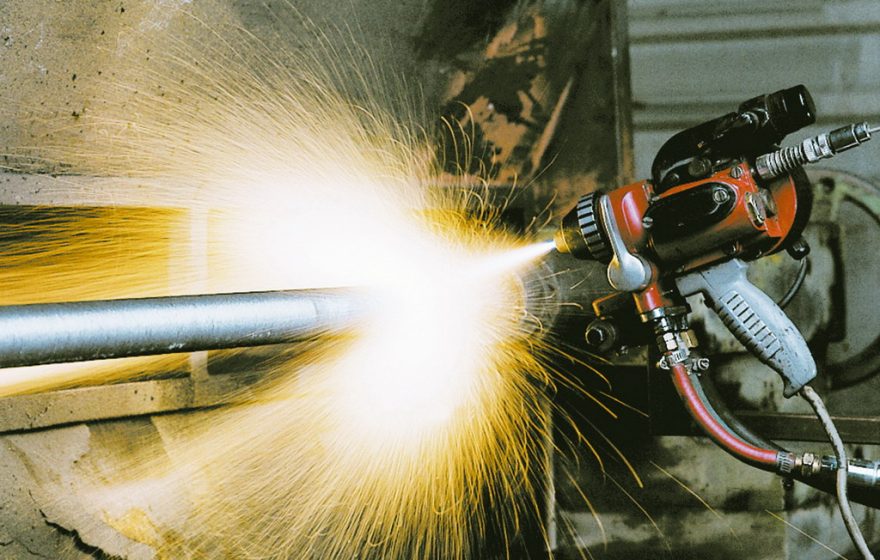
Insulated piping and vessels operating in roughly the 120–350 °F (50–175 °C) range are especially vulnerable to corrosion under insulation (CUI), because water trapped in the insulation is repeatedly heated and concentrated. Thermal cycling also stresses coatings. Purpose-designed high-temperature hybrids and thin-film epoxy novolacs, along with thermal spray aluminum, are widely used here; NACE SP0198 provides industry guidance on controlling CUI.
Advantages and limitations
Advantages
- Withstand temperatures far beyond organic coatings
- Resist thermal cycling when applied thinly
- Aluminum grades offer good heat reflectance and appearance
- Single-component, simple to apply
Limitations
- Many need heat to cure; soft and fragile before start-up
- Limited barrier protection at ambient temperatures
- Cracking or flaking if applied too thick
- Poor recoatability; low surface energy resists other paints
- Silicone contamination can cause defects in nearby painting
Application and heat-up
Most silicone heat-resistant coatings are applied at about 1–1.5 mils (25–40 µm) dry per coat, usually in one or two coats. Exceeding the maximum film thickness traps solvent and creates internal stress; when the steel heats, the film can blister, crack or delaminate. Brush and roller can be used on small areas, but spray gives the most uniform thin film.
- Prepare. Blast clean, remove dust and confirm surface temperature is within the application range.
- Apply thin. Use wet film gauges constantly to stay within the specified range.
- Allow to dry. Observe the minimum drying time before handling, insulation or start-up.
- Heat up gradually. Follow the ramp rate on the data sheet; some smoke and odor is normal during the first heat cycle as the resin cures.
- Inspect after cure. Look for cracking, blistering or bare areas after the first heat cycle.
Silicone overspray and residue are a classic cause of fisheyes and cratering in other coatings. Keep silicone application away from shops and equipment used for organic coatings, and clean tools separately.
Ventilation is important during the first heat cycle, because residual solvent and decomposition products are released. Follow the safety data sheet and site requirements.
Maintenance and touch-up
Touch-up of silicone coatings is easiest during a shutdown, with the steel cool. Damaged areas are cleaned back to sound coating and bare steel, usually by power tool or spot blasting, and recoated with the same product. New silicone generally bonds poorly to aged, fully cured silicone, so light abrasion and thorough cleaning are important, and some manufacturers recommend a specific primer or touch-up procedure. Where frequent damage occurs, a tougher system or thermal spray aluminum may be a better long-term answer.
Frequently asked questions
Why is my high-heat coating still soft after a week?
Many silicone coatings do not fully cure until heated, often to around 400 °F (205 °C). The data sheet will say whether the product is heat-cure or ambient-cure.
Can I apply silicone coatings to hot steel?
Some products are designed for application to hot surfaces within a stated range; most are not. Check the data sheet before applying to operating equipment.
Are silicone coatings the same as polysiloxane topcoats?
They share the Si–O backbone, but polysiloxane topcoats are hybrid ambient-cure finishes for weathering, not dedicated high-heat coatings.
Educational reference. Coating performance varies by formulation. Always follow the manufacturer’s product data sheet, safety data sheet and your project specification.