Solvent Cleaning (SSPC-SP 1)
Why removing oil, grease and soil is the first step of almost every surface preparation job, which cleaning methods SSPC-SP 1 allows, and how to verify the result.
Key takeaways
- SSPC-SP 1 covers removal of visible oil, grease, soil, drawing and cutting compounds and other soluble contaminants before coating or before other surface preparation.
- Despite its name, SP 1 allows not just solvents but also alkaline and emulsion cleaners, detergents, steam and vapor degreasing.
- It should come before blasting or tool cleaning, which spread oil rather than remove it.
- Poor rag technique simply redistributes contamination. Use clean rags, change them often and finish with a clean wipe.
- Solvents are flammable and toxic. Ventilate, control ignition sources and follow the SDS.
Solvent cleaning is the removal of oil, grease, dirt, soil, drawing and cutting compounds and similar contaminants from a surface using solvents, cleaning compounds, steam or other cleaning agents. In the SSPC system it is SSPC-SP 1, Solvent Cleaning, and it is the starting point for nearly every other preparation standard. Most hand tool, power tool and blast-cleaning standards assume that visible oil and grease have already been removed according to SP 1.
SP 1 does not remove rust, mill scale or old paint, and it is not intended to. Its job is to remove contaminants that would interfere with adhesion and that other methods would spread around rather than eliminate.
Why solvent cleaning comes first
- Blasting spreads oil. Abrasive blasting does not reliably remove oil and grease. It smears them across the surface, drives them into the profile and contaminates abrasive that may then be recycled across the job.
- Tools smear contaminants. Wire brushes, sanders and grinders load up with grease and spread it.
- Coatings will not wet oily surfaces. Even thin oil films cause poor adhesion, fisheyes and cratering and early delamination.
- Invisible films matter. Fingerprints, silicone release agents and fabrication lubricants may be hard to see yet still prevent bonding.
Cleaning methods permitted by SP 1
| Method | Good for | Watch-outs |
|---|---|---|
| Solvent wiping, brushing or spraying | Small areas, spot cleaning, field work | Spreads oil if rags are reused; flammability; VOC limits |
| Immersion and vapor degreasing | Shop work on parts and fabrications | Equipment and solvent controls; regulatory restrictions on some solvents |
| Alkaline cleaners | Heavy oils, greases and soils on steel | Thorough rinsing required; strong alkalis attack aluminum, zinc and galvanizing |
| Emulsion cleaners and detergents | General degreasing with water rinse | Residue must be fully rinsed off |
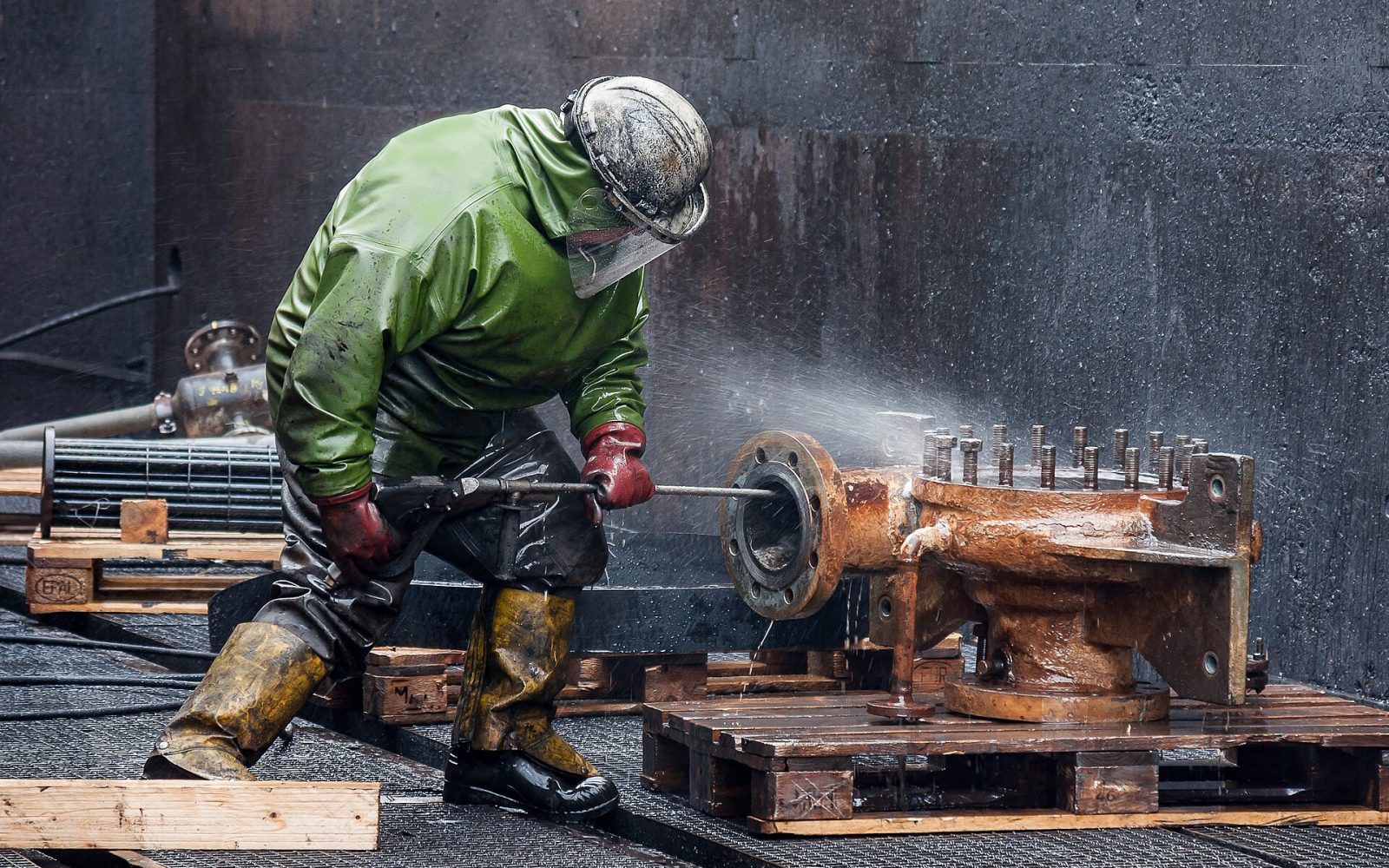
| Steam cleaning (with or without detergent) | Large areas, heavy deposits, equipment | Rinse and dry before coating |
Whatever the method, any residue from the cleaner itself must be removed, usually with a clean-water or fresh-solvent rinse, and the surface must be allowed to dry.
Choosing a cleaner
Match the cleaner to the contaminant, the substrate and the conditions on site:
- Contaminant. Light oils dissolve readily in mineral spirits or naphtha. Heavier greases, waxes and some compounds may need stronger solvents, alkaline cleaners or heat.
- Substrate. Strong alkaline cleaners can etch aluminum and attack zinc, so choose products suited to galvanized and non-ferrous metals; see preparing galvanized steel. Some solvents attack plastics, composites and existing coatings.
- Evaporation and residue. Fast solvents flash quickly but can leave dissolved oil behind as they evaporate; slower solvents need more drying time. See solvents in coatings.
- Regulation and safety. VOC limits, workplace exposure limits, flash point and disposal requirements may rule some solvents out.
- Compatibility. Some coating manufacturers specify a particular cleaner or thinner, and some prohibit products that leave a film.
Procedure
- Remove gross deposits. Scrape off heavy grease, mud and soil before using any cleaner.
- Apply the cleaner. Wipe, brush, spray or steam, working from cleaner areas toward dirtier ones where possible.
- Wipe with clean rags. Fold rags and turn to a clean face often, and replace them frequently. A common practice is to wet the surface with one rag and wipe it dry with a second, clean rag.
- Rinse. After alkaline, emulsion or detergent cleaning, rinse thoroughly with clean water to remove residues.
- Final wipe and dry. Finish with fresh solvent and clean rags, or allow rinse water to dry completely.
- Verify. Inspect and test the surface before moving on to mechanical preparation or coating.
Use clean, lint-free rags and keep solvent in a clean container. A rag dipped repeatedly into a bucket soon carries a solution of oil that is wiped straight back onto the steel.
Verifying cleanliness
SP 1 is primarily a visual standard, but simple checks help find films the eye misses:
- Visual inspection under good lighting, looking for sheen, stains and residues.
- White-cloth wipe. A clean white cloth, rubbed on the surface, shows oil and soil as discoloration.
- Water-break test. On a clean surface, a thin film of water stays continuous. Beading or breaking into islands suggests a hydrophobic film such as oil or silicone.
- Ultraviolet light. Many oils and greases fluoresce under UV (“black light”), which makes residues visible. Not all contaminants fluoresce, so a clean result does not prove the absence of oil.
These checks are typically recorded on inspection reports along with the method and cleaner used.
Limitations
- SP 1 does not remove rust, mill scale or old coatings; follow it with hand, power tool or blast cleaning as specified.
- It does not reliably remove soluble salts such as chlorides; these need water washing and specific testing.
- Porous substrates such as concrete and wood absorb oil, which may need repeated cleaning, specialist cleaners or removal of the contaminated layer.
Health and safety
Many cleaning solvents are flammable, and their vapors can form explosive mixtures in enclosed spaces. Control ignition sources, ground and bond containers when transferring flammable liquids, provide ventilation and monitor atmospheres in confined spaces; see fire and explosion hazards. Solvents can also cause dizziness, skin irritation and longer-term health effects, so use the gloves, eye protection and respiratory protection that the safety data sheet specifies. Store solvent-soaked rags in closed, approved metal containers and dispose of used solvent and rags as the regulations require. Follow your employer’s safety program and local regulations.
Frequently asked questions
Does solvent cleaning have to be done before abrasive blasting?
Yes, where oil, grease or similar contamination is present. Blasting spreads oil rather than removing it, and contaminated abrasive can carry it to other areas.
Can I use water-based cleaners under SP 1?
Yes. SP 1 allows alkaline cleaners, emulsion cleaners, detergents and steam as well as solvents, provided residues are rinsed off and the surface is dried.
Does SP 1 remove rust?
No. SP 1 removes oil, grease, soil and similar contaminants only. Rust, mill scale and old coatings require mechanical or blast cleaning.
How do I know the surface is clean enough?
Inspect visually, then use a white-cloth wipe, a water-break test or UV light where appropriate. The specification may set additional requirements.
Educational reference. Coating performance varies by formulation. Always follow the manufacturer’s product data sheet, safety data sheet and your project specification.