Preparing Galvanized Steel for Coating
Paint adhesion on galvanized steel depends on the condition of the zinc surface. Learn how to assess it and clean, sweep blast or chemically treat it without destroying the zinc layer.
Key takeaways
- Galvanized surfaces change with age, from smooth, reactive new zinc to a stable weathered patina, and the right preparation depends on which condition you have.
- ASTM D6386 is the main guide for preparing hot-dip galvanized surfaces for painting; SSPC-SP 16 defines a brush-off (sweep) blast for galvanized and non-ferrous metals.
- Sweep blasting should roughen and clean the surface while removing as little zinc as possible.
- Remove oils, wet storage stain and loose zinc salts, and avoid alkyd primers directly on zinc because they can saponify.
Hot-dip galvanizing protects steel for decades on its own, but owners often paint it for color, for added protection in aggressive environments, or to extend service life in a duplex system. Galvanized steel is also notorious for paint peeling in sheets. In nearly every case, the cause is surface preparation, not the paint itself.
This article focuses on preparing the zinc surface. For how the galvanized layer itself is produced, see hot-dip galvanizing.
Why galvanized steel is hard to paint
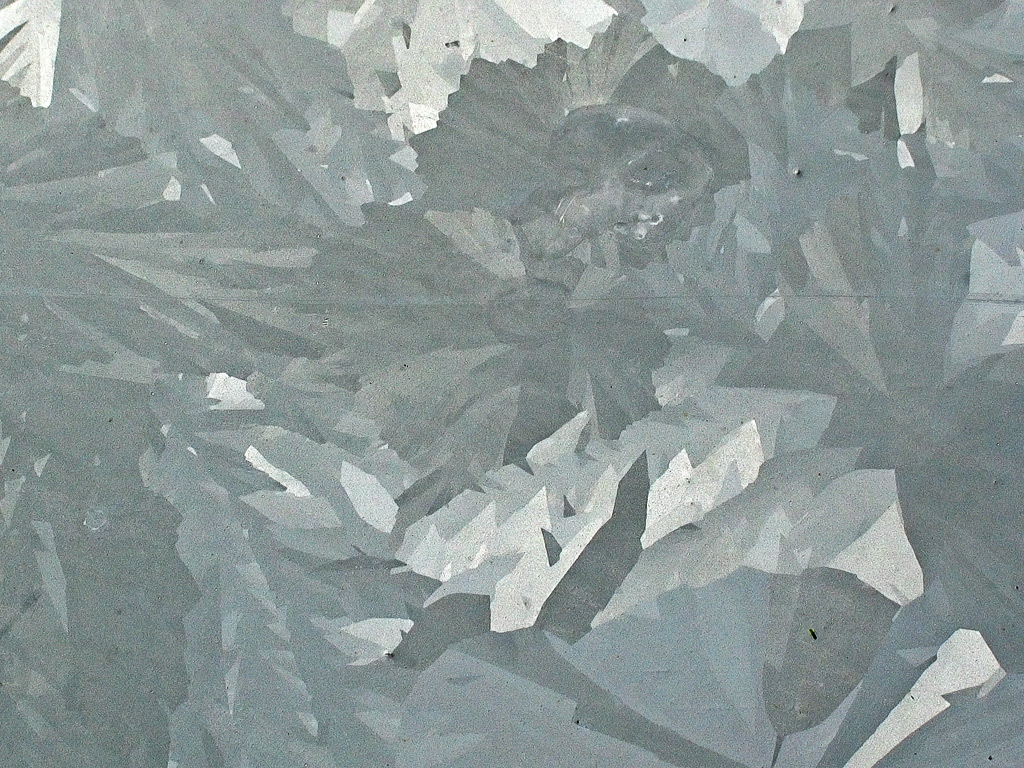
A fresh galvanized surface is smooth, dense and chemically active. Several features work against adhesion:
- Low profile. New zinc is relatively smooth and offers little mechanical anchorage.
- Surface treatments. Galvanizers may quench parts in water or a passivating solution to prevent wet storage stain. Some treatments, and any oils, interfere with adhesion.
- Reactive zinc oxides and hydroxides. As zinc begins to weather, it forms loose, powdery oxides and hydroxides before settling into a stable zinc carbonate patina. Paint applied over this unstable layer bonds to something that is still changing.
- Alkalinity. Zinc surfaces are mildly alkaline and react with oil-based binders, causing saponification of alkyds.
- Surface defects. Drips, runs, dross inclusions and high spots from the galvanizing bath can protrude through coatings.
Assess the surface condition
ASTM D6386 groups galvanized surfaces by condition and recommends preparation for each. In general terms:
| Condition | Typical appearance | Common preparation |
|---|---|---|
| Newly galvanized | Bright to light gray, smooth; may be oily or passivated | Degrease, then sweep blast or apply an approved chemical pretreatment |
| Partially weathered | Dull gray with white powdery oxides | Remove loose oxides and contaminants, then sweep blast or pretreat |
| Fully weathered | Uniform matte gray patina, usually after a year or more outdoors | Clean (pressure wash), remove contaminants; profile if required |
| Wet storage stain | Bulky white or gray deposits in stacked or bundled parts | Remove deposits mechanically; assess remaining zinc thickness |
Weathering time varies widely with climate and exposure, so judge the surface rather than the calendar. If the history is unknown, treat the surface as partially weathered and test a patch.
Preparation methods
Cleaning
Every method starts with removing oils, grease, soil and loose zinc salts. Use alkaline cleaners or solvent cleaning per SSPC-SP 1, followed by a thorough fresh-water rinse. Pressure washing is effective for weathered surfaces.
Sweep blasting (SSPC-SP 16)
SSPC-SP 16 defines brush-off blast cleaning of coated and uncoated galvanized steel, stainless steel and non-ferrous metals. The surface must be free of visible contaminants and loose material, and the blast must leave a measurable profile. Practical guidance from ASTM D6386 and industry practice:
- Use a fine, non-metallic abrasive such as aluminum oxide, garnet or fine mineral grit (see abrasive media selection).
- Reduce nozzle pressure, often to roughly 40–60 psi (275–415 kPa), and hold the nozzle farther back than for steel.
- Angle the nozzle, often around 30–60° to the surface, and keep it moving to avoid eroding the zinc.
- Remove only the outermost zinc surface layer. Measure zinc thickness before and after with a magnetic gauge.
Chemical pretreatments
Where blasting is impractical, phosphate conversion treatments, acrylic passivation solutions or other pretreatments approved by the coating manufacturer can improve adhesion. ASTM D6386 discusses these options. Older wash primers containing chromates are now restricted in many applications for health and environmental reasons.
Hand and power tool methods
Light abrading with non-woven pads or sanding is used for small areas or touch-up. Wire brushing can burnish rather than roughen zinc and is generally a poor substitute for sweep blasting.
Ask the galvanizer before fabrication whether parts will be quenched or passivated, and request no post-treatment if the steel will be painted. It is far easier than removing a treatment later. The galvanizer can also smooth drips and high spots while the part is still in their shop.
A typical preparation sequence
- Inspect. Identify the surface condition, wet storage stain, drips, runs, dross and damaged areas. Record zinc thickness.
- Smooth defects. Grind high spots, drips and runs flush without reducing the zinc below the specified minimum.
- Clean. Degrease and rinse; remove loose oxides and wet storage stain.
- Profile or pretreat. Sweep blast per SSPC-SP 16 or apply an approved chemical pretreatment.
- Remove dust. Blow down with clean, dry air and confirm no abrasive is embedded in the zinc.
- Coat promptly. Apply the primer before new oxides form, typically the same day; consult the product data sheet for limits.
Powder coating over galvanizing
Powder coatings bring an extra hazard: gas trapped in the zinc layer can escape during the curing bake and blister the film. ASTM D7803 covers preparing galvanized surfaces for powder coating and addresses outgassing, commonly through a preheat step and powders formulated for galvanized substrates. Follow the powder manufacturer’s guidance.
Common mistakes
- Applying alkyd or other oil-based primers directly to zinc.
- Over-blasting with coarse abrasive at full pressure, stripping most of the zinc.
- Painting new galvanizing without removing oils or passivation.
- Coating over white rust or loose zinc salts.
- Leaving damaged zinc unrepaired; damaged areas are commonly repaired per ASTM A780 before overcoating.
Grinding, cutting or welding galvanized steel produces zinc oxide fumes that can cause metal fume fever. Use local exhaust ventilation and the respiratory protection your safety program requires.
Frequently asked questions
Why does paint peel off galvanized steel?
Usually because of oils, passivation treatments, loose zinc salts, a smooth surface or alkyd paint saponifying on the zinc. Proper cleaning, a light profile or pretreatment, and a compatible primer prevent most failures.
Should I wait for galvanizing to weather before painting?
Not necessarily. New galvanizing can be painted successfully with correct cleaning and sweep blasting or pretreatment. Partially weathered surfaces are often the hardest to prepare, because the oxides are unstable.
Is vinegar a good pretreatment for galvanized steel?
Household acid treatments are not recognized industry methods and can leave residues. Use the cleaning and pretreatment methods described in ASTM D6386 and approved by the coating manufacturer.
What primers work on galvanized steel?
Commonly epoxy, polyamide-cured epoxy, acrylic and certain urethane primers designed for zinc surfaces. Confirm suitability on the product data sheet.
Educational reference. Coating performance varies by formulation. Always follow the manufacturer’s product data sheet, safety data sheet and your project specification.