UV- & EB-Curable Coatings
UV- and electron-beam-curable coatings harden in seconds under radiation instead of drying or reacting slowly, delivering fast, low-VOC finishes for factory lines and a growing set of field uses.
Key takeaways
- UV- and EB-curable coatings polymerize almost instantly when exposed to ultraviolet light or a beam of electrons, rather than drying by evaporation or curing slowly by chemical reaction.
- Most systems are free-radical acrylate chemistry; a smaller group uses cationic epoxy chemistry.
- UV cure needs photoinitiators and direct line-of-sight exposure; EB needs no photoinitiator and cures pigmented films, but requires shielded, capital-intensive equipment.
- They dominate factory finishing of wood flooring, cabinetry, plastics, printing and optical fiber, and are increasingly used in the field for floors and pipe lining.
Radiation-curable coatings are liquids that stay liquid until energy is delivered to them. Once exposed to ultraviolet (UV) light or an electron beam (EB), reactive resins link into a cross-linked film within a fraction of a second to a few seconds. There is no oven, no flash-off period and, in most formulations, very little solvent.
That combination of speed, compact equipment and low emissions explains why radiation curing has become standard on many industrial finishing lines. It also explains its main constraint: the coating only cures where enough energy reaches it, so part geometry, film thickness and pigmentation all matter.
How radiation curing works
In a UV-curable coating, a photoinitiator absorbs UV energy and breaks into reactive fragments (free radicals or, in cationic systems, strong acids). These start a chain reaction that links the acrylate double bonds of the oligomers and monomers into a network. The mechanism is a type of addition polymerization, covered more broadly in How Coatings Cure.
In an EB-curable coating, high-energy electrons directly generate radicals in the resin, so no photoinitiator is needed. Because electrons penetrate pigments and fillers that would block UV light, EB is well suited to heavily pigmented or opaque films, laminating adhesives and packaging inks.
Free-radical acrylate systems are inhibited by atmospheric oxygen at the surface, which can leave a tacky top layer. Formulators counter this with higher photoinitiator levels, amine synergists or more intense lamps, while EB lines and some UV lines blanket the cure zone with nitrogen. Cationic epoxy systems are not oxygen-inhibited and continue to cure for a period after exposure (“dark cure”), but they can be sensitive to humidity.
Formulation components
| Component | Typical examples | Role |
|---|---|---|
| Oligomers | Epoxy acrylates, urethane acrylates, polyester acrylates | Backbone; set hardness, flexibility, chemical and weather resistance |
| Reactive monomers (diluents) | Mono-, di- and multifunctional acrylates | Reduce viscosity and become part of the film; functionality affects crosslink density |
| Photoinitiators | Radical or cationic types matched to lamp output | Absorb UV and start polymerization (not needed for EB) |
| Additives | Matting agents, flow aids, wax, abrasion-resistant fillers | Control gloss, leveling, slip and wear |
| Pigments | Selected for low UV absorption where possible | Color and hiding; heavy loadings limit UV depth of cure |
Most products are formulated at or near 100% solids, though waterborne UV dispersions are used where a thin, low-viscosity film is needed, for example on wood cabinetry. Waterborne types must be dried before exposure so that water does not interfere with cure.
UV versus electron beam
| Factor | UV curing | EB curing |
|---|---|---|
| Energy source | Mercury arc, microwave or LED lamps | Electron accelerator |
| Photoinitiator | Required | Not required |
| Pigmented and thick films | Limited by light penetration | Good, within beam penetration depth |
| Atmosphere | Air or nitrogen | Usually nitrogen-inerted |
| Equipment cost | Lower; portable units exist | High; needs radiation shielding |
| Typical setting | Factory lines and some field work | High-volume factory lines only |
Lamps and LEDs
Traditional medium-pressure mercury lamps emit a broad UV spectrum and generate heat and ozone. UV LED arrays emit a narrow band, commonly around 365–405 nm, run cooler, switch on instantly and contain no mercury. LED curing requires photoinitiators matched to that narrow output, so a coating designed for mercury lamps will not necessarily cure under LEDs.
Where UV and EB coatings are used
- Wood: prefinished hardwood flooring, cabinetry and furniture, where roller or vacuum application on flat stock suits line-of-sight curing. See Coating Wood.
- Plastics and electronics: hard coats on polycarbonate lenses and headlamps, conformal coatings and display films. See Coating Plastics.
- Printing and packaging: inks, overprint varnishes and laminating adhesives, often EB-cured.
- Optical fiber and coil: very high line speeds where seconds of cure time matter.
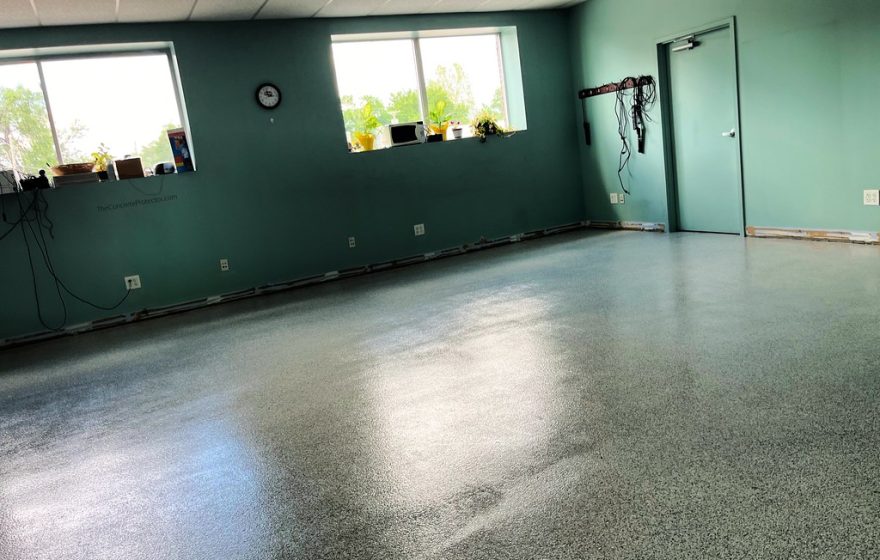
- Field floors: walk-behind UV curing units allow clear and pigmented topcoats on concrete floors to return to service almost immediately.
- Pipe rehabilitation: UV-cured glass-fiber liners pulled into sewers and cured with a lamp train.
Advantages and limitations
Advantages
- Cure in seconds; parts can be stacked or packed immediately
- Very low VOC in 100% solids formulations, easing VOC compliance
- Small floor footprint and low energy use compared with thermal ovens
- Long pot life: material does not cure in the container without light
- High hardness, scratch and stain resistance
Limitations
- UV cures only where light reaches; shadowed areas and complex shapes are difficult
- Thick or heavily pigmented films are hard to cure through with UV
- Higher shrinkage on cure can reduce adhesion to some substrates
- Uncured acrylates are skin sensitizers
- EB equipment is expensive and limited to large plants
Process control and testing
Cure depends on the energy delivered, so lines are controlled by measuring irradiance (intensity, mW/cm²) and dose (energy density, mJ/cm²) with a radiometer at the cure surface. Lamp aging, dirty reflectors, conveyor speed changes and film thickness drift all reduce effective dose. Under-cure often shows as tackiness, poor solvent resistance or reduced adhesion; over-cure can make films brittle.
Practical checks include solvent rub testing under ASTM D5402, cross-cut adhesion under ASTM D3359, and hardness and abrasion testing. See Testing Coating Cure for methods and their limits.
Log radiometer readings at every shift start and after any lamp change. Comparing dose to the value on the product data sheet catches lamp decay long before customers see soft or poorly bonded finishes.
Health and safety
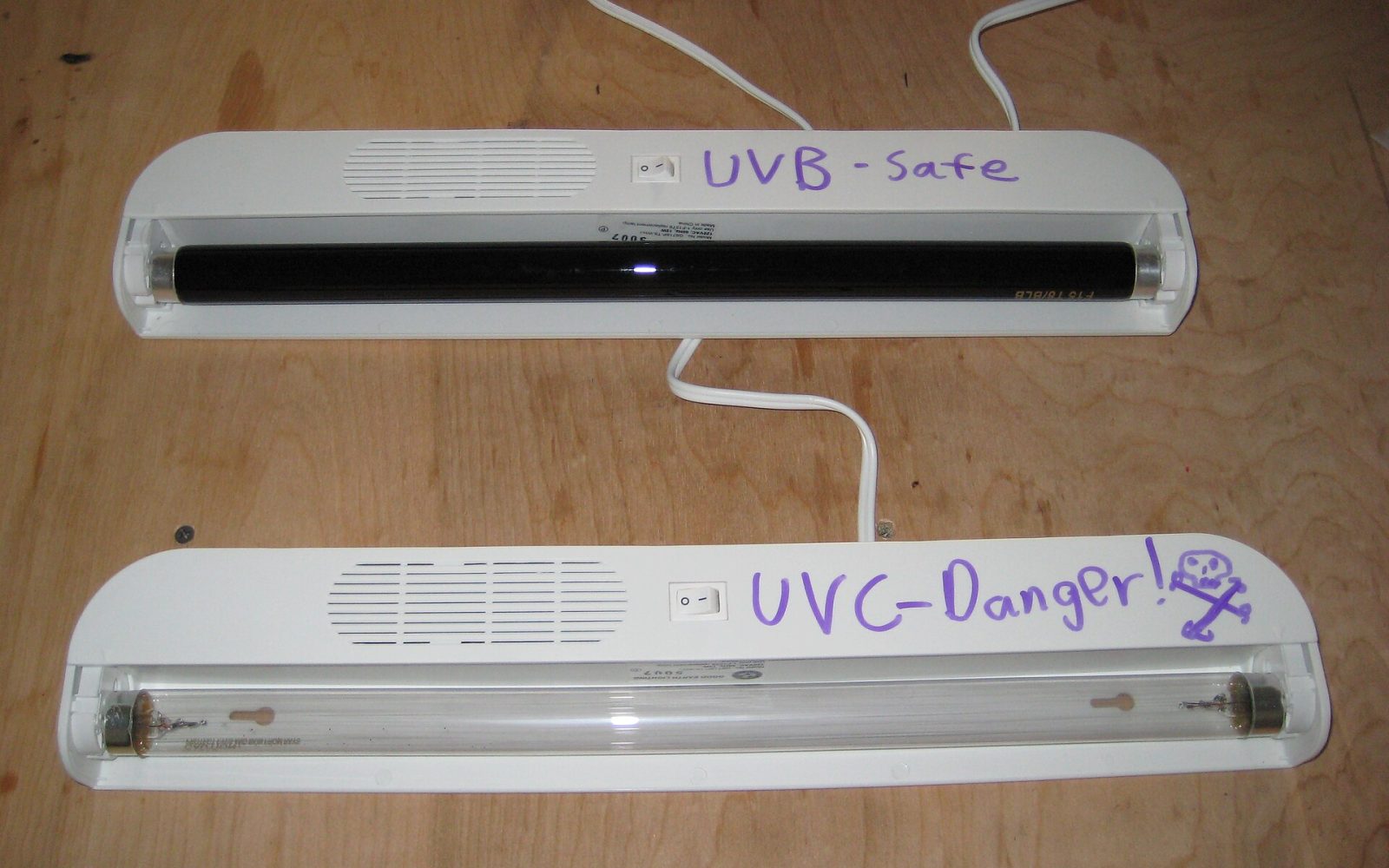
Uncured acrylate monomers and oligomers can cause skin irritation and allergic sensitization, so gloves suitable for acrylates, sleeves and eye protection are standard, and contaminated surfaces should be cleaned promptly. UV lamps can burn skin and eyes, so lamp housings must be shielded and interlocked. Mercury lamps can generate ozone that must be exhausted, and EB units produce X-rays that are contained by built-in shielding. Follow the SDS and equipment manufacturer’s guidance; see PPE for Coating Applicators.
Never look at an operating UV lamp or LED array without UV-rated eye protection. Some LED units emit little visible light, so a lamp can be on even when it does not look bright.
Frequently asked questions
Can UV-curable coatings be used outdoors?
Yes, with suitable chemistry. Aliphatic urethane acrylates with UV absorbers are used for exterior plastics and some floor topcoats, but aromatic epoxy acrylates tend to yellow and chalk in sunlight.
What happens to areas the light does not reach?
In free-radical systems they generally stay uncured. Dual-cure products add a secondary moisture or thermal cure to address shadowed areas, and EB or cationic systems can help in some cases.
Do UV coatings contain solvent?
Most are 100% solids, with reactive monomers acting as the diluent. Some waterborne and solvent-reduced versions exist for thin, low-viscosity applications.
Is a UV LED lamp interchangeable with a mercury lamp?
Not automatically. LEDs emit a narrow wavelength band, so the coating’s photoinitiator package must be designed for it. Check the product data sheet before switching.
Educational reference. Coating performance varies by formulation. Always follow the manufacturer’s product data sheet, safety data sheet and your project specification.