Dehumidification & Climate Control
How desiccant and refrigerant dehumidifiers, heaters and ventilation create controlled conditions for blasting and coating — holding the blast, preventing condensation and keeping schedules on track.
Key takeaways
- Climate control uses dehumidifiers, heaters and ventilation to keep surfaces above the dew point and within coating temperature limits.
- Desiccant dehumidifiers work well in cool and cold conditions; refrigerant units are efficient in warm, humid air.
- Controlled humidity lets blasted steel “hold the blast” without flash rusting, so blasting and coating need not happen on the same shift.
- Ventilation for worker safety and flammable vapor control must be maintained alongside humidity control.
Weather is the biggest uncontrolled variable on most coating projects. Rain, fog, dew, cold and heat routinely stop work and can compromise blasted surfaces and fresh coatings. Climate control turns an enclosure, a tank or a containment into a controlled workspace where temperature and humidity are managed instead of tolerated.
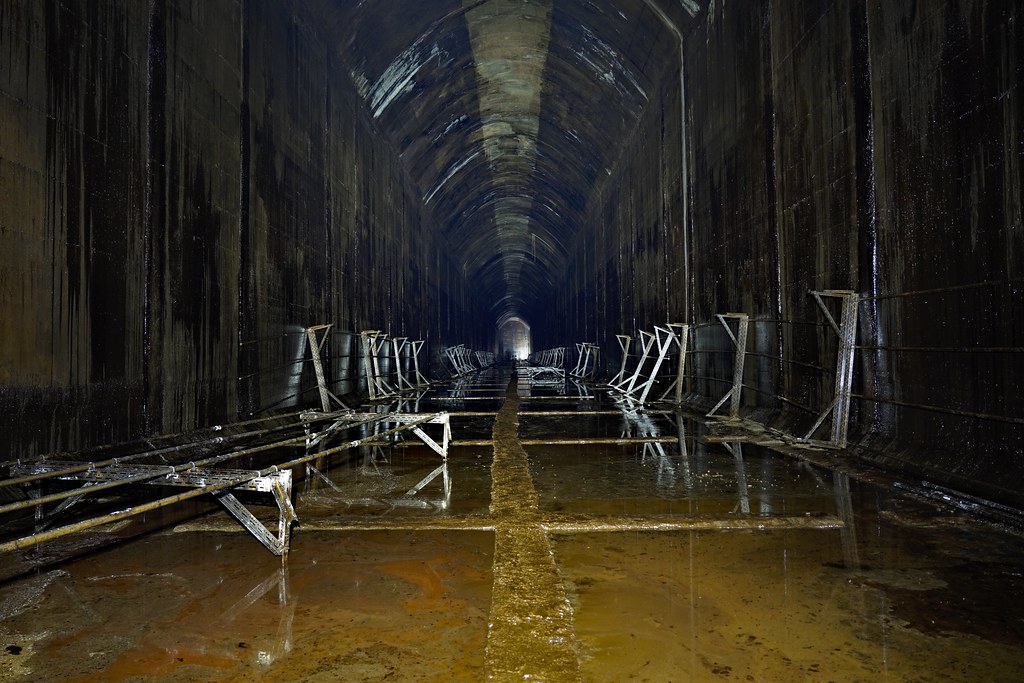
Dehumidification is especially common on storage tank linings, ship holds, pipe interiors and enclosed bridge work, where high-performance coatings demand tight environmental control. The basic thresholds are explained in environmental conditions for coating.
Why climate control matters
- Preventing condensation. Surfaces must stay above the dew point — commonly by at least 5 °F (3 °C) — during blasting, coating and cure.
- Holding the blast. Freshly blasted steel can rust within hours in humid air. Low humidity keeps it clean until coated, avoiding re-blasting.
- Controlling cure. Stable temperature and humidity give predictable cure and recoat times.
- Protecting schedules. Work can continue through rain, fog and cold, and shifts can be planned around production rather than weather.
Without control, blasted surfaces that sit overnight often show flash rust by morning and must be re-blasted before coating.
Types of equipment
Desiccant dehumidifiers
A desiccant unit passes process air through a slowly rotating wheel coated with a moisture-absorbing material. Moisture is captured from the air, and a separate stream of heated reactivation air drives it out of the wheel and exhausts it outside. Desiccant units can reach very low dew points and keep working at low temperatures, which makes them the usual choice for winter work and tank linings.
Refrigerant dehumidifiers
Refrigerant (or direct-expansion) units cool air over a coil below its dew point, condensing water that drains away, then reheat the air. They are energy-efficient in warm, humid conditions, but their effectiveness drops as air temperature falls, and coils can ice up in cool conditions.
Heaters
Heating raises surface temperature and lowers relative humidity. Indirect-fired heaters, electric heaters and hydronic systems add heat without combustion products. Direct-fired heaters add water vapor and carbon dioxide to the space, which can promote condensation and amine blush and create hazardous atmospheres in enclosures. See coating in cold weather.
| Equipment | Best conditions | Strengths | Limitations |
|---|---|---|---|
| Desiccant dehumidifier | Cool to cold, any humidity | Low dew points; works below freezing | Needs reactivation energy and ducting |
| Refrigerant dehumidifier | Warm and humid | Energy-efficient at higher temperatures | Less effective in cool air; coil icing |
| Indirect-fired heater | Cold weather | Clean heat, high output | Fuel handling; does not remove moisture |
| Electric heater | Small spaces | No combustion products | Requires substantial power supply |
| Direct-fired heater | Open, well-ventilated areas only | Simple and inexpensive | Adds moisture and CO₂; hazardous in enclosures |
Holding the blast
Holding the blast means keeping blasted steel free of rust bloom until it is coated, sometimes for days. Specifications for holding typically set limits on relative humidity, often somewhere in the range of 30–50%, and on the dew point spread. The exact values come from the project specification and the coating manufacturer.
This allows the entire interior of a tank to be blasted and inspected before a single coat is applied, which improves quality and efficiency. Before coating, the surface must still be inspected for cleanliness and any rust bloom, and re-cleaned if required.
Start dehumidification before blasting begins and keep it running continuously. Allowing humidity to rise overnight, even briefly, can cause rust bloom that must be removed.
Designing a climate-control system
- Define targets. Set the required temperature, relative humidity and dew point spread for blasting, coating and cure.
- Assess the space. Calculate the enclosed volume, the leakage and outside air infiltration, and expected moisture loads.
- Size the equipment. Select dehumidifiers and heaters to meet targets under worst-case weather, often with input from rental equipment specialists.
- Seal the enclosure. Close openings and tarp gaps to reduce infiltration of humid outside air.
- Plan airflow. Duct conditioned air to reach the far corners and all surfaces, including dead spots.
- Monitor continuously. Use data loggers and periodic manual readings to verify conditions around the clock.
Environmental monitoring instruments such as data loggers provide continuous records that support quality control and help resolve disputes.
Ventilation and safety
Dehumidification systems often recirculate air to save energy, but coating work generates solvent vapors that must be removed. Ventilation must keep flammable vapors well below the lower explosive limit and control worker exposure; many specifications and safety programs use a fraction of the LEL, commonly 10%, as a limit. Balance dehumidified supply air with exhaust as described in ventilation for coating work.
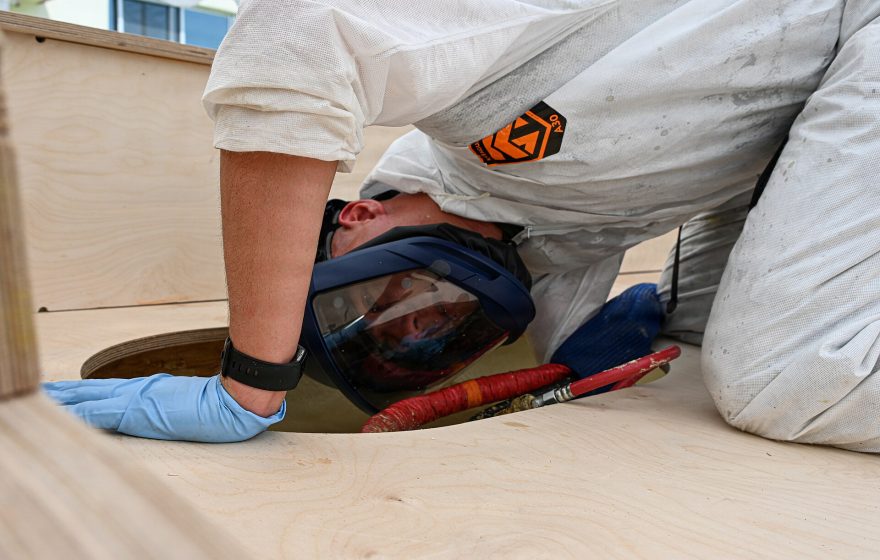
Enclosed tanks and vessels are often permit-required confined spaces. Equipment placement, ducting and atmospheric monitoring must fit the site’s confined space program and local regulations.
Advantages
- Work continues regardless of weather
- Blasted steel can be held for extended periods
- More predictable cure and recoat times
- Better quality and fewer weather-related failures
Limitations
- Equipment rental, fuel and power costs
- Requires planning, ducting and monitoring
- Must be coordinated with ventilation for safety
- Less practical for open, unenclosed structures
Frequently asked questions
Should I use a desiccant or refrigerant dehumidifier?
Desiccant units are generally preferred in cool or cold conditions and when very low dew points are needed. Refrigerant units are often more efficient in warm, humid weather.
How long can blasted steel be held?
It depends on the conditions maintained and the specification. With continuous dehumidification, steel can often be held for days, but it must be inspected before coating.
Does dehumidification replace ventilation?
No. Ventilation is still required to control solvent vapors and worker exposure. The two systems must be balanced.
Can heaters alone control humidity?
Heating lowers relative humidity and warms surfaces, but it does not remove moisture. In many cases, heating and dehumidification are used together.
Educational reference. Coating performance varies by formulation. Always follow the manufacturer’s product data sheet, safety data sheet and your project specification.