Dry Ice Blasting
How blasting with solid carbon dioxide cleans without water, residue or secondary media, where it works well, and why it is not a substitute for abrasive blasting on coated steel.
Key takeaways
- Dry ice blasting propels pellets or particles of solid carbon dioxide that sublimate on impact, so no blast media remains to clean up.
- It removes contaminants and soft, brittle or poorly bonded coatings through impact, thermal shock and gas expansion.
- It creates no surface profile and is slow or ineffective on rust, mill scale and well-bonded high-performance coatings.
- It is dry, non-conductive and non-abrasive, which makes it valuable for cleaning equipment in place and delicate substrates.
- CO₂ can accumulate in enclosed or low-lying areas. Ventilation and gas monitoring are essential.
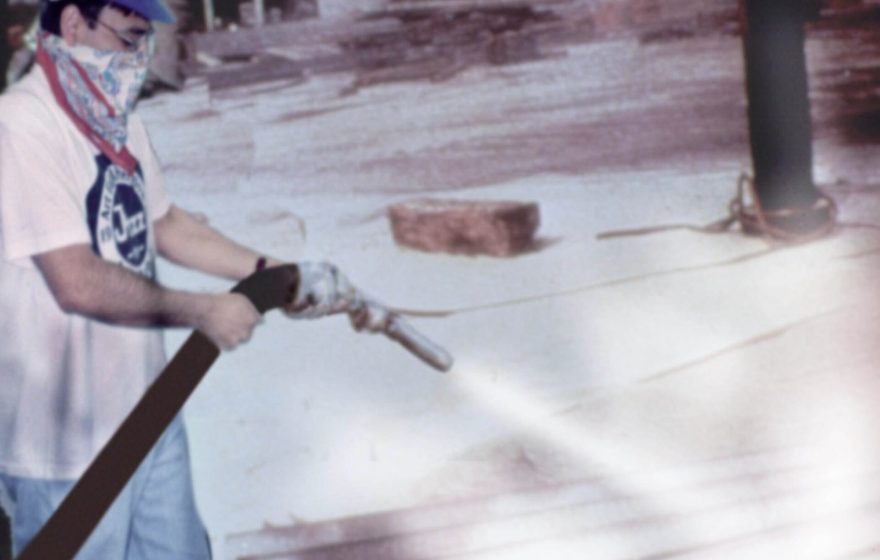
Dry ice blasting, also called CO₂ blasting, is a cleaning and coating-removal method that uses solid carbon dioxide as the blast media. Dry ice is accelerated by compressed air and directed at the surface through a nozzle, much like abrasive blasting. The key difference is that the media turns directly from solid to gas at −78.5 °C (−109.3 °F). Once it has done its work, only the removed contaminant is left to collect.
In the coatings world it is a specialist tool. It is excellent for cleaning machinery, molds and sensitive components, and for selective removal of certain coatings and residues, but it is not a general replacement for blast cleaning steel before painting.
How dry ice blasting works
Three effects act together when the dry ice strikes a surface:
- Kinetic impact. The particles strike at high velocity and loosen the contaminant, although dry ice is much softer than mineral abrasives.
- Thermal shock. The extreme cold embrittles the contaminant layer and makes it contract differently from the substrate, so it cracks and loosens its bond.
- Sublimation. As the particles turn to gas, the rapid expansion helps lift debris away from the surface.
Because the dry ice is soft and disappears on impact, the substrate is usually left without measurable abrasion, and there are no particles to lodge in machinery, crevices or bearings.
Equipment and media
- Pellets. Rice-sized pellets, commonly about 3 mm (⅛ in), are the standard media for heavier cleaning. Smaller pellets give a gentler, finer clean.
- Shaved or micro-particle ice. Some machines shave a block of dry ice into fine particles for delicate surfaces such as electronics or detailed molds.
- Blast machines. Single-hose systems deliver ice and air together and generally have more impact; two-hose systems are simpler and suit lighter work.
- Compressed air. Machines use large volumes of air, from low pressures for delicate work to roughly 80–150 psi (5.5–10 bar) for aggressive cleaning. The air must be dry and oil-free, or moisture freezes in the hose and contaminates the surface; see compressed air cleanliness.
Dry ice sublimates in storage, so it is usually delivered close to the time of use in insulated containers and not stored for long periods.
What it removes, and what it does not
| Task | Typical effectiveness | Notes |
|---|---|---|
| Oil, grease, process residues | Good | Very heavy grease may smear; pre-clean if needed |
| Soot, smoke and fire residue | Good | Common in restoration work |
| Mold-release agents, adhesives, ink | Good | Widely used in molding and printing plants |
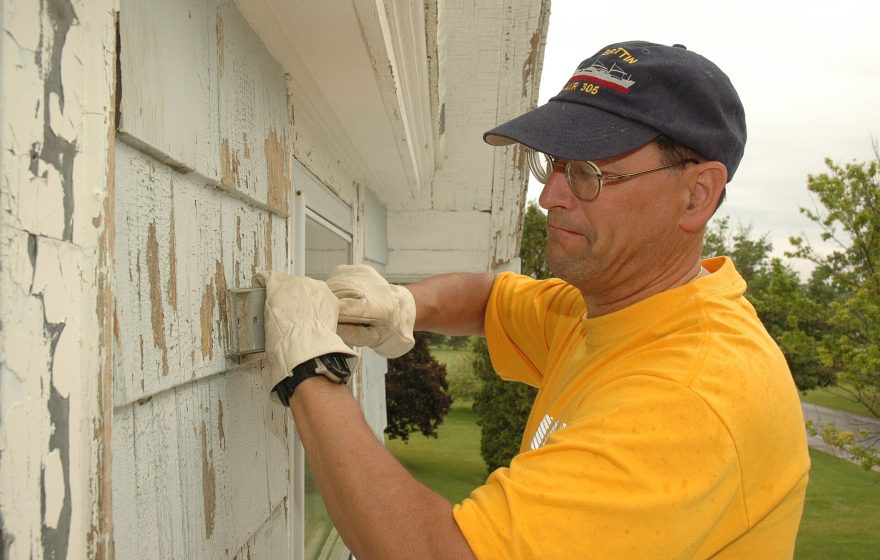
| Weak, flaking or thin paint | Moderate to good | Thermal shock helps on brittle films |
| Well-bonded epoxy or urethane systems | Poor to moderate | Slow; abrasive or other methods are usually more economical |
| Rust and mill scale | Poor | Removes loose rust only; leaves adherent oxide |
| Creating an anchor profile | None | Does not cut the substrate |
Because no profile is produced, a surface cleaned only with dry ice meets none of the abrasive-blast cleaning grades in the SSPC/NACE or ISO 8501-1 systems. Where a new coating needs a surface profile, dry ice can serve as a pre-cleaning step or remove soft layers, but it must be followed by abrasive blasting or another profile-producing method.
Advantages and limitations
Advantages
- No secondary media waste; only the removed material is collected
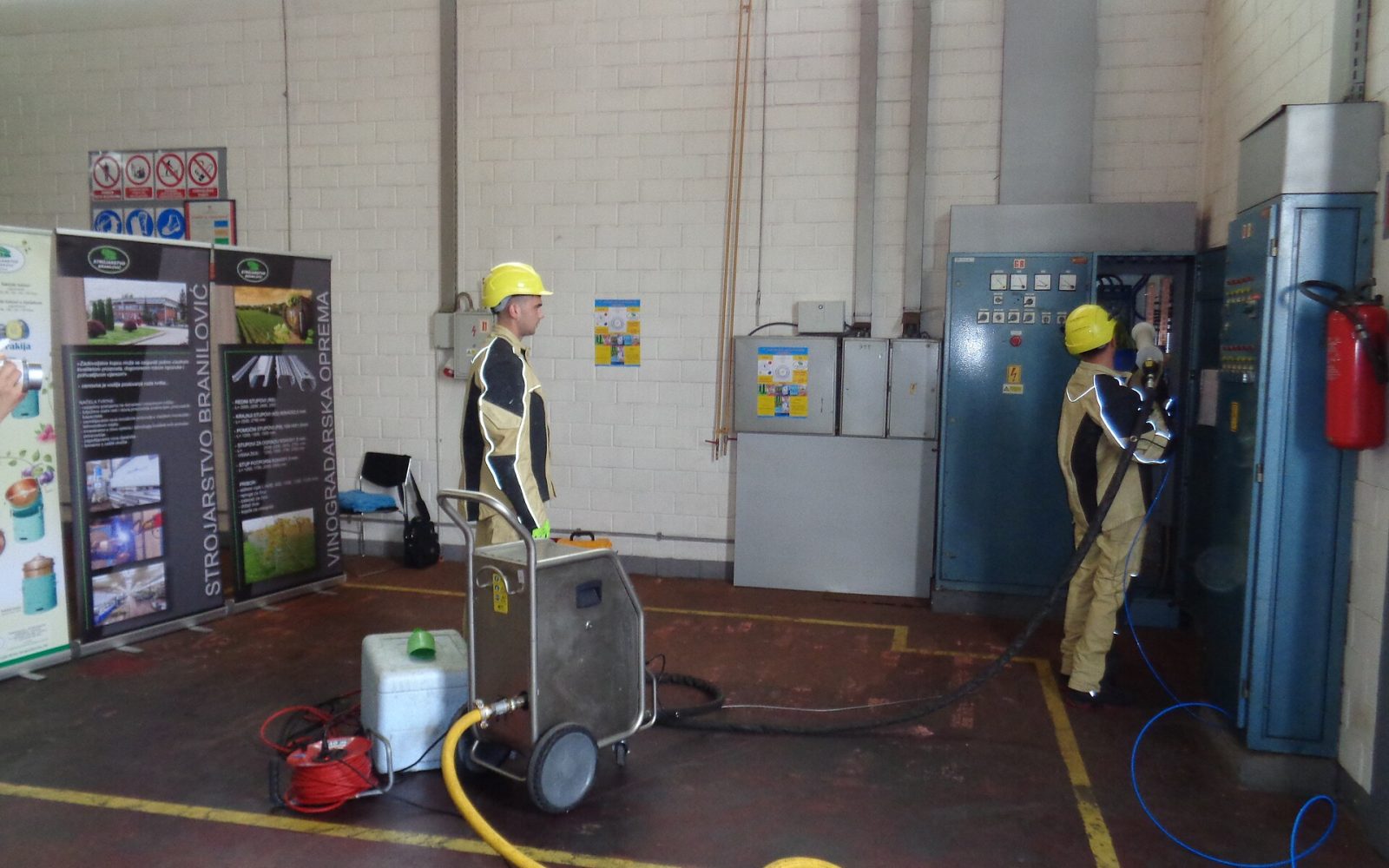
- Dry and non-conductive, so equipment can often be cleaned in place
- Non-abrasive to most substrates, including many delicate surfaces
- No media trapped in machinery, crevices or cavities
- Can reduce downtime by avoiding disassembly
Limitations
- No anchor profile; poor on rust, mill scale and tough coatings
- Dry ice must be bought frequently and sublimates in storage
- High compressed-air demand and noise levels
- CO₂ accumulation risk in enclosed areas
- Cold surfaces can attract condensation after cleaning
Applications in coating work
Typical coating-related uses include cleaning production equipment and paint-line fixtures, stripping paint and residue from molds and tooling, removing soot and contamination before recoating or restoration, and selectively stripping coatings from substrates that blasting would damage. It is also used to remove contamination from surfaces that will later be abrasive blasted, so that oils are not driven into the steel or spread through the abrasive.
It complements other low-impact methods. Where a precise, residue-free strip of a thin coating is needed, laser cleaning is another option; where tightly bonded coatings must come off quickly, abrasive or waterjetting methods usually remain more productive.
Surfaces cooled by dry ice can drop below the dew point and collect condensation. Let parts warm to the specified surface temperature before applying any coating.
Typical procedure
- Assess. Confirm that dry ice will remove the contaminant or coating, and make a small trial.
- Prepare the area. Ensure ventilation, set up CO₂ monitoring where needed, and protect nearby equipment from dislodged debris.
- Set parameters. Choose pellet size, air pressure, ice feed rate and nozzle for the job.
- Blast. Hold the nozzle at a consistent angle and distance, and work methodically.
- Collect debris. Vacuum or sweep up the removed material and dispose of it according to its composition.
- Inspect and condition. Check the surface, allow it to return to temperature, and complete any further preparation before coating.
Safety
Carbon dioxide displaces oxygen and is heavier than air, so it collects in pits, tanks, basements and other low or enclosed spaces. OSHA’s permissible exposure limit for CO₂ is 5,000 ppm as an 8-hour time-weighted average, and much higher concentrations can cause unconsciousness. Ventilate work areas, use CO₂ monitors where gas could build up, and treat tanks and vessels as confined spaces.
Other hazards include high noise levels, cold burns from handling dry ice, flying debris, static electricity and the hazards of the material being removed. Use insulated gloves, eye and face protection, hearing protection and any respiratory protection needed for the contaminant. Follow the SDS for dry ice and for the removed material, the equipment manufacturer’s instructions and your employer’s safety program.
Frequently asked questions
Can dry ice blasting prepare steel for a high-performance coating?
Not on its own. It creates no profile and does not reliably remove rust or mill scale. Use it for pre-cleaning, then abrasive blast to the specified grade and profile.
Does dry ice blasting leave any residue?
The dry ice sublimates completely. Only the removed contaminant or coating is left, which still has to be collected and disposed of properly.
Is it safe to use near electrical equipment?
Dry ice is non-conductive and leaves no water, so it is widely used to clean electrical equipment. Follow lockout procedures and the equipment manufacturer’s guidance, and control static and condensation.
Educational reference. Coating performance varies by formulation. Always follow the manufacturer’s product data sheet, safety data sheet and your project specification.