Compressed Air Cleanliness
Compressed air drives blasting, blow-down and spraying, and it can carry oil and water straight onto a freshly prepared surface. Learn where contamination comes from and how to test and control it.
Key takeaways
- Compressed air used for blasting, blow-down and spraying must be free of oil and water, or it contaminates the surface it is meant to prepare.
- Oil carryover causes fisheyes, poor wetting and adhesion loss; water causes flash rust, damp abrasive and moisture under the coating.
- ASTM D4285 is the standard field check: blow air onto a clean white blotter and look for oil or water.
- Aftercoolers, moisture separators, coalescing filters and dryers remove most contamination, provided they are sized correctly, drained and maintained.
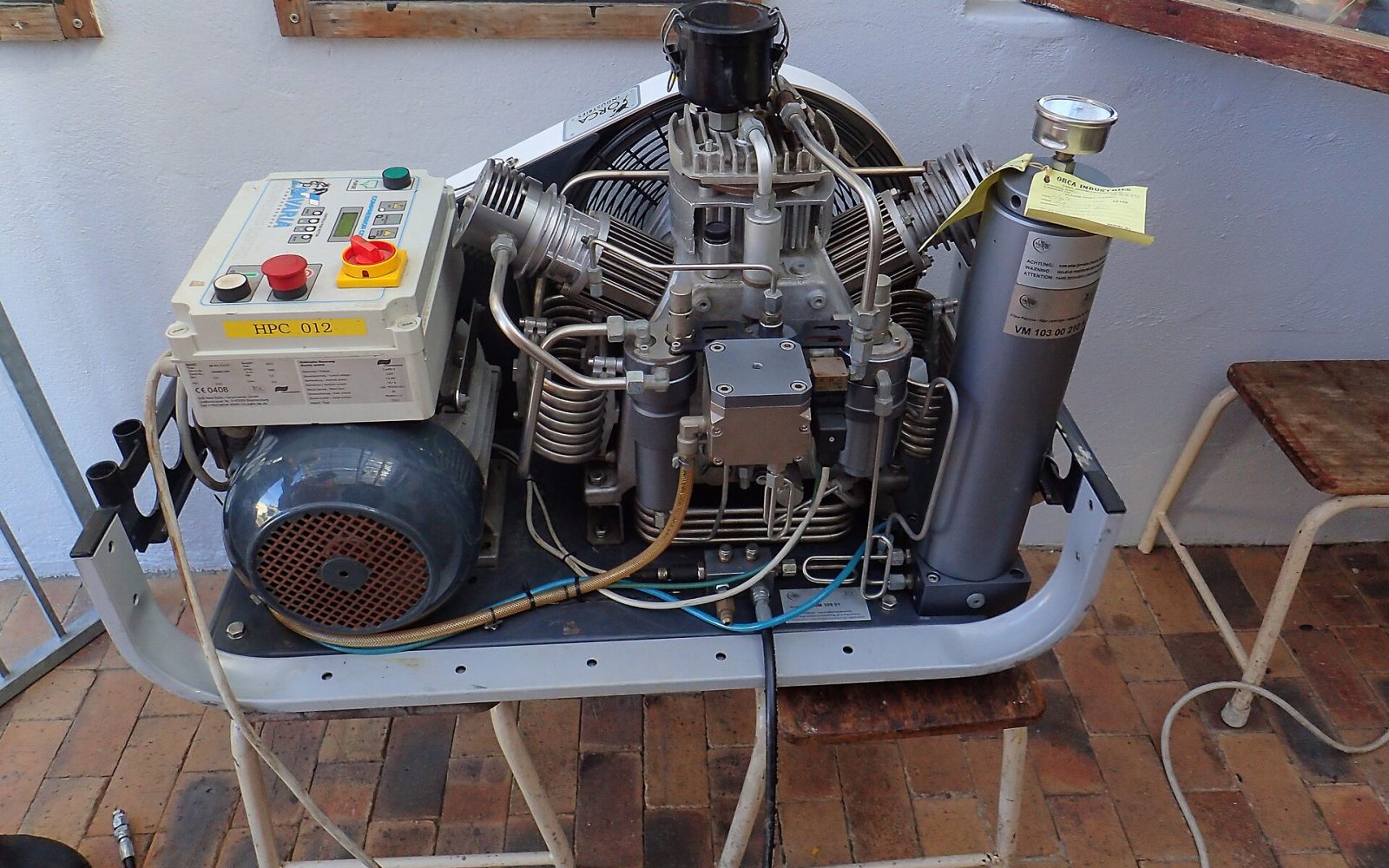
On most industrial coating projects, the air compressor is the heart of the job. It feeds abrasive blasting, blows down dust after blasting, powers conventional and some airless spray equipment, and may supply air tools. Every cubic foot of that air passes over or onto the prepared surface. If it carries oil or water, it deposits them exactly where adhesion matters most, often invisibly.
Compressed air cleanliness is therefore a standard inspection point, checked alongside environmental conditions and surface cleanliness before and during surface preparation.
Where contamination comes from
Water
Atmospheric air always contains water vapor. When a compressor squeezes air into a fraction of its original volume, that moisture is concentrated, and the hot compressed air is usually close to saturation. As the air cools in receivers, hoses and pots, the vapor condenses into liquid water. Long hose runs on cold days and humid weather make this worse.
Oil
Most portable rotary screw compressors used on coating jobs are oil-flooded: lubricating oil is injected into the compression chamber and then separated before the air leaves the unit. A small amount of oil aerosol and vapor still passes through, and carryover increases with worn separator elements, overfilled sumps, high operating temperatures and poor maintenance. Oil-free compressors avoid this source but are less common in field fleets.
Particles and other contaminants
Rust and scale from pipes and receivers, intake dust, and degraded hose linings can also enter the air stream. Engine exhaust drawn into the intake can introduce combustion products, which matters especially if the air is used for breathing.
Effects on surface preparation and coatings
| Contaminant | Effect during surface preparation | Effect on the coating |
|---|---|---|
| Oil (liquid or aerosol) | Deposits a thin film on blasted steel or concrete; abrasive may spread it further | Fisheyes, cratering, poor wetting, loss of adhesion, intercoat delamination |
| Water | Damp abrasive clumps and plugs blast pots; wet surfaces flash rust | Moisture under the film; blistering; rust-back before coating |
| Particles | Recontaminates surfaces during blow-down | Dirt inclusions, rough film, reduced adhesion |
| Water or oil in spray atomizing air | — | Surface defects, reduced gloss, cure problems in moisture-sensitive coatings |
Oil contamination is particularly troublesome because it may not be visible on a blasted surface and because blasting with oily air can embed it in the profile. Surface defects such as fisheyes and cratering are often the first sign. Water in blast air contributes to flash rust and rust-back on bare steel.
The blotter test (ASTM D4285)
ASTM D4285 describes a simple method for indicating oil or water in compressed air. It is quick, needs no instrument and is part of most daily inspection routines.
- Choose the test point. Test air downstream of moisture separators and filters, as close as practical to the point of use, such as the blast pot outlet or blow-down hose.
- Prepare the collector. Use a clean white absorbent blotter or cloth, typically mounted on a rigid backing.
- Discharge the air. With the system at normal operating pressure and no abrasive flowing, direct the air onto the collector for about one minute, holding it at the distance the standard specifies.
- Inspect. Look for any oil staining, discoloration or water on the collector. A UV light can help reveal oil traces that fluoresce.
- Record and act. Record the result, time and location. If contamination is present, stop and correct the source, then retest.
The test is pass/fail and qualitative: any visible oil or water is normally a failure. Specifications usually require it at the start of each shift and at intervals during the day or after any change in equipment.
Run the blotter test after the compressor has reached full operating temperature, not just after a cold start. Oil carryover and condensation often get worse once a compressor has been working hard for a few hours.
Air treatment equipment
- Aftercoolers cool compressed air right after the compressor so water condenses where it can be removed rather than in the hoses.
- Moisture separators and drains collect condensed water and oil droplets; they must be drained, ideally automatically.
- Coalescing filters capture fine oil aerosols and water droplets.
- Refrigerated dryers chill air to remove water to a moderate dew point, adequate for many blasting jobs.
- Desiccant dryers reach much lower dew points for demanding work or cold conditions.
- Activated carbon filters remove oil vapor where very clean air is needed.
ISO 8573-1 defines purity classes for particles, water and oil in compressed air. It is used to specify air quality for sensitive applications and to rate treatment equipment. Field coating specifications, however, more commonly rely on the D4285 blotter test.
A filter or separator that is never drained or changed becomes a contamination source. Saturated coalescing elements can release slugs of oil and water downstream. Include air-treatment maintenance in daily equipment checks (see spray equipment maintenance).
Breathing air is a separate issue
Air supplied to blast helmets and supplied-air respirators must meet breathing-air requirements, not just coating-cleanliness ones. In the US, OSHA 29 CFR 1910.134 requires compressed breathing air to meet at least Grade D as described in CGA G-7.1, and sets requirements for compressors that supply it, including protection against carbon monoxide for oil-lubricated compressors. A clean blotter does not prove air is safe to breathe. Use dedicated breathing-air equipment and follow your employer’s respiratory protection program (see respiratory protection).
Frequently asked questions
How often should the blotter test be done?
At least at the start of each shift and whenever equipment changes, plus at intervals required by the specification. Many inspectors repeat it during long blasting days.
Can I blast if the blotter shows a tiny oil spot?
Normally no. Most specifications treat any visible oil or water as a failure. Fix the source and retest before blasting or blowing down.
Is an oil-free compressor necessary?
Not usually. A properly maintained oil-flooded compressor with correctly sized separators and filters can deliver clean air. Oil-free units remove one risk but still need water removal.
What if steel was blasted with contaminated air?
Stop work, correct the air supply and evaluate the surface. Oil-contaminated areas are typically solvent cleaned and re-blasted; follow the specification and inspector’s direction.
Educational reference. Coating performance varies by formulation. Always follow the manufacturer’s product data sheet, safety data sheet and your project specification.