Silane & Siloxane Water Repellents
Silane and siloxane water repellents soak into concrete and masonry and line the pores with a water-repellent layer, keeping out rain and chlorides while letting the substrate breathe.

Key takeaways
- Silanes and siloxanes are penetrating water repellents: they react inside the pores of concrete and masonry rather than forming a surface film.
- They reduce absorption of rain and chloride-laden water while still allowing water vapor to escape.
- Silanes are small molecules that penetrate deeply and suit dense concrete; siloxanes are larger and suit more porous masonry; blends combine both.
- They do not bridge cracks, resist water under hydrostatic pressure or provide abrasion resistance.
Concrete, brick, stone and block absorb water through a network of capillary pores. That water carries chlorides that corrode reinforcing steel, drives freeze-thaw damage, feeds efflorescence and stains facades. Penetrating water repellents address absorption without changing the appearance of the surface or sealing in moisture.
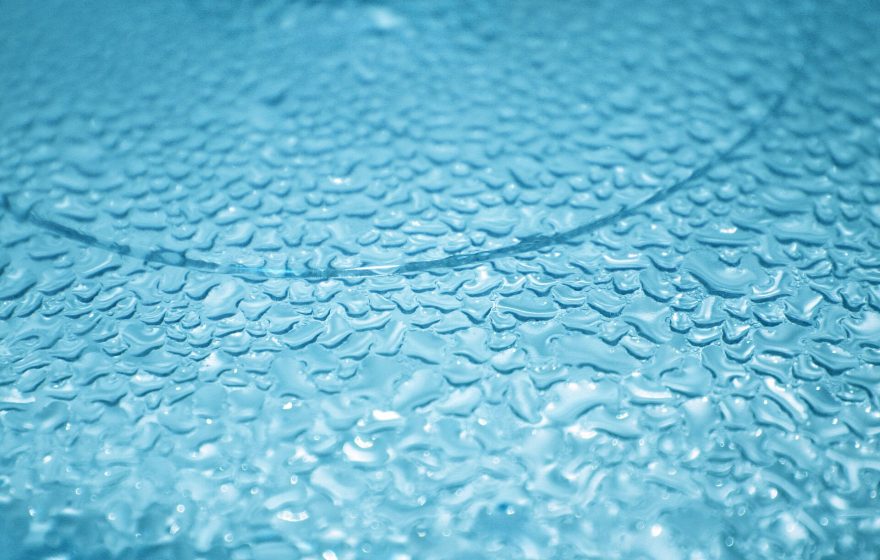
Unlike film-forming sealers and coatings, silanes and siloxanes leave the surface pores open. Water droplets bead on a treated surface and are not drawn in, but water vapor can still pass outward. That combination is why they are widely specified on bridges, parking structures and historic or architectural masonry. For film-forming systems on concrete, see Coating Concrete.
How silanes and siloxanes work
Most products are based on alkylalkoxysilanes, such as isobutyl- or octyl-trialkoxysilane, or on oligomeric siloxanes built from them. After application, the alkoxy groups react with moisture (hydrolysis) and then condense with each other and with silica-containing surfaces in the pores, forming a bonded silicone resin network. The alkyl groups orient outward, giving the pore walls a low surface energy that repels liquid water.
Because the pores are lined rather than filled, capillary suction is greatly reduced while vapor diffusion is largely preserved. The reaction is often catalyzed by the alkalinity of fresh concrete, which helps silanes perform well on concrete.
Silane versus siloxane
| Property | Silane | Siloxane |
|---|---|---|
| Molecule size | Small monomers | Larger oligomers |
| Penetration | Deep, into dense substrates | Shallower; better on porous surfaces |
| Typical active content | Often high, up to 100% for concrete products | Often lower, in solvent or water |
| Volatility | Higher; some loss by evaporation in heat or wind | Lower |
| Best suited to | Dense concrete, bridge decks, precast | Brick, block, stucco, natural stone |
Blends combine silane penetration with siloxane surface beading and are common for mixed substrates. Siliconates are a related, water-soluble class used on some masonry and as admixtures. Products are supplied as solvent-borne, waterborne emulsions or 100% active liquids and creams; gel and cream versions cling to vertical surfaces and increase dwell time. Solvent-borne types may be restricted by VOC regulations in some regions.
Where they are used
- Bridge decks, barriers and substructures: reducing chloride ingress from deicing salts and marine spray.
- Parking structures: on surfaces not receiving a traffic membrane; see Parking Deck Traffic Coatings for membrane options.
- Masonry facades: limiting water absorption, staining and freeze-thaw damage on brick, block and stone; see Coating Masonry & Concrete Block.
- Precast and tilt-up panels: as a clear protective treatment.
- Pretreatment: some anti-graffiti and coating systems use a water repellent as a base, where the topcoat manufacturer approves it.
Water repellents can prevent later coatings, sealants and patching materials from bonding. If a surface may be coated in the future, confirm compatibility with the coating manufacturer before treating it.
Surface preparation and application
- Repair first. Seal cracks wider than hairline and repair defective joints and mortar; repellents do not bridge cracks.
- Clean. Remove dirt, curing compounds, efflorescence, form release agents and coatings that would block penetration.
- Check moisture and age. Many products require surfaces to be visibly dry and new concrete to have cured for a minimum period; follow the data sheet. See Concrete Moisture Testing.
- Test a mock-up. Treat a test area to confirm coverage rate, absence of darkening and water beading.
- Apply generously. Use low-pressure spray, roller or brush, typically flooding vertical surfaces from the bottom up so the liquid runs down a few inches below the spray. Apply at the specified coverage rate in one or two applications.
- Protect. Keep rain and vehicle or foot traffic off for the stated time.
Coverage on porous masonry varies widely with absorption. Record actual consumption on the mock-up and use it to estimate quantities, rather than relying only on the data sheet’s nominal coverage rate.
Testing and performance
Laboratory evaluations of concrete treatments include water absorption tests such as ASTM D6489 and chloride-intrusion protocols derived from NCHRP Report 244. For masonry, ASTM E514 measures water penetration through walls. In the field, water absorption is often compared before and after treatment with a RILEM (Karsten) tube, which measures how much water a surface absorbs over time.
Performance gradually declines as surfaces weather and abrade. Retreatment intervals vary with product, exposure and substrate; owners often monitor with periodic water-beading or tube tests and retreat when absorption increases.
Advantages and limitations
Advantages
- Little or no change in appearance or slip resistance
- Vapor-permeable, so moisture can escape
- Reduces chloride ingress and freeze-thaw damage
- Fast, economical application over large areas
Limitations
- No crack bridging or resistance to hydrostatic pressure
- No abrasion, chemical or stain protection like a coating
- Can interfere with later coatings and sealants
- Effectiveness depends on achieving adequate penetration
Frequently asked questions
Will a silane sealer make concrete look wet or glossy?
Most silanes and siloxanes cause little or no visible change, though some can slightly darken certain substrates. A mock-up confirms the appearance.
Can silane stop basement leaks?
No. Penetrating repellents do not resist water under hydrostatic pressure. Below-grade leaks require waterproofing membranes, drainage or crack injection.
How long does a silane treatment last?
It depends on product, penetration depth, exposure and wear. Owners commonly test periodically and retreat when water absorption rises.
Can I paint over a siloxane-treated wall?
Often not without special preparation. Repellent-treated surfaces resist wetting by paint; check with the paint manufacturer first.
Educational reference. Coating performance varies by formulation. Always follow the manufacturer’s product data sheet, safety data sheet and your project specification.