Wet Abrasive Blasting
How adding water to the abrasive stream cuts dust while still cleaning and profiling steel, and how to manage flash rust, inhibitors, salts and slurry waste.
Key takeaways
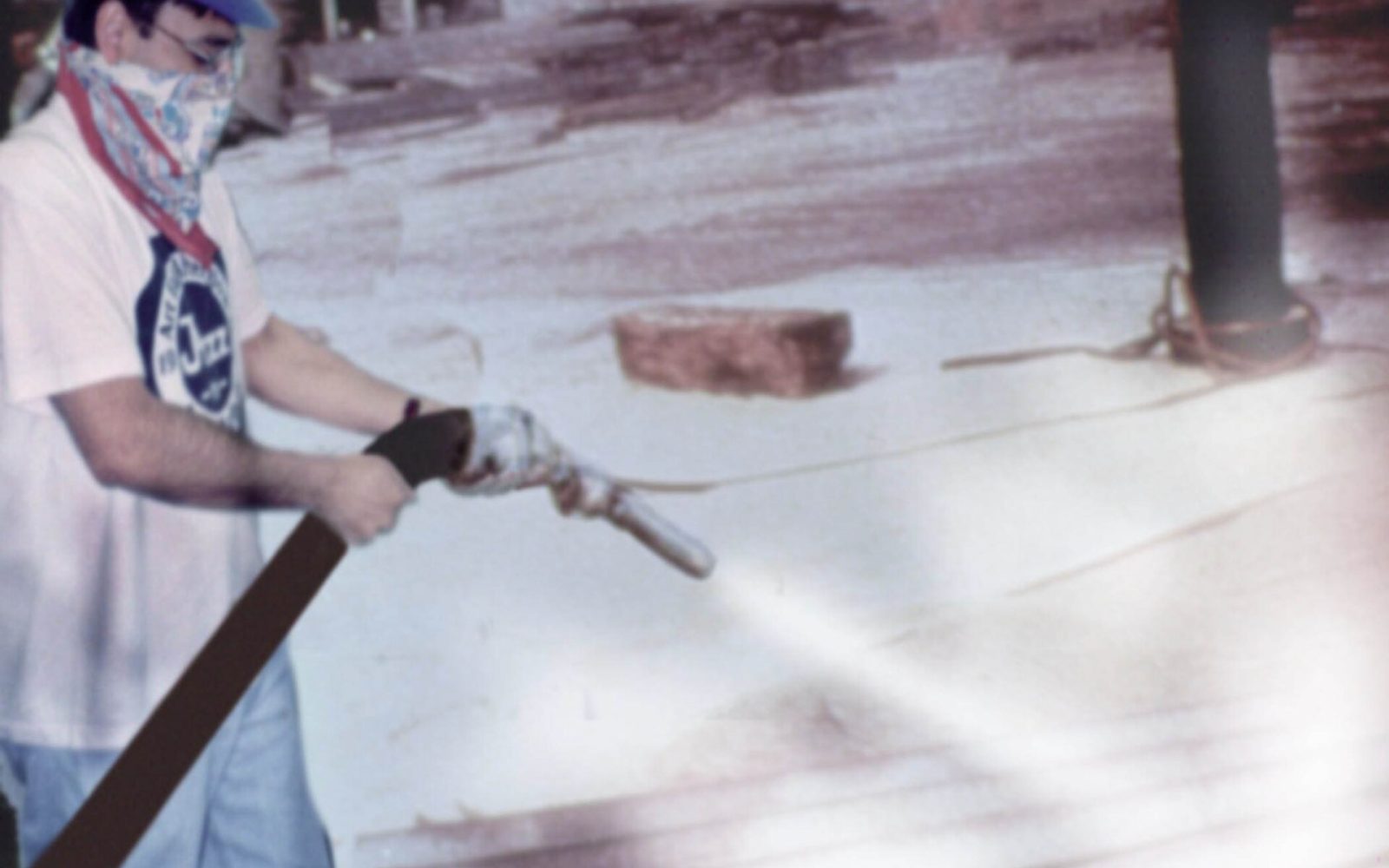
- Wet abrasive blasting adds water to an abrasive blast stream. The abrasive does the cleaning and cuts a profile; the water suppresses dust.
- It sharply reduces airborne dust compared with dry blasting, although it does not remove the need to assess and control worker exposure.
- Cleanliness is specified with wet abrasive blast (WAB) versions of the familiar joint SSPC/NACE grades, together with an acceptable flash-rust grade.
- Flash rust is the main trade-off. Corrosion inhibitors can help, but only when the coating manufacturer approves them.
- Wet methods help rinse away soluble salts, but they create a slurry that must be captured, especially when old coatings contain lead or other hazards.
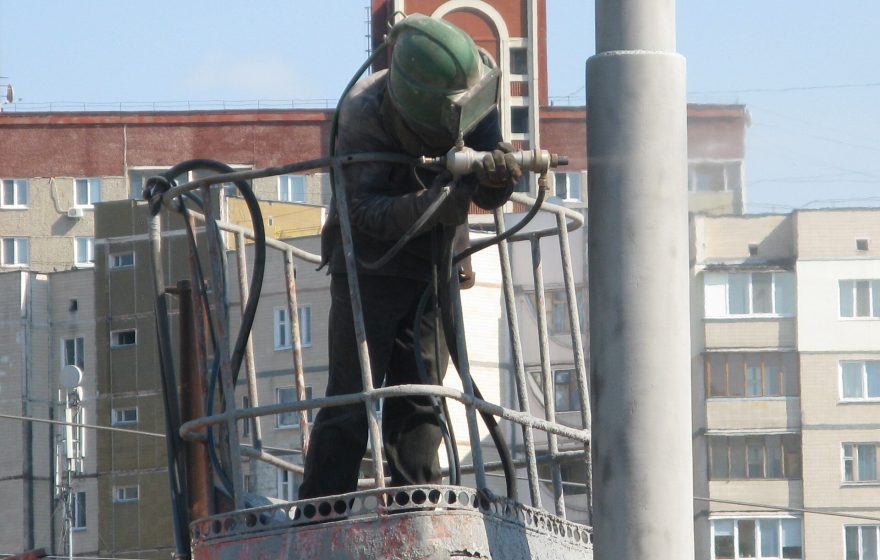
Wet abrasive blasting is a family of surface preparation methods in which water is introduced into a conventional abrasive blast so that the abrasive particles are wetted as they strike the surface. It sits between dry abrasive blasting and waterjetting. Like dry blasting, it relies on abrasive impact to remove rust, mill scale and coatings and to create a surface profile. Like waterjetting, it uses water to control dust and wash the surface. It is widely used for maintenance painting near occupied areas, on bridges and plant structures where dust is unacceptable, and for removing coatings that contain hazardous materials.
How wet abrasive blasting works
Water-injection (air/water/abrasive) blasting
A conventional blast pot delivers dry abrasive and air to the hose, and water is injected at or near the nozzle, often through a water ring or induction attachment. The amount of water can be adjusted, from a light mist that mainly suppresses dust to a heavier flow that also rinses the surface.
Slurry and vapor blasting
Abrasive and water are pre-mixed in a pressurized vessel and propelled by compressed air as a slurry. Because water is present throughout the stream, these systems tend to suppress dust very effectively and often use less abrasive. Fine-media “vapor” or “wet blast” cabinets use the same principle for finishing components in shops.
Pressurized water with abrasive injection
Some systems feed abrasive into a pressurized water stream rather than an air stream. These blur the line with waterjetting and are typically used where higher water volumes are acceptable.
Comparison with other methods
| Method | Airborne dust | Creates profile | Flash rust | Waste |
|---|---|---|---|---|
| Dry abrasive blasting | High | Yes | Minimal if kept dry | Dry spent abrasive and debris |
| Water-injection wet blasting | Much reduced | Yes | Likely | Wet abrasive and debris |
| Slurry or vapor blasting | Low | Yes, often finer | Likely | Slurry; often less abrasive |
| Waterjetting (no abrasive) | Very low | No; reveals existing profile | Likely | Water and removed coating only |
Advantages
- Large reduction in visible and airborne dust
- Cuts an anchor profile like dry blasting
- Rinses soluble salts and fine dust from the surface
- Smaller containment burden and less disruption to nearby work
- Lower risk of static sparking in some environments
Limitations
- Flash rust forms quickly as the surface dries
- Wet abrasive and slurry are heavier and messier to handle
- Visibility can be reduced and wet surfaces are slippery
- Steel must dry before most coatings are applied
- Cold weather can freeze water and residue
Cleanliness grades and flash rust
The joint SSPC/NACE surface preparation standards include wet abrasive blast versions of the main blast-cleaning grades, identified by a “(WAB)” designation, for example SSPC-SP 10 (WAB) for near-white metal wet abrasive blast cleaning. They define cleanliness at the moment of blasting, before flash rust forms, and require the specifier to state the level of flash rust that is acceptable when the coating is applied, typically as light, moderate or heavy. See SSPC, NACE and ISO surface preparation standards.
A light, tightly adherent flash rust is often acceptable under coatings designed for it, while heavy, loose flash rust usually has to be removed or the surface re-blasted. Always confirm what the coating manufacturer allows. More detail is in flash rust.
Corrosion inhibitors
Some wet blasting operations add a corrosion inhibitor to the water to delay flash rust. Inhibitors can leave residues that interfere with adhesion or cause blistering under immersion, so many specifications prohibit them unless the coating manufacturer approves the specific product and concentration. Using clean water and controlling the time between blasting and coating is often the more reliable approach.
Never assume an inhibitor is compatible with your coating. Get written approval from the coating manufacturer, and rinse the surface with clean water if they require it.
Typical procedure
- Pre-clean. Remove oil and grease by solvent or detergent cleaning, because blasting does not reliably remove them.
- Set up. Check water quality, set the water-to-abrasive balance and establish containment and slurry collection.
- Blast. Clean to the specified WAB grade and profile, working in sections that can be rinsed and coated within the allowed time.
- Rinse. Wash off residual abrasive, debris and salts with clean water, from the top down.
- Dry and assess. Let the surface dry, or speed drying with clean compressed air or ventilation, then compare the flash rust against the specified grade.
- Test. Measure profile, check for soluble salts where required, and confirm the surface is above the dew point.
- Coat. Apply the primer within the allowable window, using a product suited to the surface condition.
Salts, abrasives and water quality
Water helps dissolve and rinse chlorides and sulfates from pitted steel, so wet methods can give lower residual soluble salt levels than dry blasting alone. That benefit depends on clean blast and rinse water; contaminated water can deposit salts instead. Abrasive choice also matters. Low-dust, low-friability expendable abrasives are common, and abrasive cleanliness should be verified as it would be for dry blasting. See abrasive media selection.
Health, safety and waste
Wet blasting reduces dust but does not eliminate it, and hazardous constituents in old coatings or abrasives remain a concern. Silica, lead, chromium and other hazards still require exposure assessment, appropriate respiratory protection and compliance with regulations such as OSHA’s silica and lead standards. See crystalline silica and abrasive blasting. Wet surfaces, hoses and slurry create slip and trip hazards, and the noise is comparable to dry blasting.
The slurry of water, abrasive and removed coating must be captured, settled or filtered, and characterized before disposal. Where lead or other regulated materials are present, both the water and the solids may be hazardous waste. Follow the SDS, your employer’s safety program and local regulations.
Frequently asked questions
Does wet abrasive blasting create a surface profile?
Yes. The abrasive cuts the profile just as it does in dry blasting. Profile depth depends mainly on abrasive type, size and pressure.
Is flash rust after wet blasting a defect?
Not necessarily. Specifications state an acceptable flash rust grade at the time of coating. Light, adherent flash rust is often allowed under compatible coatings; heavy or loose rust usually is not.
Can I coat steel while it is still wet?
Only with coatings specifically formulated and approved for damp surfaces. Most coatings require dry steel at least 5 °F (3 °C) above the dew point.
Does wet blasting make silica sand safe to use?
No. It reduces dust but does not remove the hazard. Lower-silica abrasives, exposure monitoring and respiratory protection are still required.
Educational reference. Coating performance varies by formulation. Always follow the manufacturer’s product data sheet, safety data sheet and your project specification.