Waterjetting (High & Ultra-High Pressure)
How high- and ultra-high-pressure water strips coatings, rust and salts without abrasive, how WJ cleanliness and flash-rust grades work, and what it cannot do.
Key takeaways
- Waterjetting uses water at 10,000 psi (70 MPa) or more, without abrasive, to remove coatings, rust and contaminants. Ultra-high-pressure (UHP) waterjetting exceeds 30,000 psi (210 MPa).
- It does not create a surface profile. It cleans down to, and re-exposes, whatever profile the steel already has.
- Cleanliness is specified as SSPC-SP WJ-1 to WJ-4 / NACE WJ-1 to WJ-4, or ISO 8501-4 Wa grades, together with a flash-rust grade.
- Its main technical advantage is removing soluble salts from pitted steel, and it generates no spent abrasive.
- Waterjets can cause severe injection injuries. Only trained operators using properly rated equipment and controls should do this work.
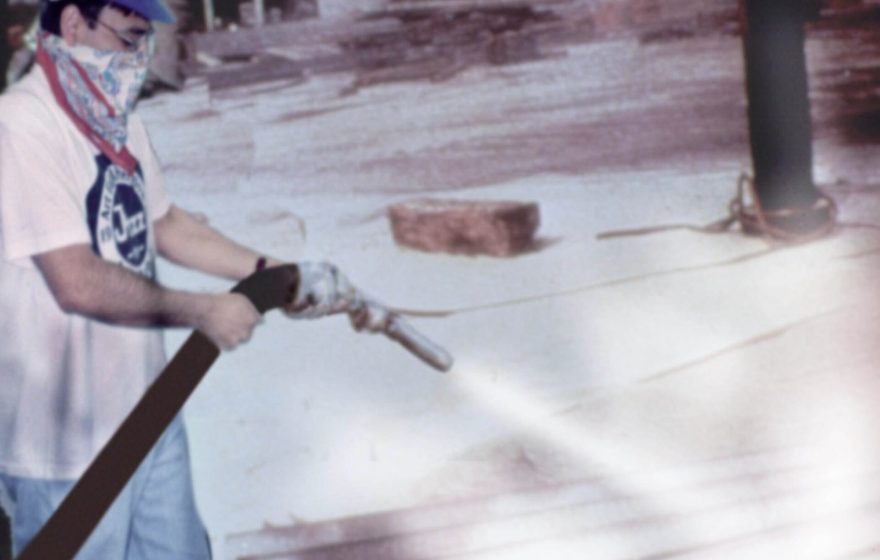
Waterjetting is a surface preparation method that uses a high-velocity stream of water to remove coatings, rust, scale and contaminants from steel, concrete and other substrates. Because no abrasive is used, it produces far less dust and waste than abrasive blasting. It is common in maintenance painting of ships, offshore structures, tanks and process plant, where old coatings are already over a good profile and salt contamination is a serious concern.
Pressure classes and terminology
The joint SSPC/NACE waterjetting standards distinguish water cleaning from waterjetting by pressure:
| Term | Pressure | Typical use |
|---|---|---|
| Low-pressure water cleaning (LPWC) | Below 5,000 psi (34 MPa) | Washing off dirt, chalk, loose material and salts |
| High-pressure water cleaning (HPWC) | 5,000–10,000 psi (34–70 MPa) | Removing loose paint and rust, heavier washing |
| High-pressure waterjetting (HPWJ) | 10,000–30,000 psi (70–210 MPa) | Removing coatings and rust |
| Ultra-high-pressure waterjetting (UHPWJ) | Above 30,000 psi (210 MPa) | Removing tightly adherent coatings, rust and scale; salt removal |
Pressure is only part of the picture. Flow rate, nozzle type, stand-off distance and traverse speed all affect cleaning. UHP systems use relatively low flow, often through rotating multi-jet nozzles, while lower-pressure, higher-flow systems remove material more by impact than by cutting.
Cleanliness and flash-rust grades
SSPC-SP WJ-1 to WJ-4 / NACE WJ-1 to WJ-4 define four visual cleanliness levels for steel cleaned by waterjetting, judged before flash rust appears:
- WJ-1, Clean to Bare Substrate — all previous coatings, rust, mill scale and foreign matter removed, leaving a matte metal finish.
- WJ-2, Very Thorough Cleaning — a matte surface with only limited, randomly dispersed staining or tightly adherent material.
- WJ-3, Thorough Cleaning — a larger proportion of staining and tightly adherent thin coatings may remain.
- WJ-4, Light Cleaning — loose rust, loose mill scale and loose coatings removed.
The standards set specific limits for each grade, and SSPC-VIS 4/NACE VIS 7 provides reference photographs. Internationally, ISO 8501-4 describes the comparable Wa 1, Wa 2 and Wa 2½ grades. Both systems also define flash rust grades (light, moderate or medium, and heavy) that the specification uses to state what is acceptable when the coating is applied. For the wider family of grades, see SSPC, NACE and ISO surface preparation standards.
Profile and soluble salts
Water alone cannot cut steel the way angular abrasive does, so waterjetting creates no new surface profile. On previously blasted and coated steel the original profile is usually still there under the old coating, and waterjetting simply exposes it. On new, smooth or mill-scaled steel, or where the existing profile is too shallow for the new coating, abrasive blasting is needed.
Where waterjetting excels is in removing water-soluble contaminants. Chlorides and sulfates that sit at the bottom of corrosion pits are hard to remove with dry abrasive, which can hammer them deeper. A high-velocity water stream dissolves and flushes them out. That is why it is widely used on marine and coastal structures where soluble salt contamination drives coating failures.
Advantages
- No spent abrasive; waste is mainly water and removed coating
- Very low dust and no abrasive embedment
- Excellent removal of soluble salts from pits
- Can strip selected layers and preserve sound primers
- Suits areas where abrasive would damage machinery
Limitations
- Cannot create a profile or easily remove intact mill scale
- Flash rust forms as the steel dries
- Generally slower than abrasive blasting for full removal
- High equipment cost and specialist operators
- Serious injection-injury hazard
Equipment and water quality
- Pump units — high-pressure pumps sized for the pressure and flow required.
- Hoses and fittings — rated for at least the maximum operating pressure, inspected before every shift.
- Tools — hand-held lances with rotating or fixed nozzles, and an operator-controlled shut-off (“dump” or “deadman”) valve that stops the jet when released.
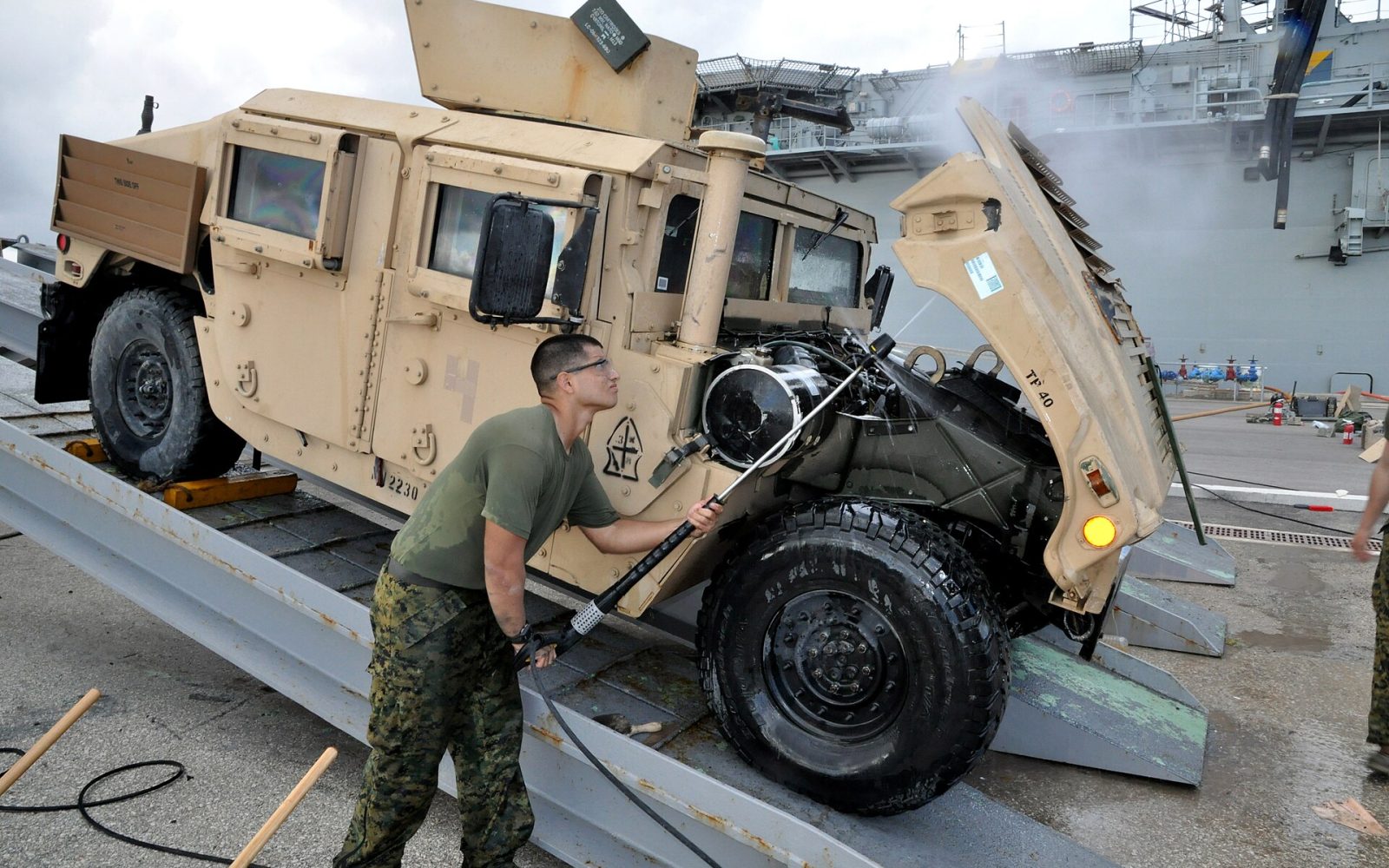
- Automated systems — crawlers, robotic arms and vacuum-recovery heads for large flat areas such as hulls and tank walls. They improve productivity and keep operators away from the jet.
- Water — filtered and low in chlorides and other contaminants, so that the cleaning water does not leave salts behind.
Typical procedure
- Remove oil and grease. Waterjetting does not reliably remove them; solvent or detergent clean first.
- Plan the work. Confirm the WJ grade, the acceptable flash-rust grade and the time allowed between cleaning and coating.
- Set up controls. Barricade the work zone, check equipment and confirm water quality.
- Jet the surface. Work methodically at a consistent stand-off and traverse rate to reach the specified grade.
- Inspect. Compare with the visual references, test for soluble salts if required, and confirm the existing profile is adequate.
- Dry and coat. Allow or assist drying, check the flash-rust grade and the dew point, then apply a primer suited to the surface condition.
Many coating manufacturers publish primers specifically for waterjetted steel that tolerate light flash rust and slightly damp surfaces. Choose the coating with the surface preparation method in mind.
Safety
A waterjet at these pressures can cut through skin and inject water and contaminants deep into tissue. Such injuries may look minor at first but are medical emergencies that need prompt specialist treatment. Operators should carry information identifying the injury as a high-pressure injection injury for the treating clinician, as industry guidance recommends.
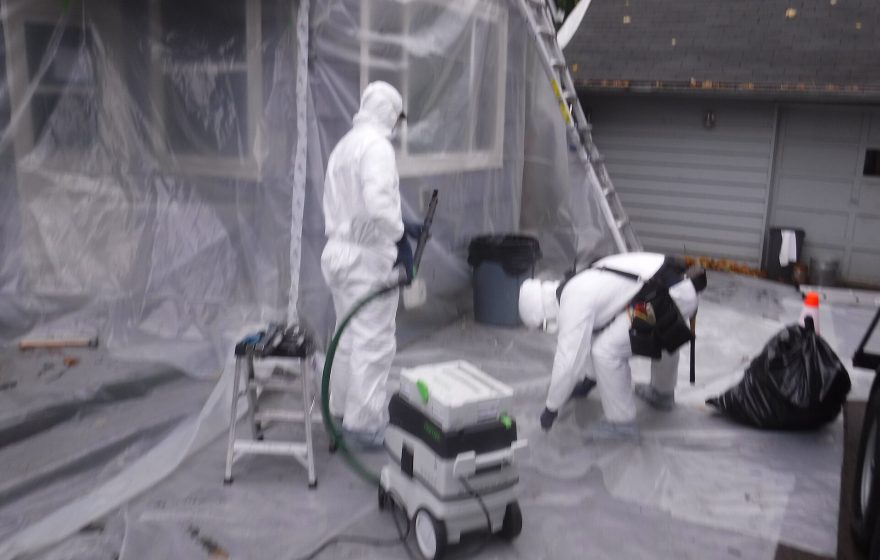
Controls include formal training, barricaded exclusion zones, deadman controls, rated and inspected hoses, whip checks and never pointing a lance at anyone. Required PPE typically includes face and eye protection, hearing protection, waterproof protective clothing and boots, and any respiratory protection needed for the coating being removed. When the old coating contains lead or other hazards, the water and debris must be captured and handled as for lead paint removal. Follow the manufacturer’s instructions, your employer’s safety program and local regulations.
Frequently asked questions
Does waterjetting create an anchor profile?
No. It removes material down to the substrate and exposes any existing profile, but cannot create a new one. Use abrasive blasting where a profile is needed.
Is pressure washing the same as waterjetting?
No. Pressure washing is low- or high-pressure water cleaning, below 10,000 psi (70 MPa). It is good for removing dirt, chalk and salts but not for removing tightly adherent coatings or rust.
Why do specifications require a flash-rust grade?
Steel cleaned with water will rust lightly as it dries. The flash-rust grade states how much is acceptable at the moment of coating, so contractors and inspectors share a clear acceptance criterion.
Educational reference. Coating performance varies by formulation. Always follow the manufacturer’s product data sheet, safety data sheet and your project specification.