Mining & Heavy Equipment Coatings
Abrasion-resistant linings, rugged finishes and acid-resistant systems that keep haul trucks, chutes, processing plants and heavy equipment working in the harshest conditions.
Key takeaways
- Mining combines severe abrasion and impact with corrosive water, acids and process chemicals, often in remote locations with limited maintenance windows.
- Sliding abrasion favors hard, ceramic-filled materials, while impact and gouging favor tough elastomers such as polyurethane and polyurea.
- Mobile equipment finishes balance corrosion protection, color retention and ease of field repair during rebuilds.
- Processing plants need zone-by-zone systems, from atmospheric steel to acid-resistant linings in leaching and electrowinning areas.
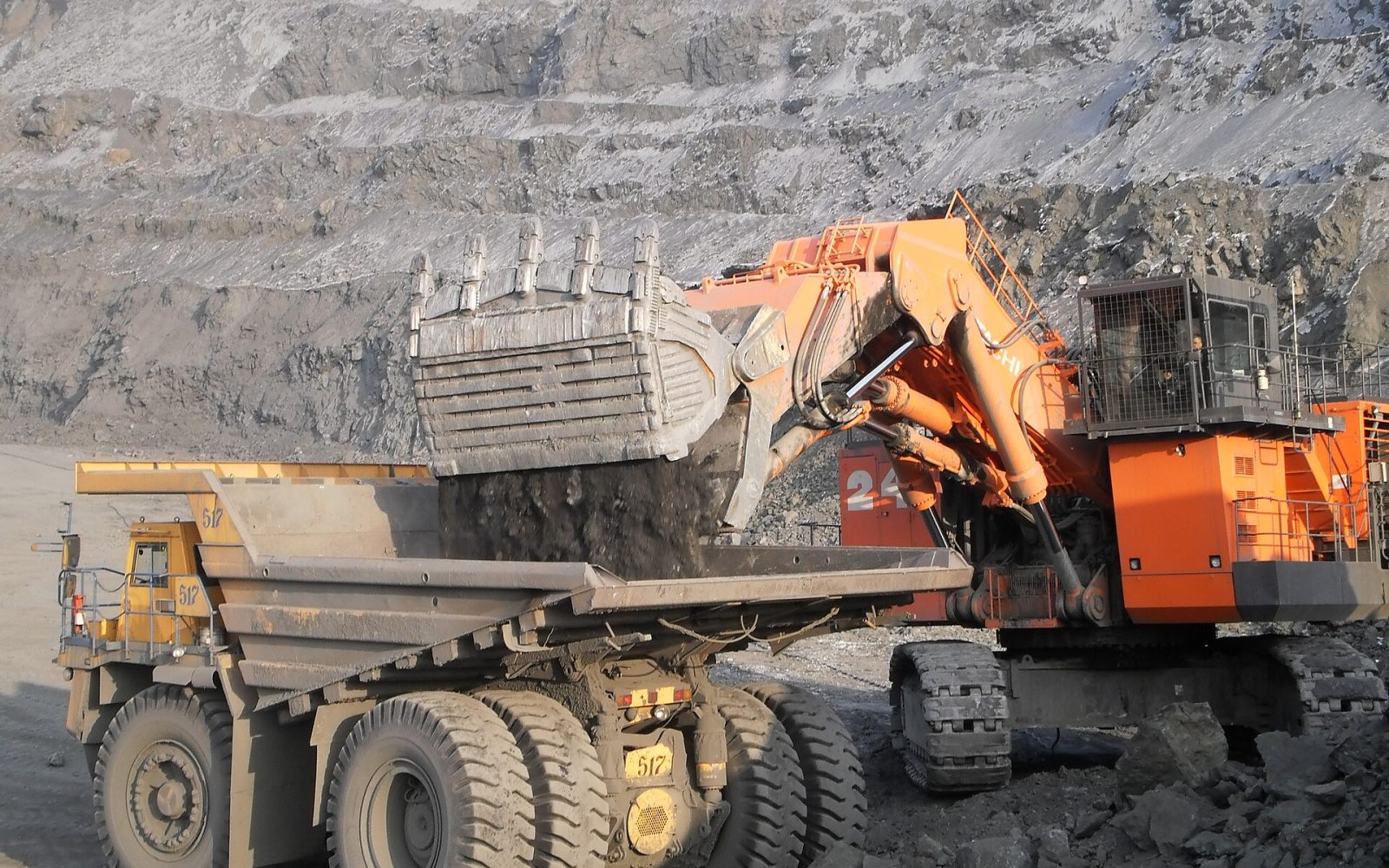
Mine sites are hard on everything. Haul trucks carry hundreds of tonnes of blasted rock; chutes and transfer points see a constant stream of sharp, heavy material; slurry pipes carry abrasive solids at high velocity; and processing plants handle acids, cyanide solutions and saline water. Coatings protect equipment and structures from corrosion, but in mining they are just as often asked to fight wear, reduce material buildup or extend the time between rebuilds.
Because downtime on a single large haul truck, crusher or conveyor can be extremely costly, coating choices are driven by life-cycle performance and how quickly a system can be repaired in the field.
Understanding wear mechanisms
Choosing a wear-resistant coating starts with identifying how the surface is being worn:
- Sliding abrasion — fine to medium particles slide across a surface at shallow angles, as in chutes, hoppers and pump casings. Hard materials such as ceramic-filled epoxies and ceramic tiles excel here.
- Impact and gouging — large rocks dropping onto surfaces, as in truck bodies and loading points. Hard brittle materials crack; resilient elastomers absorb energy and rebound.
- Erosion — particle-laden fluids striking surfaces, as in slurry pipes, cyclones and pump impellers. Elastomeric urethanes and rubbers often perform well at low impingement angles, while hard materials can be better at others.
- Corrosion–abrasion synergy — wet, corrosive slurries remove protective films and expose fresh metal, accelerating loss beyond either mechanism alone.
Wear-resistant linings
| Material | Best against | Typical thickness | Limitations |
|---|---|---|---|
| Ceramic-filled epoxy (trowel or spray) | Sliding abrasion, erosion | Commonly ¼–1 in (6–25 mm) for trowel grades | Brittle under heavy impact; limited flexibility |
| Spray polyurea / hybrid | Impact, moderate abrasion, carryback reduction | Often ~80–250+ mils (2–6+ mm) | Cut and gouge by sharp rock; heat limits |
| Cast or sprayed polyurethane | Impact, erosion, wet slurry | Several mm to 25+ mm | Heat build-up; some grades hydrolysis-sensitive |
| Natural and synthetic rubber | Fine slurry erosion, impact | Sheet linings, several mm and up | Oils and some chemicals; bonding expertise needed |
| Ceramic tile and wear plate | Severe sliding abrasion | Engineered panels | Weight; installation time |
For more on these chemistries, see ceramic and ceramic-filled coatings and polyurea coatings. Laboratory abrasion tests such as ASTM D4060 (Taber) are useful for ranking coatings, but they do not replicate gouging by large rock; see abrasion and hardness testing. Field trials on a section of a chute or one truck body remain the most reliable proof.
Mobile equipment and haul truck bodies
Original equipment manufacturers typically finish heavy equipment with a corrosion-protective primer, often epoxy, and a polyurethane or other durable topcoat in high-visibility colors. During component rebuilds and mid-life overhauls, frames, booms and bodies are stripped, repaired and repainted, often in site workshops using fast-curing two-component systems.
Haul truck bodies and trays may receive elastomeric linings to reduce impact damage, noise and carryback, the sticky material that stays in the body after dumping and reduces payload efficiency. Low-friction and release-type coatings are also used to reduce buildup of wet clays. Lining weight and thickness must be balanced against payload, and linings should be compatible with welded repairs.
Rail-mounted ore cars face similar wear and corrosion issues; see rail car coatings and linings.
Processing plant coatings
Concentrators, smelters and hydrometallurgical plants contain many exposure zones. Structural steel and building envelopes typically follow systems for high-corrosivity environments described in ISO 12944 corrosivity categories, often C4 or C5 where humidity, saline water or acid mist is present.
- Grinding, flotation and thickeners — tank interiors and launders see wet abrasion; urethane, rubber and high-build epoxy linings are common.
- Leaching and solvent extraction–electrowinning (SX-EW) — sulfuric acid solutions and acid mist call for vinyl ester and novolac linings, FRP and acid-resistant floors; see vinyl ester coatings and linings.
- Tailings and water handling — pipelines, pumps and reclaim water systems combine abrasion and corrosion.
- Underground operations — high humidity, mine water that may be acidic and limited ventilation, requiring robust, low-odor or water-based maintenance products where appropriate.
Coating work at mine sites is governed by site-specific safety rules in addition to general regulations. Isolation and lockout of equipment, confined space entry into bins and tanks, working at heights on conveyors and ventilation underground all need to be planned with the site safety team.
Application and field repair
- Clean and decontaminate. Remove ore fines, grease and process residues; pressure washing and degreasing often precede blasting.
- Blast clean. Wear linings and immersion systems generally require abrasive blasting to a near-white or white metal finish with an angular profile suited to the lining thickness.
- Prime promptly. Apply the specified primer within the time allowed to avoid flash rust in humid sites.
- Apply the lining or finish. Trowel, spray or cast to the specified thickness, paying attention to edges, weld seams and terminations where wear starts.
- Inspect. Verify thickness, hardness or cure, and adhesion, and holiday test linings where specified.
Field repair kits of ceramic-filled putties and fast-cure elastomers let maintenance crews patch worn areas during short shutdowns, extending the life of the main lining until a full rebuild.
Frequently asked questions
Is polyurea or ceramic epoxy better for chutes?
It depends on the wear mechanism. Ceramic-filled epoxies usually perform better against fine sliding abrasion, while polyurea and polyurethane generally perform better where large, impacting material dominates.
Do truck body liners add much weight?
Elastomeric liners are generally lighter than equivalent steel wear plate, but they still reduce payload. Thickness should be matched to the actual wear pattern rather than applied uniformly.
Can wear linings be repaired in the field?
Yes. Most systems can be patched after cleaning and roughening the damaged area, using compatible repair materials recommended by the manufacturer.
Educational reference. Coating performance varies by formulation. Always follow the manufacturer’s product data sheet, safety data sheet and your project specification.