Density of Liquid Coatings
Learn how density cups measure liquid coatings, why temperature and sampling matter, and how density differs from viscosity and volume solids.
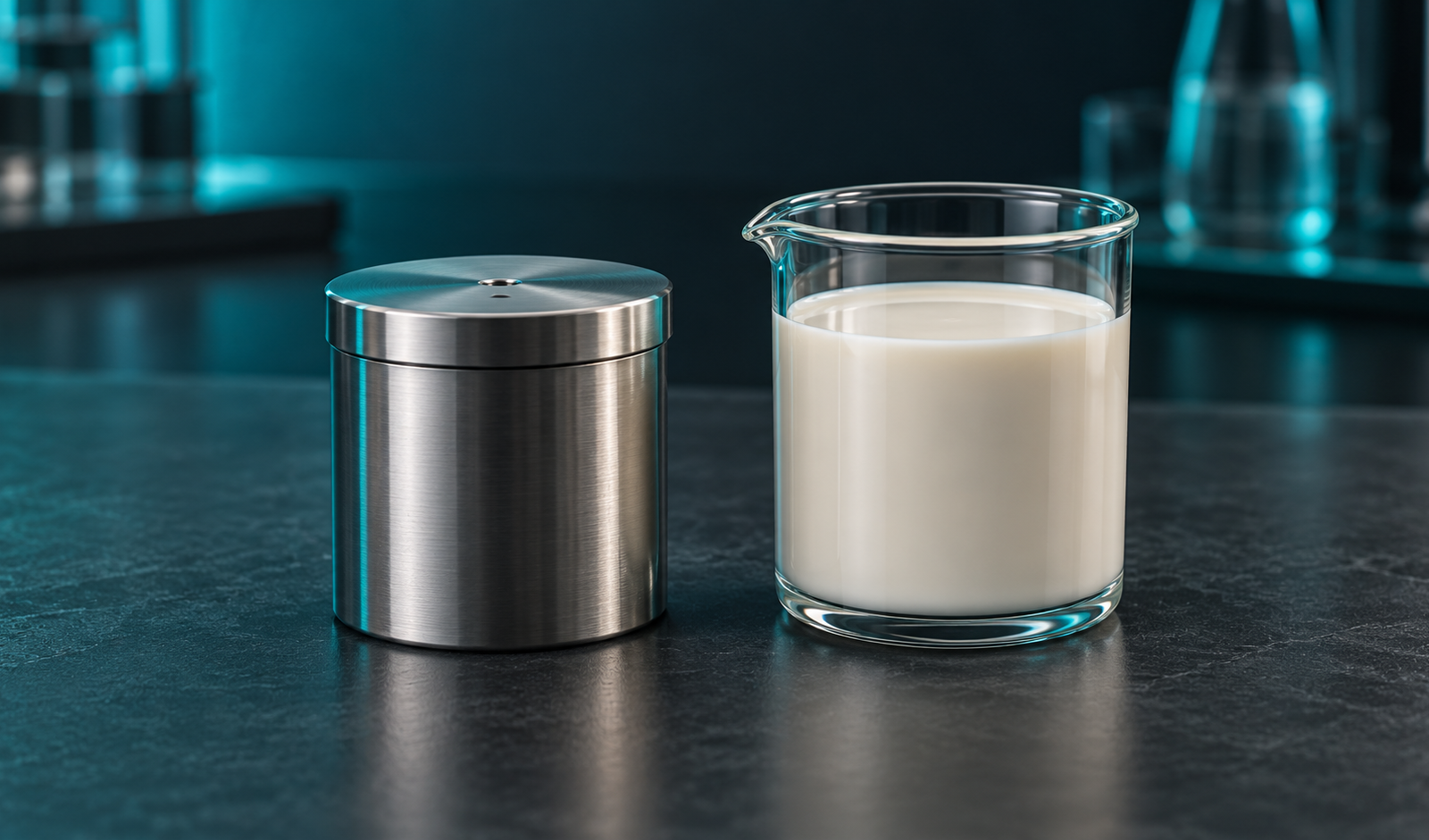
Density tells you how much mass occupies a given volume of liquid coating. It helps laboratories compare batches and lets users convert between mass and volume. To interpret a result, keep the temperature, sample condition and test method alongside the number. A density measurement answers a specific quality-control question; other properties still need their own tests.
Where density testing fits
ASTM D1475-13(2025) covers density measurement for liquid paints, inks, varnishes, lacquers and their fluid components, excluding pigments tested separately. ASTM identifies density as useful for characterization and quality control. A result outside the applicable specification can flag a formulation or production discrepancy, but further investigation is needed to establish the cause.
Always compare the same material state. A base component, hardener and mixed coating are different samples. The result should identify which was tested and whether any permitted thinner had already been added.
How a density cup works
A density cup, or liquid pycnometer, holds a known volume. The Elcometer density-cup explanation describes a cylindrical vessel with a fitted lid and an opening through which excess liquid escapes. Weighing the empty cup and lid, then the filled assembly, provides the liquid’s net mass.
Density = (filled assembly mass − empty assembly mass) / calibrated cup volume.
For an illustrative calculation, suppose the empty assembly weighs 150.0 g and the filled assembly weighs 275.0 g. The liquid therefore weighs 125.0 g. If the applicable cup volume is 100.0 mL, the density is 1.250 g/mL. This example demonstrates the arithmetic; it is not a product specification or a claim about achievable measurement accuracy.
Keep the reporting convention clear. Grams per millilitre and kilograms per litre have the same numerical value. If reporting weight per gallon, identify the gallon convention and use the calculation appropriate to the cup and method.
Density and specific gravity
Specific gravity compares a material’s density with a reference density, commonly that of water at stated conditions. Elcometer gives the ratio using material and water at the same temperature. Because matching units cancel, specific gravity has no units. Density retains its units. Their numerical values can be close when density is expressed in g/mL, but the terms should not be used interchangeably in a test report.
Temperature and filling matter
BYK-Gardner’s density-cup guidance calls for conditioning both the cup and test liquid to the temperature required by the relevant standard. It also emphasizes avoiding air bubbles and removing overflowing liquid before weighing. These details help ensure the mass corresponds to the intended liquid volume.
Use the specified conditioning procedure rather than assuming a sample has reached equilibrium because the room is comfortable. Record the measured temperature. When two results disagree, a temperature difference or a filling problem belongs among the checks before a conclusion about the coating itself.
Start with a representative sample
The cup only measures the material placed inside it. A carefully weighed sample from an unrepresentative part of a container can still produce misleading batch information. Follow the product’s mixing and sampling instructions, and document the sampling point. Avoid inventing a universal stirring, thinning or waiting period for every coating.
A practical pre-test check should confirm sample identity, cup cleanliness, the correct lid, cup volume and the balance’s suitability. Use the instrument instructions and the selected method for calibration, handling and repeat measurements.
What density cannot tell you
Density does not describe resistance to flow. That requires viscosity or broader rheological measurements under defined conditions, as discussed in Rheology & Viscosity. A density result alone cannot establish a suitable spray setup or justify adding thinner.
It also cannot supply dry-film coverage by itself. ASTM D2697’s explanation of volume nonvolatile matter connects coverage at a specified dry-film thickness with the volume of dry coating obtainable from liquid coating. That is a different question from how much the liquid weighs. Use appropriate product-specific volume-solids information for coverage calculations.
Make the result useful
Retain the product and batch identity, component or mixed state, sampling details, test temperature, method, cup identification and volume, empty and filled masses, calculated result and units. Record the acceptance criterion separately so the reader can distinguish the measurement from the decision.
If the result is unexpected, review those conditions and investigate using the laboratory’s procedure. This article explains measurement principles and interpretation; carrying out a standards-based test requires the applicable standard and equipment instructions.
Educational reference. Coating performance varies by formulation. Always follow the manufacturer’s product data sheet, safety data sheet and your project specification.