Epoxy Skin Sensitization
Why uncured epoxy resins, reactive diluents and amine curing agents cause allergic contact dermatitis, how sensitization develops, and the work practices and gloves that prevent it.
Key takeaways
- Epoxy resins, reactive diluents and many amine curing agents are skin sensitizers: repeated contact can trigger an allergy that causes dermatitis on later exposures.
- Once a person is sensitized, the allergy is usually permanent, and even tiny exposures can cause a reaction.
- Uncured and partially cured material carries the risk; fully cured epoxy presents much less, but sanding incompletely cured films can still expose workers.
- Prevention relies on avoiding all skin contact — correct gloves changed often, covered skin, clean tools and surfaces, and washing with soap and water, never solvent.
Epoxy coatings are among the most widely used protective and flooring systems, and skin problems are among the most common health complaints of people who apply them. Most cases are preventable. The key is understanding that the problem is usually an allergy, not simple irritation, and that the allergy is built up by small, repeated exposures that workers often do not notice.
This article is general information, not medical advice. Anyone with persistent skin symptoms should see a physician, ideally one with occupational or dermatology experience, and should follow the product SDS and their employer’s safety program.
What skin sensitization is
Allergic contact dermatitis is a delayed immune reaction. It develops in two phases:
- Induction. Small reactive molecules penetrate the skin and bind to proteins. The immune system learns to recognize them. This phase produces no symptoms and can take anywhere from days to years of contact.
- Elicitation. After sensitization, a later exposure — sometimes very small — triggers inflammation, typically appearing hours to a few days after contact.
It differs from irritant contact dermatitis, which is direct damage to the skin from solvents, corrosive amines or frequent washing. Irritation does not involve the immune system, but damaged skin lets sensitizers penetrate more easily, so the two often occur together.
Typical signs
Redness, itching, swelling, small blisters, weeping, and later dry, cracked and thickened skin. Hands, wrists and forearms are common sites, but the face, eyelids and neck are frequently affected by vapor, aerosol or transfer from contaminated gloves and hands.
Which ingredients cause it
Many epoxy system components can sensitize, though potency varies. The table summarizes the usual suspects; the actual hazards of a given product are in its safety data sheet, usually flagged with the H317 statement “May cause an allergic skin reaction”.
| Component | Role | Skin hazard notes |
|---|---|---|
| Low-molecular-weight liquid epoxy resins | Main binder in most liquid epoxies | Well-established sensitizers; lower molecular weight generally means higher risk |
| Reactive diluents (glycidyl ethers) | Reduce viscosity, especially in solvent-free products | Often potent sensitizers |
| Amine curing agents | Cross-link the resin | Many are sensitizers; some are also corrosive or irritant |
| Accelerators and other additives | Speed cure, modify properties | Some are sensitizers or irritants |
| Solvents | Thin and clean | Defat and irritate skin, increasing penetration of sensitizers |
Formulators can reduce risk by using higher-molecular-weight resins and pre-reacted amine adducts, but no epoxy system should be assumed to be non-sensitizing. Some curing agents and anhydride hardeners are also associated with respiratory effects, including occupational asthma. For more on chemistry see epoxy curing agents.
How exposure happens
- Splashes while opening, pouring and mixing — see mixing, induction time and pot life.
- Gloves that are permeable to the product, torn, worn too long or reused.
- Contamination inside gloves when they are pulled on with dirty hands.
- Touching the face, phones, door handles, tools and steering wheels with contaminated gloves or hands.
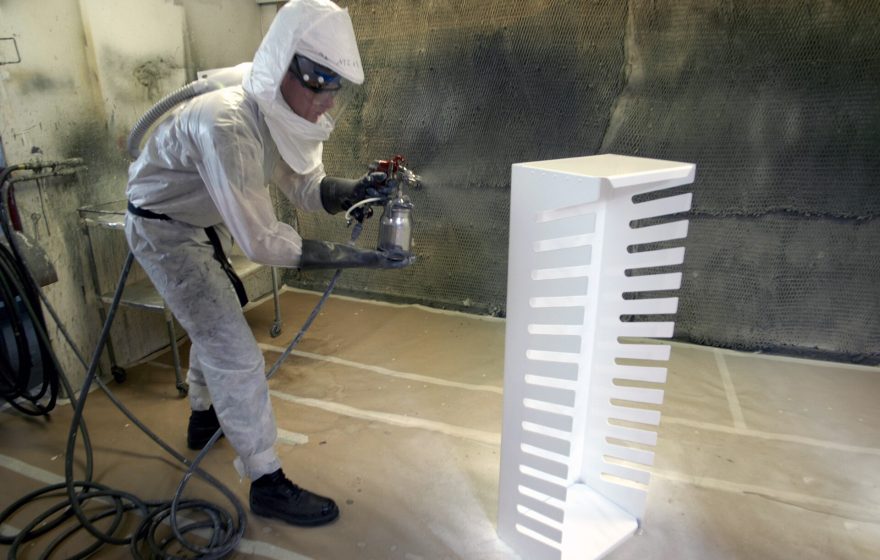
- Spray mist settling on exposed skin, particularly the face and neck.
- Sanding dust from coatings that are not fully cured.
- Cleaning hands with solvent, which removes skin oils and drives resin deeper.
Preventing sensitization
- Reduce handling. Use pre-measured kits, mechanical mixers, pumps or plural-component equipment to cut down manual contact.
- Choose suitable gloves. Follow SDS Section 8 and glove-maker permeation data. Thicker nitrile and multilayer laminate gloves are commonly recommended; thin disposable gloves give only brief protection.
- Change gloves often. Replace them when contaminated, damaged or at the end of the recommended wear time, and remove them inside-out without touching the outer surface.
- Cover skin. Wear long sleeves or coveralls, tape glove cuffs where needed, and use eye and face protection when splashes are possible. See PPE for coating applicators.
- Keep surfaces clean. Wipe up spills promptly, keep resin off tools, handles and phones, and designate clean areas for eating and breaks.
- Wash properly. Remove any skin contamination promptly with soap and water or a cleanser recommended for resins — never solvents.
- Train and report. Make sure workers know early symptoms and report them without delay.
Barrier creams are not a substitute for gloves. They may help with skin care but do not reliably stop epoxy components from penetrating the skin.
If symptoms appear
Report symptoms to a supervisor and seek medical evaluation. A dermatologist can use patch testing to identify whether a person is allergic and to which components. Because sensitization is generally lifelong, a sensitized worker may need to avoid contact with the responsible substances, which can affect their ability to work with epoxy systems at all. Early detection and better controls for the rest of the crew are essential: one case often signals that others are being exposed too.
Glove fit matters. Gloves that are too large snag and slip, encouraging workers to remove them; gloves that are too small tear. Stock a full range of sizes and a compatible liner for comfort in long shifts.
Frequently asked questions
Can someone become sensitized after years without problems?
Yes. Sensitization can develop after weeks or after many years of exposure. A lack of symptoms so far does not mean a worker is immune.
Is cured epoxy safe to touch?
Fully cured epoxy generally presents a much lower risk, which is why many cured products are used in contact with people. Incompletely cured films, cut edges and sanding dust may still contain reactive components.
Are waterborne epoxies safer for skin?
They avoid many solvents, which can reduce irritation, but they still contain epoxy resins and amine curing agents that can sensitize. The same glove and hygiene practices apply.
Educational reference. Coating performance varies by formulation. Always follow the manufacturer’s product data sheet, safety data sheet and your project specification.