Orange Peel Paint: Causes, Look-Alike Defects, Fixes and Prevention
Orange peel paint explained: what causes the texture, how to tell it from look-alike defects, how to fix cured orange peel and how to stop it on the next job.
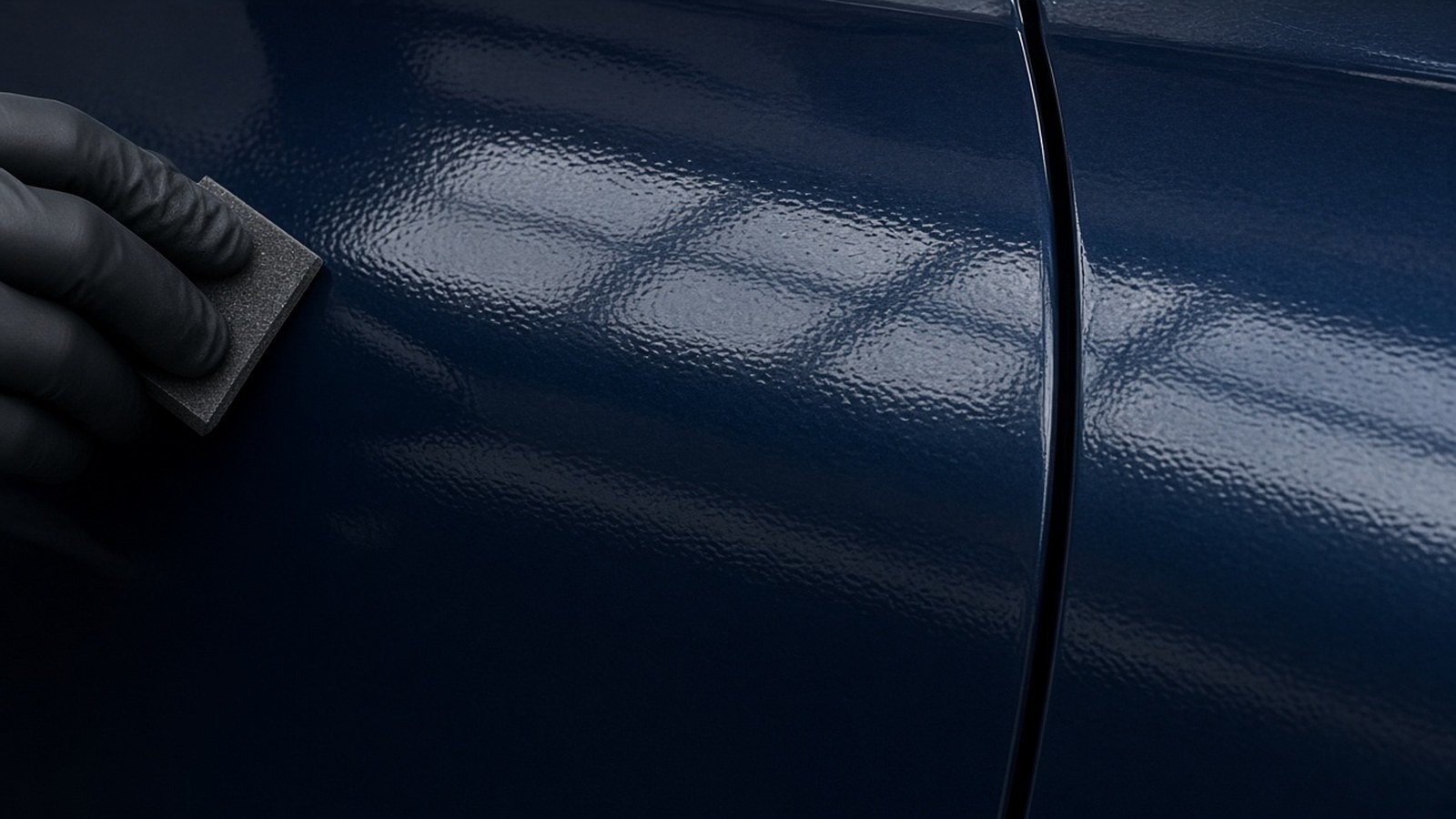
Hold a flashlight at a low angle across a freshly sprayed panel and you’ll see it right away: a dimpled, pebbly surface that looks like the skin of an orange. Orange peel paint shows up on everything we spray: car clear, tractor enamel, kitchen cabinet lacquer, you name it. A little is fine. Most new cars leave the plant with some. Heavy peel is different. Gloss goes flat, reflections go wavy, and nine times out of ten the gun, the mix or the booth is to blame. Below: causes, look-alikes, how to fix cured peel, and how to keep it off the next panel.
What orange peel paint actually is
Think of it as a race. Your gun throws droplets at the panel. They hit, run together and try to flatten out, while solvent is flashing off and the paint is getting thicker by the second. Lose the race and the bumps lock in place. That’s orange peel: poor flow and leveling.
PPG’s refinish guidance describes it as an uneven, bumpy texture resembling an orange skin, and it adds a point people forget: some orange peel is common in most OEM finishes. Factory paint lines trade a bit of texture for speed and film build. So the target isn’t zero texture. It’s texture that matches the panel next to it, or the spec on the job.
Two meanings of “orange peel”
The phrase also gets used for a deliberate wall finish. Drywall crews spray a thinned joint compound to create an “orange peel texture,” and roller-applied architectural paint can leave a mild stipple. That’s intentional. This article deals with the defect in sprayed coatings, though the physics of flow and leveling apply to both.
What causes orange peel paint
Nearly every cause comes back to one idea: the droplets got too dry, too big or too thick to level. PPG’s list is a good summary:
- Gun setup. Too little air pressure, a fan pattern opened too wide or spraying from too far away.
- Reducer or hardener too fast. A fast solvent flashes before the film can flow out.
- Too little reducer. The material goes on too thick and won’t level.
- High booth temperature. Heat drives solvent off faster than the film can recover.
- Poor mixing. Flow and leveling additives that aren’t stirred in can’t do their job.
Field painters would add two more. Heavy film build can trap texture, and an aggressive blast profile on steel can telegraph through the primer and topcoat. That second one matters on industrial work, where the surface profile measurement should be checked before primer goes down.
Gun distance and atomization
Distance is the variable most people get wrong without noticing. Farther away, droplets spend longer in the air and arrive drier. Too close, and you get heavy, wet film that can sag. The right distance depends on the equipment. HVLP and conventional air guns usually run closer than airless, so follow the gun maker and the coating data sheet rather than one number from a forum. Our guide to HVLP and conventional air spray covers how air cap pressure and fluid tip size shift that balance, and airless spray application covers tip size and pressure on the airless side.
Viscosity
If you don’t measure viscosity, you’re guessing. A flow cup takes a minute and tells you whether the reduction is where the data sheet wants it. See flow cup viscosity testing for how to run one and read the result.
Orange peel vs look-alike defects
Several defects look similar under poor light. Getting the diagnosis right decides the fix.
| Defect | What you see | Main cause | Key difference |
|---|---|---|---|
| Orange peel | Even, dimpled texture across the panel | Droplets don’t level: dry spray, thick material, fast solvent | Uniform; gloss is present but wavy |
| Dry spray | Rough, sandy, low-gloss surface | Droplets nearly dry on arrival | Feels gritty; little or no gloss |
| Solvent pop | Small craters or pinholes, often in heavier areas | Solvent trapped under a skinned surface | Discrete holes, not waves |
| Fish eye | Round craters with a raised rim | Surface contamination like silicone | Isolated, circular, starts at a contaminant |
| Runs and sags | Curtains or drips | Too much material or too close | Heavy, directional, opposite of dry |
Dry spray and orange peel share a cause, which is why they often show up together on the edges of a panel. Our page on dry spray and overspray goes deeper on that overlap.
Orange peel troubleshooter
Tick what matches your setup. The tool ranks the likely causes and suggests the first change to make.
Orange peel troubleshooter
How to fix orange peel paint after it cures
Once the finish is hard, you can’t make it flow again. You remove the high spots instead. Axalta’s paint defects manual splits it into two remedies: mild cases get sanded and polished, while extreme cases get sanded smooth and refinished with a slower reducer at the right air pressure.
Cut and buff for mild texture
- Confirm film thickness first. On clearcoat work, measure before you sand. You need enough clear left after leveling to protect the base and survive UV.
- Level with fine paper. Wet sand with a block, starting with the finest grit that actually knocks the peaks down. Many refinishers start around 1500 and finish at 2000 to 3000.
- Check often. Wipe and inspect under raking light. When the shiny low spots are gone, the surface is flat.
- Compound, then polish. Use a cutting compound to remove sand scratches, then a finer polish to bring the gloss back.
- Watch edges and body lines. Paint is thinnest there. Tape them off and stay away with the paper.
Recoat for heavy texture
If the peel is deep, or the film is too thin to sand safely, sand the panel smooth, clean it and spray another coat with corrected settings. That’s more work, but it’s the only honest fix for severe texture on a thin film.
Preventing orange peel on the next job
- Read the data sheet for reduction, gun setup, flash time and recoat window, then follow it.
- Choose the reducer for the actual temperature in the booth, not the one on the shelf.
- Set pressure at the gun with the trigger pulled, and check it again after a hose change.
- Spray a test panel before every job and look at it under raking light.
- Keep gun distance and travel speed consistent. Overlap about half of each pass.
- Don’t fan or force-dry a wet panel before the solvent has had time to let the film level.
In shops that also powder coat, the same logic applies with different variables. Film build and cure curve matter there too, and anyone weighing whether they can powder coat aluminum wheels will run into orange peel as a finish spec. Thick, textured coatings like sprayed rubber are another case: there, a spray-on rubber coating for metal is supposed to carry texture, and judging it by an automotive gloss standard makes no sense.
For a refresher on how the layers in a modern car finish are built, see automotive refinish coatings.
Before you spray: orange peel prevention checklist
☐ Data sheet read
Reduction ratio, recommended tip and air cap, gun distance range, flash time and recoat window noted.
☐ Reducer matched to temperature
Slower reducer in a hot booth, faster in a cool one, within the maker’s range.
☐ Viscosity measured
Flow cup reading inside the data sheet range.
☐ Pressure set at the gun
Measured with the trigger pulled, not just at the regulator.
☐ Test panel sprayed
Checked under raking light before touching the job.
☐ Film thickness plan
Target wet and dry film known, with room for sanding if you’ll cut and buff.
Orange peel paint FAQ
Is a little orange peel normal?
Yes. PPG notes that some orange peel is common in most OEM finishes. The goal is to match the surrounding panels or meet the job spec, not to reach a perfect mirror on every part.
Will more clearcoat fix orange peel?
Sometimes. PPG’s correction advice includes applying full wet coats of clear with the recommended flash times. On a cured panel, though, the standard fix is to sand and polish, or sand smooth and recoat if the texture is heavy.
What grit should I use to remove orange peel?
Start with the finest grit that actually levels the peaks. Many refinishers begin around 1500 and finish at 2000 to 3000 before compounding. Measure film thickness first so you don’t cut through the clear.
Does a hot booth cause orange peel?
It can. High temperatures drive solvent off before the film levels. Switching to a slower reducer for the temperature is the usual fix.
Can roller paint get orange peel?
Rolled paint can leave a stipple, and on walls an orange peel texture is often deliberate. The defect discussed here is mainly a sprayed-finish problem, but thick paint and fast drying make any finish level poorly.
Educational reference. Coating performance varies by formulation. Always follow the manufacturer’s product data sheet, safety data sheet and your project specification.