Water & Wastewater Coatings
Linings that keep drinking water safe and protect sewers, tanks and treatment plants from immersion corrosion and biogenic acid attack.
Key takeaways
- Coatings in contact with drinking water must be certified for that use, in North America typically to NSF/ANSI/CAN 61, and applied within the certification’s limits.
- Wastewater structures face biogenic sulfuric acid attack, driven by hydrogen sulfide and bacteria, that can rapidly destroy unprotected concrete.
- Immersion service demands near-holiday-free linings; continuity testing per NACE SP0188 (steel) or ASTM D4787 (concrete) is standard.
- Concrete outgassing, moisture and contamination are the main causes of lining failures in wastewater structures.
- Full cure before immersion is critical — immersing an under-cured lining can cause blistering and, in potable service, taste and odor problems.
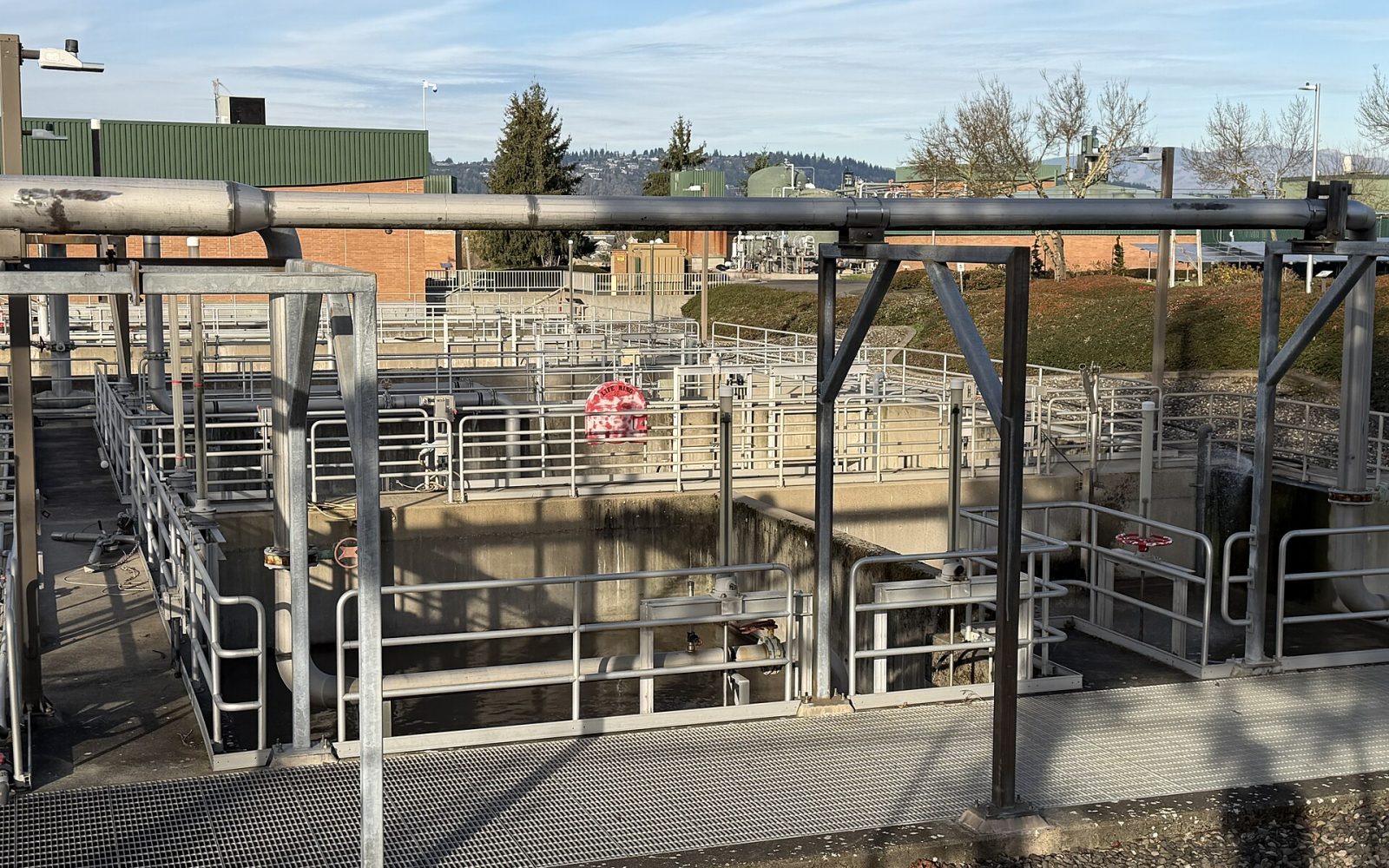
Water and wastewater infrastructure — treatment plants, storage tanks, pipelines, manholes, lift stations and clarifiers — depends on protective coatings and linings to keep steel from corroding and concrete from deteriorating. Two very different environments are involved: potable water, where the main concerns are corrosion of steel and the safety of anything in contact with drinking water, and wastewater, where aggressive chemical and biological attack can consume concrete within years.
Because these assets are expected to serve for decades and taking them out of service is costly and disruptive, coating selection, preparation and inspection carry high stakes.
Potable water storage and pipe
Interior linings of steel and concrete water tanks, reservoirs and pipe must not leach harmful substances into the water. In the United States and Canada, products are typically certified to NSF/ANSI/CAN 61, which evaluates health effects of drinking water system components. Certification listings include conditions such as maximum water temperature, minimum tank size or surface-area-to-volume ratio, and the cure schedule required before the lining contacts water. Applying outside those limits — for example, thicker films or shorter cure — can void the basis of certification.
Common systems include:
- Multi-coat epoxy or polyamide/polyamine epoxy — the long-standing workhorse for steel tank interiors and pipe linings. See epoxy coatings.
- 100% solids epoxies and polyurethanes — applied by plural-component spray in thick single coats for pipe and tank linings.
- Polyurea and hybrid linings — used for fast return to service and for concrete reservoirs where elasticity helps.
AWWA standards provide much of the industry framework, including AWWA D102 (coating steel water-storage tanks, with defined inside and outside coating systems), AWWA C210 (liquid epoxy linings and coatings for steel water pipe) and AWWA C222 (polyurethane for steel water pipe). After coating and cure, tanks are disinfected before returning to service, typically following AWWA C652.
Corrosion in wastewater systems
The most destructive mechanism in wastewater collection and headworks is microbially influenced corrosion of concrete, often called biogenic sulfide corrosion:
- Under low-oxygen conditions in sewers and wet wells, sulfate-reducing bacteria in the slime layer produce sulfide in the wastewater.
- Turbulence at drops, force-main discharges and lift stations releases hydrogen sulfide (H₂S) gas into the headspace.
- On damp concrete crowns and walls, sulfur-oxidizing bacteria convert H₂S to sulfuric acid.
- The acid dissolves cement paste, producing soft, expansive gypsum and exposing aggregate and reinforcement. Surface pH can fall to strongly acidic levels.
The worst attack is usually found in the headspace above the waterline rather than in continuous immersion. Linings must therefore resist dilute-to-strong sulfuric acid, tolerate damp substrates and bridge or seal the porous, often damaged concrete beneath.
| Structure / area | Main threat | Commonly used linings |
|---|---|---|
| Potable steel tank interior | Immersion corrosion; water quality | NSF/ANSI/CAN 61 certified multi-coat epoxy, 100% solids epoxy or polyurethane |
| Steel tank exterior | Atmospheric corrosion, UV | Zinc or epoxy primer, epoxy intermediate, polyurethane or fluoropolymer topcoat |
| Manholes, wet wells, lift stations | Biogenic sulfuric acid; infiltration | 100% solids epoxy, novolac epoxy, polyurethane, polyurea hybrids, calcium aluminate mortars |
| Headworks and grit chambers | H₂S acid attack plus abrasion | Novolac epoxy, mortar-filled epoxy, embedded PVC or HDPE liners |
| Clarifiers and aeration basins | Immersion, abrasion, wet–dry cycling | Epoxy systems on steel mechanisms; epoxy or polyurea on concrete |
| Digesters | Elevated temperature, H₂S, gas pressure | High-performance epoxy or novolac systems rated for temperature |
Surface preparation and application
Steel
Immersion steel is typically blast-cleaned to SSPC-SP 10/NACE No. 2 (Sa 2½) or SSPC-SP 5/NACE No. 1 (Sa 3), with a profile matched to the lining thickness and checked per ASTM D4417, and soluble salt levels tested where specified. Welds are ground smooth, sharp edges radiused and weld spatter removed before blasting, since weld defects are common sites of holidays.
Concrete
Deteriorated concrete is removed by high-pressure water jetting or abrasive blasting down to sound material, then rebuilt with repair mortars compatible with the lining. The surface is profiled to the lining manufacturer’s ICRI CSP requirement, and contamination such as grease and sulfate deposits is removed. See concrete surface preparation.
Concrete pushes air out of its pores when its temperature rises, creating bubbles and pinholes in fresh linings. Applying the primer or lining while the structure’s temperature is steady or falling — for example, late in the day for sun-exposed structures — and using a penetrating primer or filler coat reduces outgassing pinholes.
- Isolate and ventilate. Take the structure out of service, bypass flows, ventilate and follow confined-space entry procedures.
- Clean and remove. Pressure-wash, remove deteriorated concrete or old coatings, and repair to sound substrate.
- Prepare. Blast or water-jet to the specified cleanliness and profile; test moisture and salts as required.
- Prime and fill. Apply primer and, on concrete, resurfacer to close bugholes and voids.
- Apply lining. Stripe-coat edges and welds, then apply the lining by spray, trowel or roller to the specified thickness.
- Inspect. Measure thickness, perform holiday testing, repair defects and retest.
- Cure and return to service. Provide forced ventilation and heat as needed, verify cure per the manufacturer, then disinfect (potable) and refill.
Inspection and testing
Linings in immersion and acid service must be essentially pinhole-free. Thickness on steel is measured per SSPC-PA 2; on concrete it is controlled by wet film checks and destructive or ultrasonic methods. Continuity testing is the key quality gate:
- On steel, NACE SP0188 covers low-voltage wet sponge testing for thinner films and high-voltage spark testing for thicker films.
- On concrete, ASTM D4787 covers continuity verification of liquid and sheet linings, which may require a conductive layer or adequate substrate moisture to work.
Adhesion is commonly verified with pull-off testing per ASTM D4541 (steel) or ASTM D7234 (concrete). See holiday testing and adhesion testing for procedures.
Returning a tank to service before the lining is fully cured can cause solvent retention, blistering, softening and taste or odor complaints. Cure times lengthen sharply at low temperatures, and many specifications require heated, dehumidified air during cure in cold weather.
Frequently asked questions
Is any epoxy safe for drinking water?
No. Only products certified for potable water contact — typically to NSF/ANSI/CAN 61 in North America — should be used, and only within the certified conditions such as thickness, cure time and temperature.
Why does sewer concrete corrode above the waterline?
Hydrogen sulfide released from the wastewater is converted by bacteria to sulfuric acid on moist surfaces in the headspace. The submerged concrete is less exposed to this process.
Can wastewater linings be applied to damp concrete?
Some products are formulated to tolerate damp surfaces, but standing water, active infiltration and high moisture vapor drive still cause failures. Infiltration is usually stopped with injection grouts or plugs before lining.
How long do water tank linings last?
Properly applied interior systems often provide many years of service, with life governed by surface preparation, film thickness, water chemistry and inspection and maintenance cycles. Periodic inspection lets owners touch up damage before corrosion spreads.
Educational reference. Coating performance varies by formulation. Always follow the manufacturer’s product data sheet, safety data sheet and your project specification.