Wind Turbine Coatings
How towers, foundations, nacelles and blades are protected from corrosion, UV and rain erosion for 20 to 30 years — often in places where maintenance means rope access or a ship.
Key takeaways
- A wind turbine needs several different coating systems: steel towers and foundations, cast hubs and nacelle components, and fiber-reinforced composite blades.
- Towers and foundations follow ISO 12944 corrosion protection principles, with offshore structures using the most robust systems from ISO 12944-9 and NORSOK M-501.
- Blade leading-edge erosion from rain, hail and sand is one of the largest maintenance issues in the industry and reduces energy output.
- Because access is expensive and weather-limited, systems are specified for long life and applied under factory-controlled conditions wherever possible.
Wind turbine coatings protect onshore and offshore turbines over design lives commonly of 20–30 years. Unlike a bridge or building, a turbine combines very different materials — welded steel tubes, ductile iron castings, glass-fiber and carbon-fiber composites — in a structure that moves, vibrates and stands exposed to wind-driven rain, UV and, offshore, salt spray and seawater. Repairs at height are slow and expensive, and offshore work depends on vessel availability and sea state, so getting coatings right in the factory is a major economic priority.
Towers and steel foundations
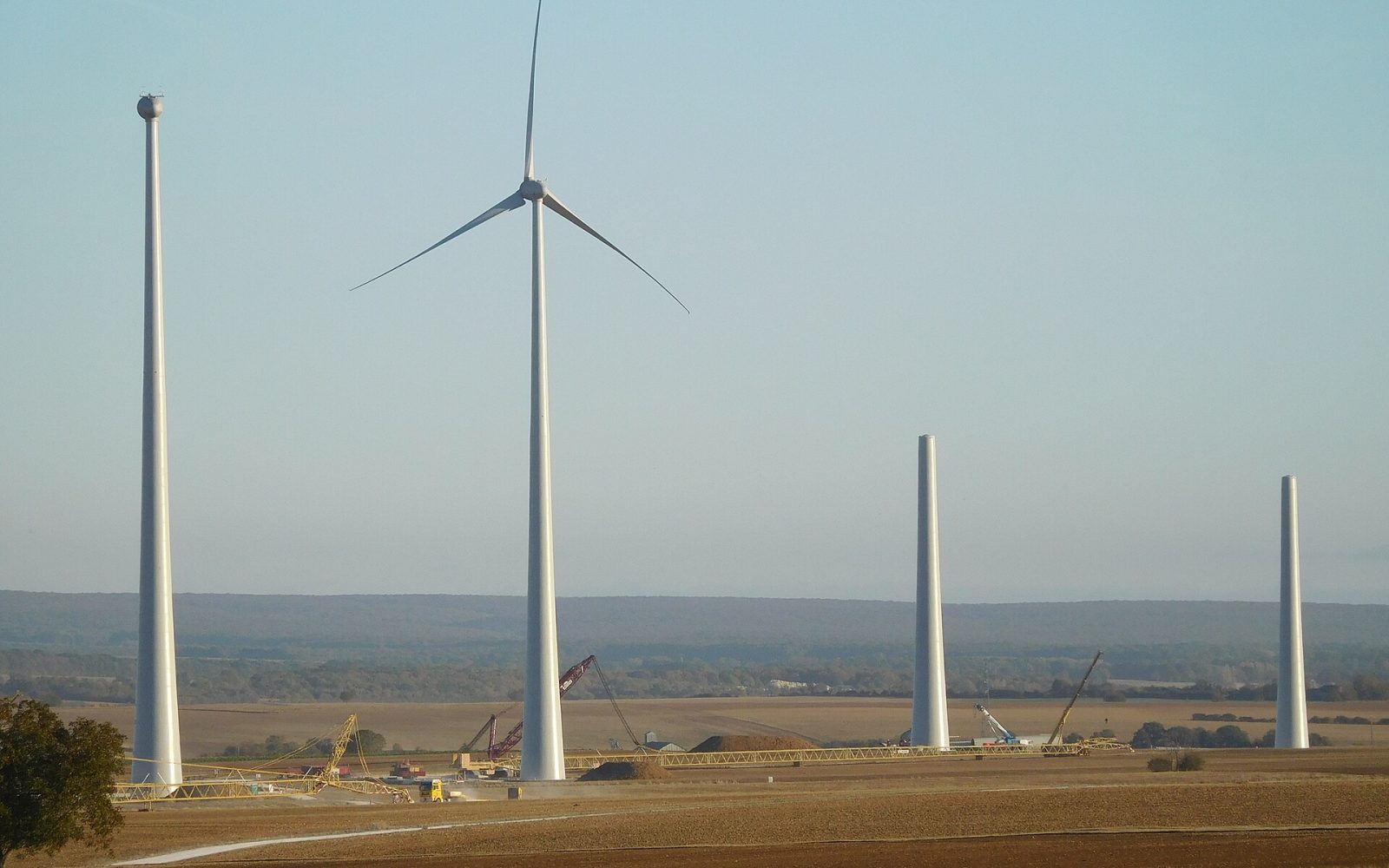
Tubular steel towers are typically fabricated in sections, blasted and painted in a shop, then bolted together on site. The external system is selected from the corrosivity of the site — usually C3 to C5 onshore depending on location, and CX for offshore atmospheric exposure — using the framework in ISO 12944 corrosivity categories. Internal tower surfaces see lower corrosivity but may suffer condensation.
| Component / zone | Typical exposure | Common system approach |
|---|---|---|
| Onshore tower exterior | C3–C5 atmospheric | Zinc-rich or epoxy primer, epoxy intermediate, polyurethane topcoat |
| Tower interior | C2–C3, condensation | Epoxy or epoxy–polyurethane, often lighter build |
| Offshore tower and transition piece (atmospheric) | CX | Zinc-rich primer plus multi-coat epoxy and polyurethane or polysiloxane, high total DFT |
| Splash zone | CX / Im with wave impact | Thick high-build or glass-flake epoxy; sometimes thermal-sprayed aluminum underneath |
| Submerged monopile / jacket | Im2 (or Im4 with cathodic protection) | Epoxy systems compatible with cathodic protection, or bare steel with anodes |
Offshore structures borrow heavily from oil-and-gas practice — see marine and offshore coatings. Pre-qualification testing under ISO 12944-9 or NORSOK M-501 typically includes cyclic ageing and cathodic disbondment testing. Total dry film thicknesses for offshore atmospheric systems are often in the range of about 12–20 mils (300–500 µm), with splash zone systems thicker still; always follow the project specification.
Bolted flange connections and slip-critical faying surfaces need special treatment. Coatings in friction joints must be qualified for slip resistance, and flange faces may be specified with thermal-sprayed zinc or uncoated contact areas. Overcoating them with ordinary paint can compromise joint preload.
Nacelles, hubs and castings
Hubs, main frames and bearing housings are usually large ductile iron castings. Their porous, sand-textured surfaces need careful blasting and often a surfacer or high-build primer to avoid pinholes from outgassing — see coating ductile and cast iron. Nacelle covers and spinners are commonly glass-fiber composites finished with gelcoat or polyurethane paint. Internal components such as gearboxes and generators receive standard industrial coatings, while offshore nacelles may be pressurized or dehumidified to limit internal corrosion.
Blade coatings and leading-edge erosion
Turbine blades are large composite structures made from glass or carbon fiber in epoxy or polyester resins. They are finished with a gelcoat or in-mold coat plus a polyurethane topcoat for UV and weather protection.
Why leading edges erode
Blade tips on modern turbines move at very high speeds — commonly around 80–100 m/s (roughly 180–220 mph) or more on large machines. At those speeds every raindrop, hailstone and sand grain strikes the leading edge like a small projectile. Repeated impacts cause fatigue, pitting and eventually loss of coating and laminate. Even modest roughness reduces aerodynamic efficiency and annual energy production, and severe damage can expose the structural laminate to moisture.
Leading-edge protection (LEP) options
- Flexible LEP coatings — elastomeric polyurethane or polyurea-based coatings that absorb impact energy rather than resisting it with hardness. Applied in the factory or in the field by roller or spray.
- Protective tapes — thick polyurethane films bonded along the edge; effective but sensitive to installation quality and edge sealing.
- Shells and covers — preformed thermoplastic or elastomeric shields bonded over the leading edge, usually for new blades or major repairs.
LEP products are compared using rain erosion testing on whirling-arm rigs, such as the method described in ASTM G73, along with recommended practices from certification bodies. Rig results help rank products but do not translate directly into field years, which depend on site rainfall and tip speed. See abrasion and hardness testing for related methods.
Most LEP failures in the field trace to adhesion and application issues — trapped air, poor edge feathering, contamination or wrong film thickness — rather than to the material itself. Insist on qualified technicians, environmental monitoring and documented surface preparation for every blade repair.
Maintenance and repair
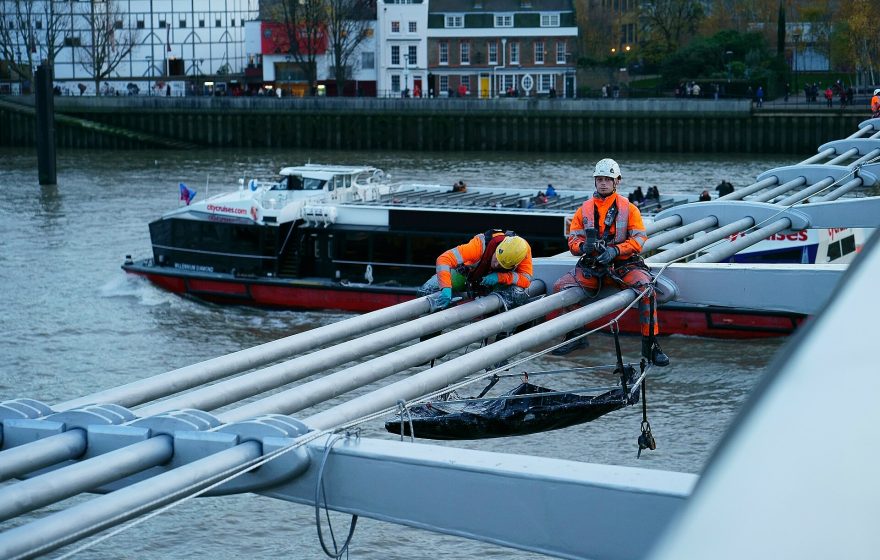
Inspections commonly use drones, ground-based cameras or rope-access teams to grade blade erosion and coating damage on towers and foundations. Repairs are performed from rope access, platforms or blade-access systems, and field conditions — wind, temperature, humidity and dew point — strictly limit working windows. Coatings for field repair are often chosen for fast cure and tolerance of low temperatures. Planning repairs before damage reaches the laminate saves substantial cost, which is why many operators adopt condition-based maintenance programs — see coating maintenance planning.
Frequently asked questions
How long do wind turbine tower coatings last?
Well-specified shop-applied systems are designed to protect towers for much of the turbine’s 20–30 year life with only touch-up maintenance, provided the corrosivity category was assessed correctly.
How often do blade leading edges need repair?
It varies greatly with rainfall, tip speed and protection type. At aggressive sites, some form of leading-edge repair within the first several years of operation is common.
Are wind turbine blades painted?
Yes. Blades receive a gelcoat or in-mold coating and usually a polyurethane topcoat, plus dedicated leading-edge protection.
Is cathodic protection used on offshore wind foundations?
Yes. Submerged steel is normally protected by sacrificial anodes or impressed current, sometimes combined with coatings to reduce the current demand.
Educational reference. Coating performance varies by formulation. Always follow the manufacturer’s product data sheet, safety data sheet and your project specification.