Confined Space Coating Work
How to plan and control coating work inside tanks, vessels, pipes and manholes — permits, atmospheric testing, ventilation through cure, ignition control and rescue.
Key takeaways
- Tanks, vessels, pipes, manholes, ship compartments and pits are typical confined spaces where coating work can create flammable, toxic or oxygen-deficient atmospheres within minutes.
- In the US, entry is regulated by OSHA 29 CFR 1910.146 for general industry and 29 CFR 1926 Subpart AA for construction; most coating entries are permit-required.
- Test the atmosphere before entry and monitor continuously — oxygen first, then flammables, then toxics — and keep forced ventilation running through application and cure.
- Every entry needs a trained entrant, attendant and entry supervisor, a written permit and a rescue plan that does not rely on untrained co-workers going in.
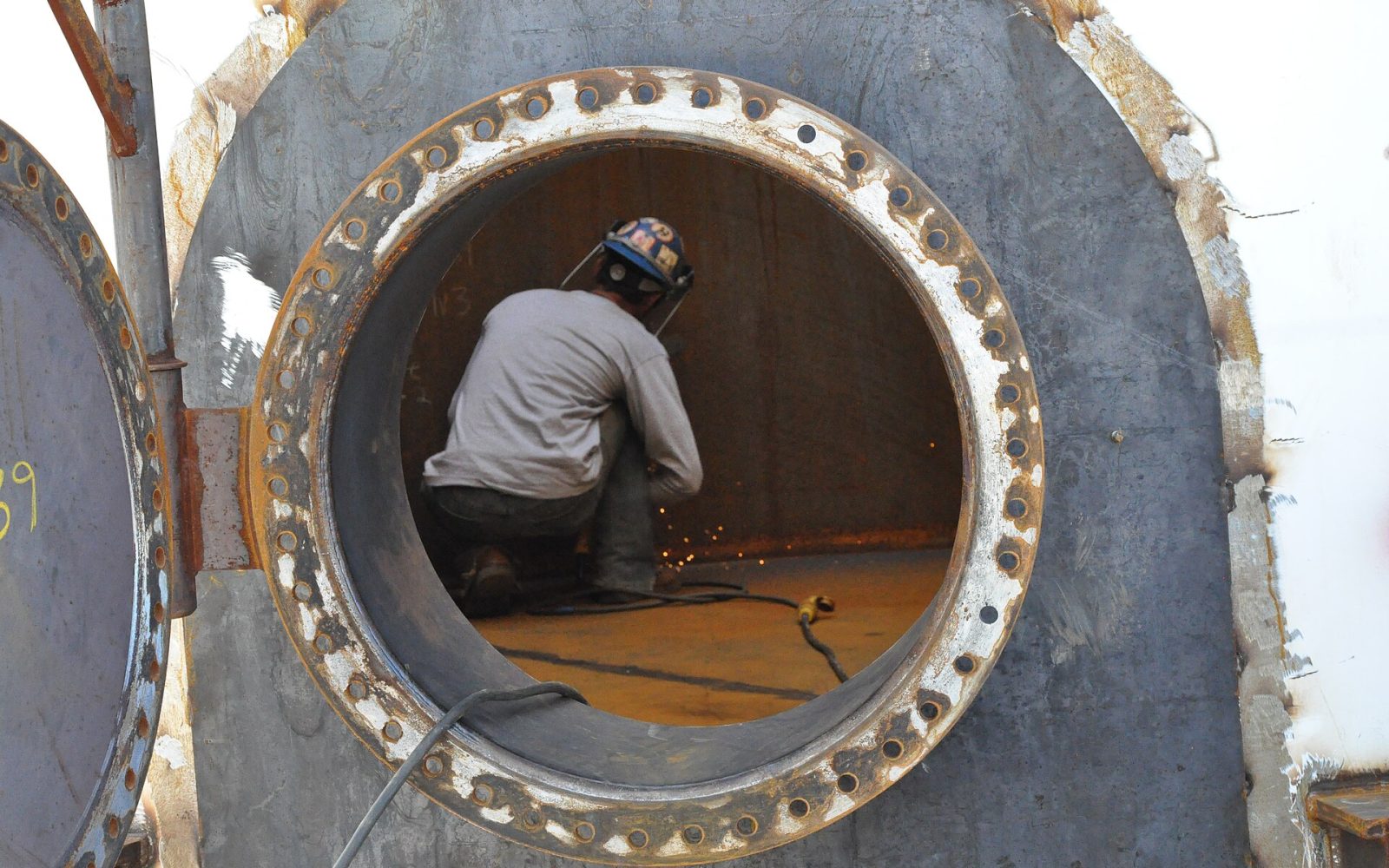
Many of the most important coating jobs happen inside enclosed structures: lining storage tanks, rehabilitating sewers and manholes, coating the interiors of pipes, rail tank cars, ship ballast tanks and process vessels. These spaces concentrate hazards. Solvent vapors build up, air is consumed or displaced, exits are small and rescue is difficult. Confined spaces have a long history of fatalities, often including would-be rescuers.
This article outlines general principles. Always follow your employer’s confined space program, the coating’s Safety Data Sheet and local regulations, which vary by jurisdiction.
What makes a space confined
OSHA defines a confined space as one that is large enough to enter and perform work, has limited or restricted means of entry or exit, and is not designed for continuous occupancy. A permit-required confined space also has one or more serious hazards, such as:
- A hazardous atmosphere or the potential for one.
- Material that could engulf an entrant.
- An internal shape that could trap or asphyxiate, such as inwardly converging walls or a floor sloping to a small cross-section.
- Any other recognized serious safety or health hazard.
Because spray-applying or even rolling solvent-borne coatings can create a hazardous atmosphere, coating work inside a confined space is normally treated as permit-required, even if the empty space was not.
Atmospheric hazards in coating work
| Hazard | Source in coating work | Commonly used limit |
|---|---|---|
| Oxygen deficiency | Displacement by inert gas, rusting steel consuming oxygen, poor ventilation | Below 19.5% oxygen is hazardous |
| Oxygen enrichment | Leaking oxygen lines or cylinders | Above 23.5% oxygen is hazardous |
| Flammable atmosphere | Solvent vapors during spraying, mixing and curing | Above 10% of the LFL/LEL is hazardous |
| Toxic vapors and mists | Solvents, isocyanates, amines, residues of stored products | Below applicable exposure limits |
| Toxic dusts | Blasting old lead or chromate coatings, silica | Below applicable exposure limits |
| Hydrogen sulfide and others | Sewers, wastewater and process residues | Below applicable exposure limits |
Most solvent vapors are heavier than air and collect in low points, sumps and the bottoms of tanks. They also continue to evaporate from the wet film after spraying stops, so hazardous conditions can persist through the cure. See fire and explosion hazards.
Permits, roles and training
A written entry permit documents the space, purpose, hazards, controls, test results, equipment, communications and rescue arrangements, and is signed by the entry supervisor. Key roles:
- Authorized entrants — workers trained to recognize hazards, use equipment and get out when needed.
- Attendant — stays outside, monitors entrants and conditions, controls access, and summons rescue; does not enter to attempt a rescue unless relieved and part of the rescue team.
- Entry supervisor — verifies conditions, authorizes and terminates entry, and confirms rescue services are available.
Atmospheric testing and monitoring
- Calibrate and bump test. Check direct-reading multi-gas monitors against known gases as the manufacturer and the program require.
- Test from outside first. Sample before entry through openings, at several depths and locations, including the bottom and remote corners.
- Test in order. Oxygen first, then flammable gases and vapors, then toxic contaminants — oxygen levels affect how some flammable sensors read.
- Monitor continuously. Keep monitors in the work zone and breathing zone during work; coating operations change conditions quickly.
- Act on alarms. Stop work and evacuate when alarms sound or readings approach permit limits; re-evaluate before re-entry.
Never ventilate a confined space with pure oxygen, and never use compressed oxygen for tools or cleaning. Oxygen enrichment makes clothing and materials burn violently.
Ventilation during application and cure
Forced ventilation is the primary control for vapor buildup. Good practice includes:
- Exhausting from low points and the far side of the work, with clean make-up air entering at an opposite opening so air sweeps through the space.
- Sizing airflow from the solvent content and application rate, with a safety margin, to keep vapors well below the flammable limit throughout.
- Using fans and ducting rated for flammable atmospheres where needed, and discharging exhaust away from people, intakes and ignition sources.
- Continuing ventilation after application until the coating has released enough solvent, as indicated by monitoring and the data sheet.
Ventilation is often coordinated with dehumidification and climate control during tank lining projects to manage dew point and cure.
Ignition control, PPE and rescue
- Ignition sources. Use lighting and electrical equipment rated for the hazardous location, bond and ground spray equipment and containers, and control hot work and static.
- Isolation. Blank or disconnect lines, lock out mixers, pumps and agitators, and verify isolation before entry.
- Respiratory protection. Supplied-air respirators are common for spraying in confined spaces; SCBA or supplied air with an escape cylinder is needed in IDLH or oxygen-deficient atmospheres. See respiratory protection.
- Other PPE and hazards. Protect against skin contact, noise, heat stress, slips and falls on ladders and scaffolds.
- Rescue. Provide retrieval systems where feasible and a trained rescue service able to respond in time, and practice the rescue plan.
Plan the space before the coating crew arrives: count and size the openings, map airflow paths, decide where monitors and fans go, and confirm that a stretcher or retrieval line can actually get through the manway.
Frequently asked questions
Is a water tank a confined space?
Usually yes: it can be entered, has limited openings and is not designed for occupancy. Coating work inside generally makes it permit-required.
Why test oxygen before flammables?
Oxygen deficiency is immediately dangerous, and many combustible sensors need adequate oxygen to read correctly.
Can the attendant go in to help?
No. The attendant summons rescue and uses non-entry retrieval where possible. Many confined space fatalities are unprotected would-be rescuers.
When can ventilation be switched off?
Only when monitoring shows the atmosphere remains acceptable without it and the coating’s solvent release is essentially complete, as the entry supervisor determines.
Educational reference. Coating performance varies by formulation. Always follow the manufacturer’s product data sheet, safety data sheet and your project specification.