Potable Water Tank Coatings
Certified interior linings and weather-resistant exterior systems for elevated, ground and standpipe drinking-water tanks — where corrosion protection must never compromise water quality.
Key takeaways
- Interior linings in drinking-water tanks must be certified for potable water contact, typically to NSF/ANSI/CAN 61, and applied within the certification’s limits for thickness, cure and tank size.
- In North America, AWWA D102 is the principal standard for coating welded steel water-storage tanks, defining interior and exterior coating systems.
- A lining that is not fully cured can leach solvents or other substances into the water, causing taste, odor and compliance problems.
- Older tanks frequently carry lead-based exterior paint, which makes repainting a containment and worker-protection project.
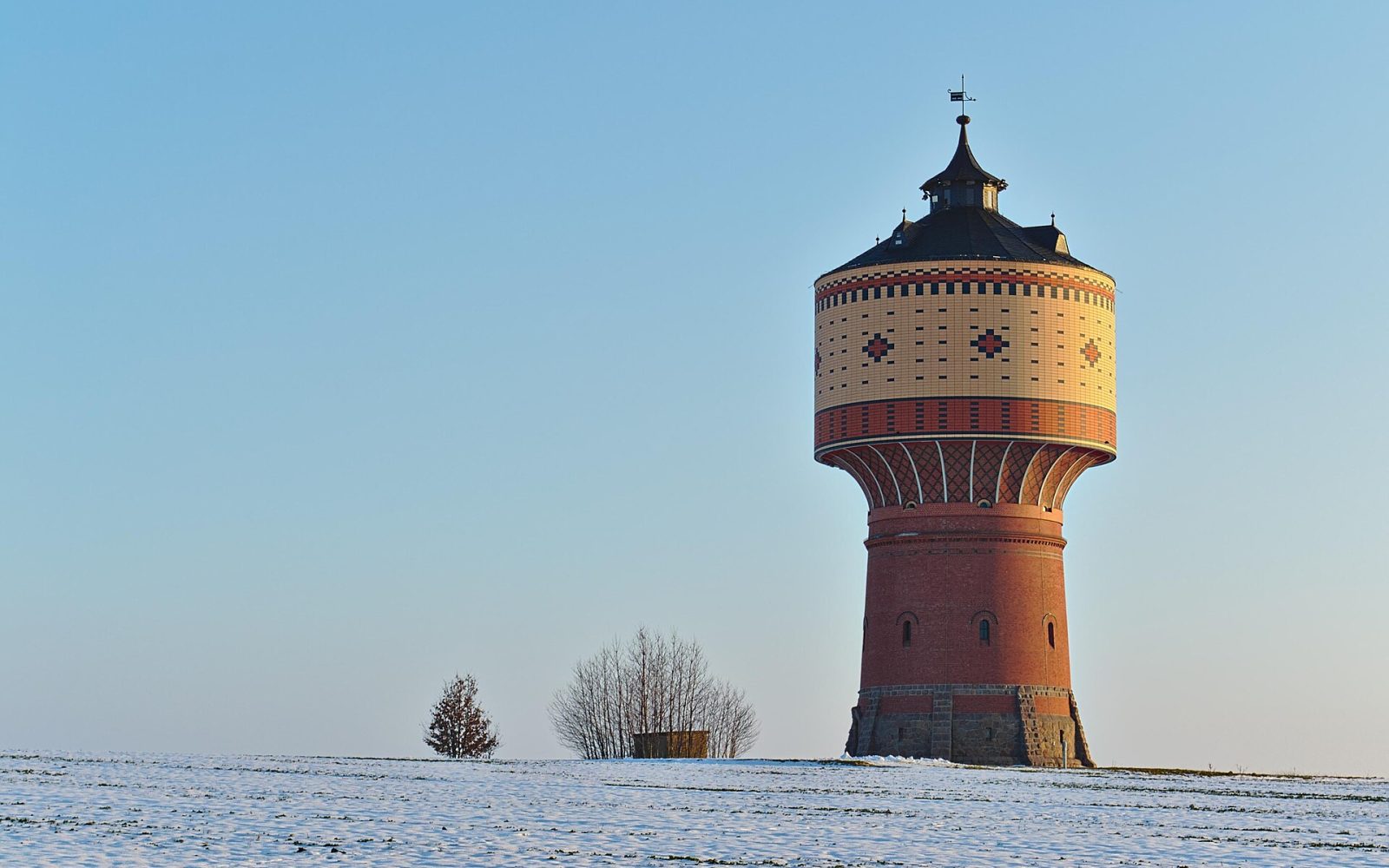
Potable water tank coatings protect the steel and concrete reservoirs, elevated towers, standpipes and ground storage tanks that hold treated drinking water. Inside, the lining sits in continuous immersion in chlorinated or chloraminated water, with a humid, condensing vapor space above and repeated wetting and drying at the fluctuating water line. Outside, the coating faces weather, UV and often intense public scrutiny of its appearance. Unlike most industrial linings, the interior system must also be safe for the people who drink the water.
This article focuses on storage tanks. Treatment plant structures and wastewater environments are covered in water and wastewater coatings.
Standards and certification
Two frameworks dominate in North America:
- NSF/ANSI/CAN 61 — certifies that materials in contact with drinking water do not leach contaminants above health-based limits. For coatings, the listing specifies conditions such as the minimum tank size, maximum dry film thickness, number of coats and minimum cure time and temperature. Applying outside those conditions may void the basis of certification. See NSF/ANSI/CAN 61 for coatings.
- AWWA D102 — the American Water Works Association standard for coating steel water-storage tanks. It describes inside coating systems (ICS) and outside coating systems (OCS), surface preparation requirements, and inspection.
Other countries use their own approval schemes for materials in contact with drinking water; owners should confirm which apply locally. State drinking-water regulators may add requirements for coatings work, inspection and returning a tank to service.
Interior lining systems
| System type | Typical build | Notes |
|---|---|---|
| Multi-coat polyamide or polyamine epoxy | Two or three coats, often about 10–16 mils (250–400 µm) total | Long track record; contrasting coat colors help inspection |
| Zinc-rich primer + epoxy | Primer plus epoxy intermediate and finish | Adds galvanic protection at damage points where permitted |
| Single-coat 100% solids epoxy | Often 20 mils (500 µm) or more in one coat | Plural-component spray; fast return to service |
| Aromatic polyurethane or polyurea | High build, plural-component spray | Fast cure, flexible; check NSF listing limits closely |
Exact film builds depend on the product and its certification. Linings must cover the floor, shell, roof underside, ladders, columns and rafters. Roof structures in the vapor space are notoriously difficult to coat well because of edges, skip welds and lap joints; seal welding and stripe coating are often specified — see stripe coating.
Concrete potable water tanks are usually left uncoated or treated with cementitious or epoxy systems certified for drinking water. Coating concrete requires moisture and surface preparation checks specific to concrete rather than steel practice.
Surface preparation and application
- Drain and inspect. Remove sediment, assess coating condition, and identify steel repairs and any lead-containing coatings.
- Blast clean. Interiors are commonly blasted to near-white metal (SSPC-SP 10/NACE No. 2) or white metal per the specification, with a profile matching the lining data sheet.
- Control the environment. Use dehumidification and heating to hold the blast and keep the steel above the dew point; see dehumidification and climate control.
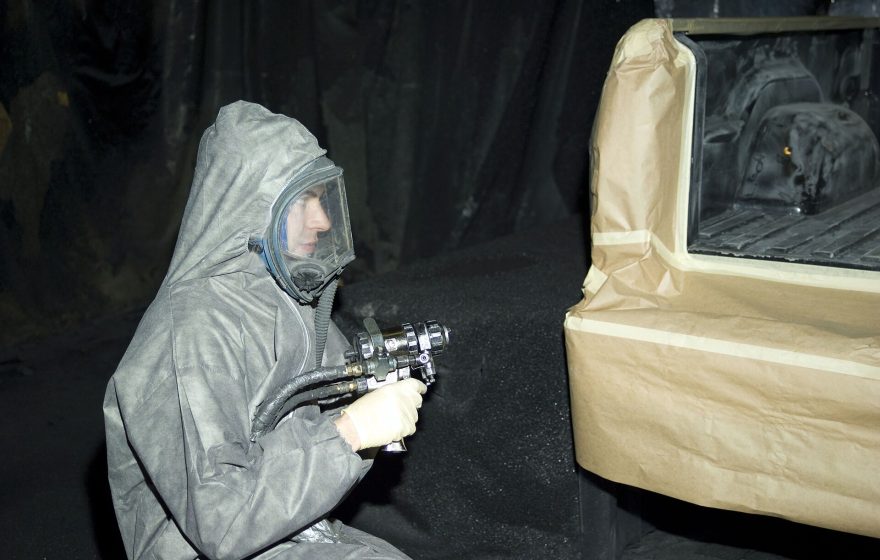
- Apply and stripe. Spray full coats with stripe coats on welds, edges and roof framing, measuring wet and dry film thickness throughout.
- Cure with ventilation. Maintain forced ventilation and temperature for at least the cure time stated in the NSF listing so solvents are fully released.
- Inspect and holiday test. Check DFT, adhesion and continuity, typically with holiday testing of immersion surfaces, and repair defects.
- Disinfect and test. Disinfect according to AWWA C652 or the regulator’s requirements, then fill, sample and confirm water quality before returning the tank to service.
Inadequate ventilation during cure is a common cause of solvent odor and taste complaints after a tank returns to service. Do not shortcut the cure schedule to meet a fill date, and follow the confined space entry permit and safety data sheet throughout the job.
Exterior coatings
Exterior systems on steel tanks typically combine a zinc-rich or epoxy primer, an epoxy intermediate and an aliphatic polyurethane or fluoropolymer finish for color and gloss retention. Elevated tanks are often community landmarks carrying logos and town names, so long-term appearance matters. Coastal or industrial locations call for more robust systems based on the site’s corrosivity. Condensation on the exterior of cold-water tanks in humid weather can complicate application timing.
Repainting and maintaining existing tanks
Many tanks built before the late 1970s carry lead-based exterior coatings. Abrasive blasting these requires full containment, air monitoring and worker protection programs — see lead paint removal. Overcoating sound existing systems can be a cost-effective alternative when adhesion testing shows the old coating is well bonded.
Regular washouts and inspections — commonly every few years — allow owners to track interior coating condition, sediment and corrosion, and to plan recoating before steel loss occurs. Diver or remotely operated vehicle inspections can reduce downtime by allowing inspection without draining the tank.
Coordinate tank coating outages with system operations early. Taking a tank offline affects pressure, fire flow and storage capacity, and a delay in cure or disinfection can extend the outage by weeks.
Frequently asked questions
Can any epoxy be used inside a water tank?
No. The product must be certified for potable water contact, typically to NSF/ANSI/CAN 61, and applied within the conditions of that certification.
How long after coating can a water tank be filled?
Only after the cure time stated in the product’s certification and data sheet at the actual temperature, followed by disinfection and water quality testing. This can range from a few days to longer in cold conditions.
How often do water tank interiors need recoating?
It varies with the original system, water chemistry and maintenance, but well-applied modern linings commonly last many years between full recoats, with spot repairs in between.
Educational reference. Coating performance varies by formulation. Always follow the manufacturer’s product data sheet, safety data sheet and your project specification.