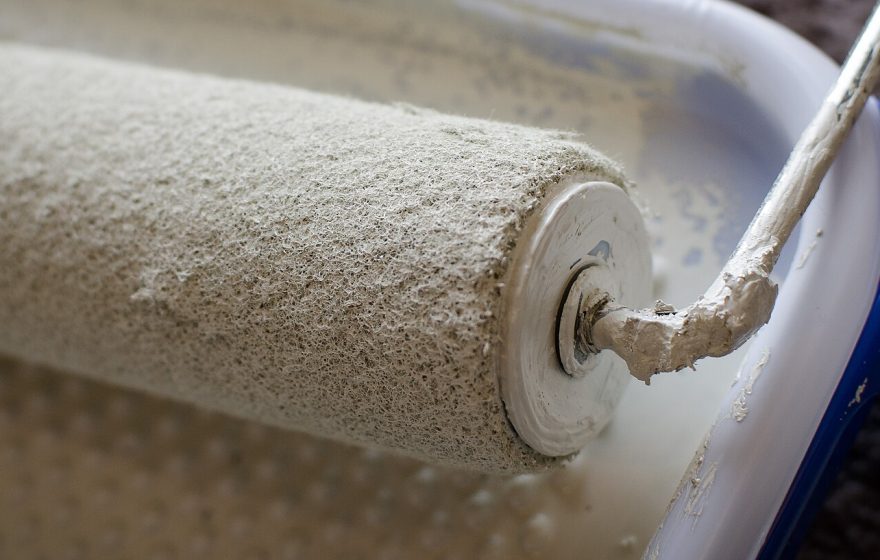
Roller Cover Selection
How nap length, fabric and core construction decide film build, finish and lint — and how to match a roller cover to the coating and the surface.
Key takeaways
- Roller covers are defined by three things: nap (pile) length, fabric, and core. Each one affects film build, finish and solvent resistance.
- Match nap length to surface texture: short naps for smooth steel and floors, long naps for block, stucco and rough concrete.
- Solvent-borne epoxies, urethanes and similar high-performance coatings need solvent-resistant (phenolic or plastic) cores and shed-resistant fabrics.
- A cheap cover that sheds lint or collapses mid-job can ruin a coating that costs many times more. Buy for the coating, not the price.
A roller cover looks like a simple consumable, but it controls how much coating reaches the surface, how evenly it is spread and what texture the cured film has. On protective coating work, where a specification calls for a defined dry film thickness and a defect-free finish, the wrong cover is a common hidden cause of thin spots, stipple, bubbles and embedded fibers.
This article focuses on choosing the cover itself. For overall rolling and brushing technique, see brush and roller application.
Anatomy of a roller cover
Every cover has a core (the tube that slides onto the frame), a fabric bonded to that core, and a nap or pile — the length of the fibers standing off the core. The fabric may be woven or knitted. Woven fabrics have a tighter backing and shed less; knitted fabrics are softer, hold more coating and are generally faster, but shed more readily.
Edges matter too. Bevelled or rounded ends reduce the ridges (“roller marks” or “tram lines”) left at the edges of each pass, which is especially important on floors and smooth tank walls.
Choosing nap length
Nap length is the first decision. Longer nap holds more coating and reaches into pores, mortar joints and texture, but it leaves more stipple and is harder to control on smooth surfaces. Shorter nap gives a smoother finish and more consistent film but cannot fill deep texture.
| Nap length | Typical surfaces | Finish and use |
|---|---|---|
| 3/16–¼ in (5–6 mm) | Smooth steel, metal doors, cabinets, primed panels | Smoothest finish; gloss enamels and urethane topcoats |
| ⅜ in (10 mm) | Smooth to lightly textured concrete floors, smooth plaster, steel | General purpose; most epoxy and polyaspartic floor coats |
| ½ in (13 mm) | Light-textured walls, smooth poured concrete walls | Higher film build per pass; some stipple |
| ¾ in (19 mm) | Concrete block, rough concrete, brick | Fills pores and joints; heavy stipple |
| 1–1¼ in (25–32 mm) | Split-face block, stucco, very rough masonry | Maximum reach into texture; elastomeric wall coatings |
These are starting points. Many manufacturers specify a nap length on the product data sheet because it affects the film thickness a single coat can deliver — follow that recommendation when one is given.
Fabric types and what they do
Synthetic fabrics
- Polyester — durable, inexpensive, good with waterborne and many solvent-borne coatings; quality varies widely.
- Nylon and nylon/polyester blends — tough and resilient, good on rough surfaces, often used with waterborne acrylics and elastomerics.
- Microfiber — very fine fibers that hold and release a lot of coating with a smooth finish; popular for waterborne architectural finishes and some floor work.
Natural fibers
- Mohair — very short, dense nap that leaves an extremely smooth finish with gloss enamels and varnishes; traditionally chosen for solvent-borne finishes.
- Lambskin (sheepskin) — holds large amounts of coating and releases it evenly on rough surfaces; best suited to solvent-borne materials, as waterborne coatings can make it mat down.
Foam and specialty covers
Foam covers give a smooth, brush-mark-free finish on small flat areas but tend to trap air and cause bubbles in fast-curing or high-solids coatings. Spiked (porcupine) rollers are not application tools at all: they are run through freshly applied self-leveling floor coatings to release entrapped air (see trowel and squeegee floor application).
Matching the cover to the coating
The coating chemistry decides which cores and fabrics will survive. Strong solvents in epoxy, urethane and zinc-rich primers can soften the glue and cardboard cores of economy covers, causing the fabric to slip, peel or shed fibers into the film.
| Coating type | Recommended core | Fabric and nap guidance |
|---|---|---|
| Waterborne acrylics and latex | Plastic or phenolic | Polyester, nylon blend or microfiber; nap by texture |
| Solvent-borne epoxies and urethanes | Phenolic (solvent-resistant) | Shed-resistant woven synthetic; ¼–⅜ in (6–10 mm) on smooth work |
| 100% solids epoxy floor coats | Phenolic | Shed-resistant ⅜ in (10 mm) for back-rolling |
| Polyaspartic and fast-cure urethanes | Phenolic | Short, shed-resistant nap; often disposable |
| Elastomeric wall and roof coatings | Plastic or phenolic | ¾–1¼ in (19–32 mm) synthetic |
| Gloss alkyd enamels and varnishes | Phenolic | Mohair or very short woven synthetic |
For fast-curing systems such as polyaspartic coatings, cleaning a cover is rarely practical; plan on several covers per job and swap them before the material in the nap begins to gel.
Preparing and using covers on the job
- De-lint. Wrap new covers in masking tape and peel it off, or run them over tape, to pull loose fibers before they reach the coating.
- Pre-condition. For waterborne coatings, dampen the cover with water and spin or blot it out; for solvent-borne coatings, follow the manufacturer’s guidance on pre-wetting with the recommended solvent.
- Load evenly. Saturate the nap fully, then roll off the excess on a tray or grid so the first strokes are not overloaded.
- Check film build. Use a wet film gauge early and often — a heavily loaded long nap can easily lay down more than intended. See wet film thickness measurement.
- Replace on schedule. Change covers when the nap mats, the coating begins to thicken in the pile or the pot life is near its end.
Keep a few spare covers sealed in a clean bag at the work area. A cover dropped on a dusty floor or contaminated with abrasive is cheaper to replace than to clean, and debris in a floor coating shows forever.
Advantages and limitations of rolling
Advantages
- Low equipment cost and minimal overspray
- Good wetting of porous concrete and masonry
- Covers are matched easily to surface texture
- Well suited to occupied buildings and small areas
Limitations
- Lower production rate than spray on large areas
- Harder to achieve high film build in one coat
- Stipple texture and roller marks on smooth work
- Lint and fiber contamination from poor covers
Rolling high-build coatings to the thickness of a sprayed coat often takes multiple coats. Check whether the specification or data sheet permits roller application and what dry film thickness per coat is realistic.
Frequently asked questions
What nap should I use for an epoxy garage floor?
A shed-resistant ⅜ in (10 mm) cover on a phenolic core is the most common choice for smooth to lightly profiled concrete. Always follow the coating manufacturer’s recommendation if one is given.
Can I clean and reuse roller covers used for epoxy?
Covers used with two-component epoxies and urethanes are usually treated as disposable, because the material cures in the nap. Waterborne coatings can be cleaned with water if done promptly.
Why is my roller leaving bubbles?
Common causes are foam covers, overworking the coating, rolling too fast and very thick or fast-curing materials. Switch to a fabric cover, slow down and avoid excessive back-rolling.
Does a longer nap mean higher DFT?
Usually more wet film per pass, but not always a uniform one. Film build also depends on loading, pressure and spread rate, so verify thickness with a gauge rather than assuming.
Educational reference. Coating performance varies by formulation. Always follow the manufacturer’s product data sheet, safety data sheet and your project specification.