Adhesive vs Cohesive Failure
Adhesive failure occurs at an interface between layers; cohesive failure occurs within a single layer. Identifying which one happened is the first step in understanding why a coating or test failed.
Adhesive failure and cohesive failure are the two basic modes by which a coating system separates. In an adhesive failure, separation happens at the interface between two materials, such as between the substrate and the primer, or between two coats. In a cohesive failure, separation happens within a single material, leaving that material on both separated surfaces. Coating inspectors, failure investigators and laboratory technicians describe failures this way because the mode points toward the cause. The terms are used in adhesion testing, coating delamination investigations and coating failure investigation.
Definitions
Adhesive failure
Separation at the boundary between two layers. The two surfaces exposed by the failure are different materials. Examples:
- Primer comes off clean, leaving bare steel.
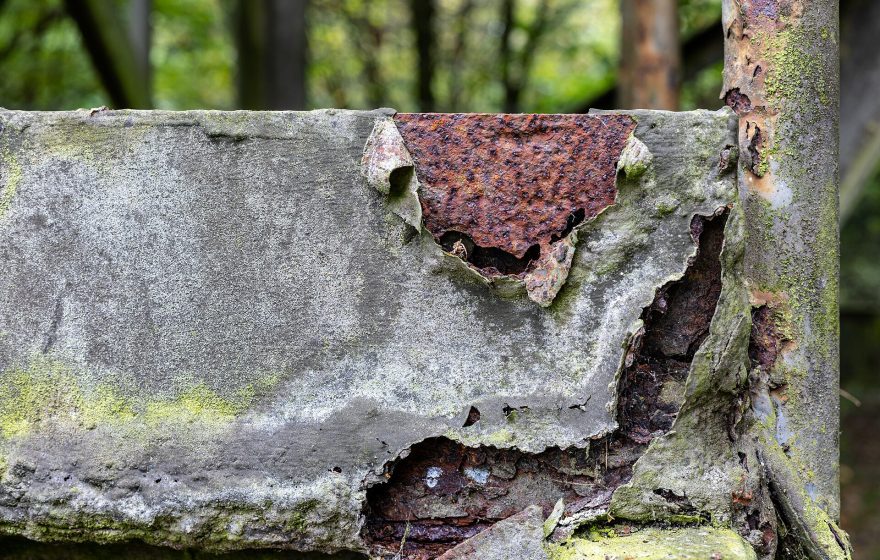
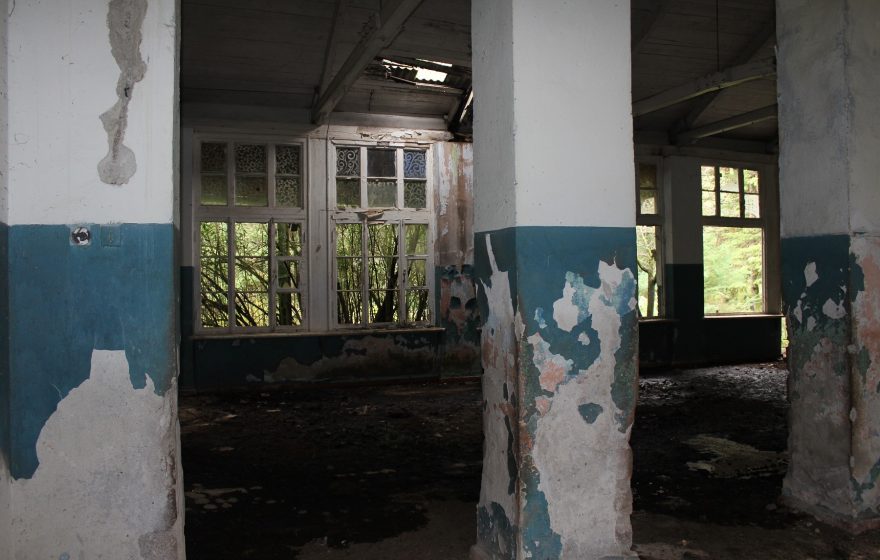
- Topcoat peels from the primer, leaving the primer surface smooth and intact (see intercoat delamination).
Cohesive failure
Separation within one layer. The same material appears on both faces. Examples:
- Primer splits within its own thickness, with primer on both the substrate and the detached flake.
- Concrete breaks below the coating, leaving concrete stuck to the underside of the coating.
Mixed-mode failure
Many real failures combine both, for example 60 percent cohesive in the primer and 40 percent adhesive at the substrate. Test reports usually record the percentage of each mode.
What each mode suggests
| Mode | Location | Possible causes |
|---|---|---|
| Adhesive, substrate to primer | Interface with metal or concrete | Contamination, inadequate profile, moisture, salts, wrong primer |
| Adhesive, between coats | Interface between coats | Exceeded recoat windows, amine blush, contamination, incompatibility |
| Cohesive within a coat | Inside a layer | Under-cure, solvent entrapment, off-ratio, weak formulation, aging |
| Cohesive in the substrate | Concrete, wood, old paint | Weak surface layer, laitance, weathered wood, failing old coating |
| Glue failure | Between dolly and coating | Test failure; adhesive did not hold |
Reading pull-off test results
In pull-off testing (ASTM D4541, ASTM D7234 and ISO 4624), a dolly is glued to the coating and pulled off with a tester. The result has two parts: a pull-off stress and a description of the failure. Both are needed. A high stress with cohesive failure in the substrate means the coating is bonded better than the substrate is strong. A low stress with adhesive failure at the primer interface points to surface preparation problems.
Standard notation describes each layer by letter, for example:
- A for substrate
- B for first coat
- C for second coat
- Y for adhesive (glue)
- Z for dolly
A failure recorded as “A/B 70 percent, B 30 percent” means 70 percent adhesive failure between substrate and first coat and 30 percent cohesive failure within the first coat. See concrete pull-off testing for concrete-specific practice.
Glue failures
If the dolly separates from the coating with glue on both faces, the test measures only the glue’s strength. The result shows that coating adhesion is at least that value, but not how strong it actually is. Glue failures often come from inadequate abrasion of the coating, contaminated dollies, or uncured adhesive.
Knife and tape tests
In knife testing (ASTM D6677) and tape testing (ASTM D3359), the inspector notes not only how easily coating is removed but where separation occurs. Coating that lifts in chips leaving bare metal indicates adhesive failure; coating that tears within itself shows cohesive weakness.
Field examples
Floor coating peeling with concrete attached
Cohesive failure in concrete usually means the coating was well bonded but the concrete surface was weak, for example due to laitance or poor curing. Better preparation, such as shot blasting concrete, removes the weak layer.
Topcoat peeling cleanly from an epoxy primer
Adhesive failure between coats often points to amine blush or an exceeded recoat window.
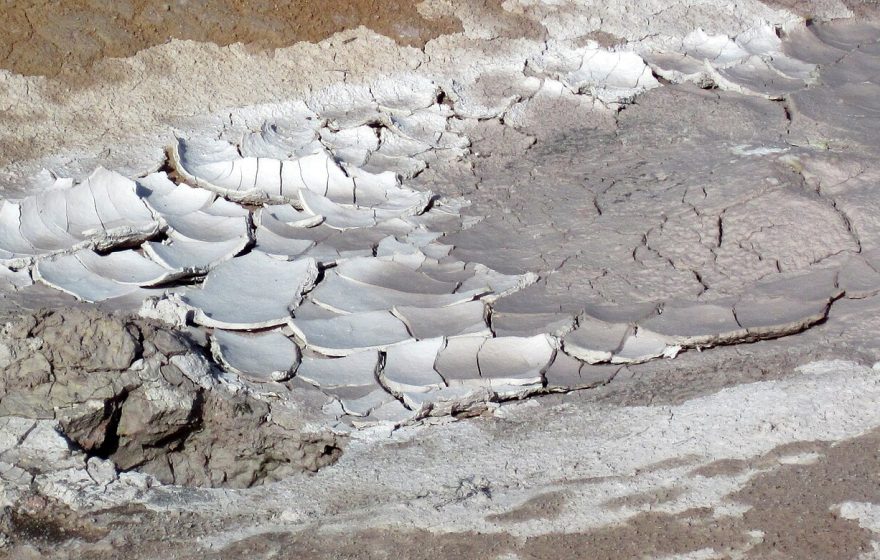
Coating splitting within itself
Cohesive failure inside a coat suggests under-cure or a formulation weakness. Cure testing and lab analysis can confirm.
Investigating mode
- Examine both faces of the failure under magnification.
- Identify layers by color, texture and thickness.
- Use solvent tests or FTIR to identify materials.
- Test for contaminants such as salts or oils on the exposed faces.
- Document with photographs and measurements.
Key terms
- Adhesive failure. Separation at an interface between two layers or between coating and substrate.
- Cohesive failure. A break within a single layer, leaving that material on both faces.
- Glue failure. In pull-off testing, failure of the adhesive holding the dolly rather than the coating.
- Mixed-mode failure. Failure involving more than one location, recorded as percentages.
- Pull-off strength. The stress at which a dolly detaches, measured under ASTM D4541 or D7234 (see adhesion testing).
Frequently asked questions
Which failure mode is better?
Neither is “good.” Cohesive failure in the substrate at a high stress generally indicates good adhesion. Adhesive failure at a low stress generally indicates a bonding problem.
Why does the failure mode matter more than the number?
The number alone does not show where the weakness is. The mode tells investigators which layer or interface to look at.
Is “substrate failure” the same as cohesive failure?
Yes. It is cohesive failure of the substrate, such as concrete or old coating.
Related entries
- Adhesion testing
- Adhesion science
- Coating delamination
- Intercoat delamination
- Alligatoring (new)
- Concrete crack repair before coating (new)
Educational reference. Coating performance varies by formulation. Always follow the manufacturer’s product data sheet, safety data sheet and your project specification.
[…] Adhesive vs cohesive failure (new) […]