Coating Weathering Steel
When self-protecting weathering steel still needs a coating, how to remove the patina and salts properly, and which systems protect girder ends, crevices and coastal structures.
Key takeaways
- Weathering steel forms a dense, adherent rust patina that slows further corrosion — but only where the surface regularly wets and dries.
- Where it stays wet, is exposed to chlorides or collects debris, the patina does not stabilize and the steel corrodes much like ordinary carbon steel.
- Coating is common at bridge girder ends under leaking joints, in crevices and splash zones, and for appearance or to prevent rust staining.
- Coating rusted weathering steel requires thorough removal of the patina and the soluble salts in its pits, usually by abrasive blasting and salt testing.
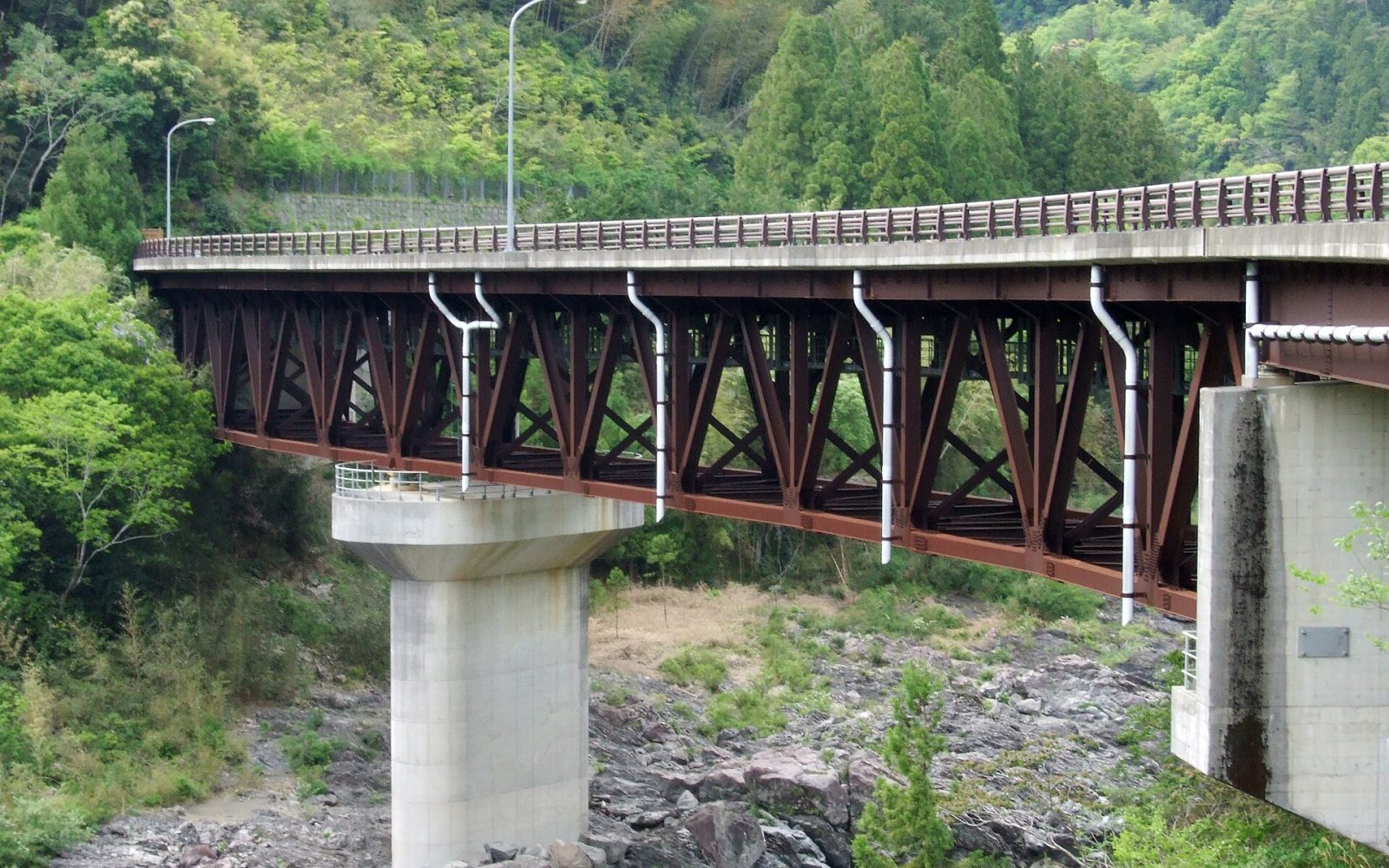
Weathering steels — high-strength, low-alloy steels with small additions of copper, chromium, nickel and phosphorus — are designed to be used bare. In suitable atmospheres they develop a tightly adherent, dark brown oxide layer that slows the corrosion rate far below that of plain carbon steel. Common specifications include ASTM A588, ASTM A606 Type 4, ASTM A242 and the weathering grades of ASTM A709 (such as Grade 50W) used for bridges.
Bare weathering steel is popular for bridges, transmission towers, architectural façades and sculpture because it avoids the cost of initial painting and repainting. Yet it is not “maintenance free”. Where design or environment prevents a stable patina from forming, coating is required — either from the start or as a repair.
How the patina works
All steel rusts in the atmosphere. On weathering steel, the alloying elements cause the inner rust layer to become finer-grained and more compact over a period of years of alternating wet and dry cycles. The result is a barrier that limits oxygen and moisture access to the steel. The process depends on three conditions:
- Wet–dry cycling. Surfaces must dry out regularly. Continuous wetness or high time-of-wetness prevents patina formation.
- Low chloride exposure. Marine spray and deicing salts disrupt the patina and keep corrosion active.
- Clean, drained details. Debris, bird droppings, leaf litter and trapped water create local wet pockets.
The underlying electrochemistry is covered in corrosion science basics.
When weathering steel should be coated
| Situation | Why bare performance suffers | Typical response |
|---|---|---|
| Marine or coastal sites | Airborne chlorides prevent a protective patina | Coat fully or select another material |
| Girder ends under expansion joints | Leaking deck drainage carries deicing salt | Coat a zone at each end; fix the joint |
| Crevices, faying surfaces, pack rust areas | Retained moisture and crevice corrosion | Seal and coat; improve detailing |
| Low-clearance overpasses | Salt spray from traffic beneath | Coat exposed elements |
| Buried or immersed parts | Continuous wetness, no drying | Coat as for carbon steel |
| Architectural use near light finishes | Rust runoff stains concrete and paving | Manage drainage or coat |
US Federal Highway Administration guidance on uncoated weathering steel in structures has long recommended against bare use in marine environments, in locations with frequent salt spray or fog, and where details trap water and debris. Many owners specify coating a length of girder adjacent to expansion joints as standard practice.
Coating weathering steel is not a design failure. Many bridges use a hybrid approach — bare steel over most of the span, coated steel at joints and other wet zones — to combine low life-cycle cost with protection where it is needed most.
Surface preparation
New, unweathered weathering steel can be prepared and coated much like carbon steel: remove mill scale, blast to the specified cleanliness and profile, and prime. Coating steel that has already rusted is far more demanding.
- Assess. Measure section loss, look for pack rust between plates and laminar (layered) rust, and identify the source of water or salt.
- Remove debris and pack rust. Clear debris, then remove pack rust and laminar scale mechanically; it can be thick and tightly wedged in crevices.
- Abrasive blast. Blast to a high standard — commonly SSPC-SP 10/NACE No. 2 (near-white) or better for the coated zone — to remove the patina. The patina is tightly bonded and pitted, so production is slower than on new steel.
- Test for soluble salts. Chlorides concentrate at the bottom of pits. Test after blasting and, if limits are exceeded, wash with clean water or waterjetting and reblast. See soluble salt contamination.
- Treat crevices. Seal crevices and faying-surface gaps with a penetrating sealer or caulk compatible with the coating system before or between coats.
Coating over residual rust or salts on weathering steel tends to produce rapid underfilm corrosion and blistering. On salt-contaminated girder ends, cleaning to a visual standard alone is not enough — verify chloride levels before priming.
Coating systems
Systems for weathering steel are generally the same as for carbon steel in the same environment, selected using exposure categories such as those in ISO 12944. Common choices include:
- Zinc-rich primer, epoxy intermediate, polyurethane or polysiloxane topcoat — the standard high-performance three-coat bridge system, giving barrier and galvanic protection. See zinc-rich primers.
- Surface-tolerant epoxy mastics — for maintenance where full blasting is not practicable, accepting shorter service life.
- Penetrating sealers — for crevices and pack rust areas, often under a topcoat.
Matching appearance
Owners often want coated zones to blend with surrounding bare steel. Topcoats are available in brown tones that approximate the patina color, though the bare steel continues to darken and change over time, so a perfect match is rarely permanent.
Design and maintenance considerations
Good detailing reduces the need for coating: drain decks away from steel, use jointless or well-sealed decks, avoid horizontal ledges and pockets that trap water, and provide drip details to keep runoff off concrete. Maintenance should include regular washing of debris from flanges and bearings and periodic inspection of patina condition. A patina that is flaking, granular or laminar rather than tight and fine-textured indicates the steel is not performing as intended. Plan inspections and recoats as part of a broader bridge coating program.
Frequently asked questions
Does weathering steel need paint?
Not in suitable environments with good drainage. It does need coating where it stays wet, is exposed to chlorides, or where design traps water and debris.
Can I paint over the rust patina?
Not reliably. The patina and the salts in its pits should be removed by abrasive blasting before priming, as for rusted carbon steel.
How do I tell if the patina is protective?
A protective patina is tight, dark and fine-textured. Flaking, granular or layered rust indicates active corrosion and a need for investigation.
Educational reference. Coating performance varies by formulation. Always follow the manufacturer’s product data sheet, safety data sheet and your project specification.