Nanocoatings
Nanocoatings use materials or structures measured in billionths of a meter to add properties such as scratch resistance, water repellency or UV protection. Some are proven workhorses; others are mostly marketing.
Key takeaways
- “Nanocoating” describes coatings that use nanoscale particles, nanometer-thin films or nanostructured surfaces, generally in the range of about 1–100 nm.
- Established uses include nano-silica and nano-alumina for scratch resistance, nano-oxides for transparent UV protection, and nanometer-thin zirconium and sol-gel pretreatments.
- Many “nano” consumer products, including automotive “ceramic” coatings, are thin silica or siloxane films whose durability claims should be verified.
- Nanomaterials raise distinct handling questions, especially when dry powders are mixed or cured films are sanded.
Nanotechnology entered coatings through two routes. Formulators found that particles far smaller than the wavelength of visible light could add hardness or UV absorption without making a clear coat cloudy. Surface scientists learned to build films only tens of nanometers thick, or to texture surfaces at the nanoscale, to control wetting and adhesion. Both routes now coexist under a single, loosely used label.
ISO’s nanotechnology vocabulary, the ISO/TS 80004 series, defines the nanoscale as roughly 1–100 nm. Many coatings marketed as “nano” contain such particles or structures; some simply use the word for its appeal. This article explains the real mechanisms so readers can separate the two.
Types of nanocoatings
| Type | What it is | Example uses |
|---|---|---|
| Nanoparticle-modified coatings | Conventional binders with nanoscale fillers or pigments | Scratch-resistant clearcoats, transparent UV protection on wood |
| Sol-gel and thin inorganic films | Silica or metal-oxide networks formed from liquid precursors | Easy-clean glass, hard coats on plastics, metal pretreatment |
| Thin-film conversion coatings | Zirconium- or titanium-based layers tens of nanometers thick | Phosphate replacement before powder coating and e-coat |
| Nanostructured surfaces | Surface roughness at the nanoscale combined with low-energy chemistry | Superhydrophobic and anti-icing research, self-cleaning glass |
| Photocatalytic coatings | Nanoscale titanium dioxide activated by UV light | Self-cleaning facades and glass |
| Functional nanocontainers and 2D materials | Inhibitor-loaded nanoparticles, graphene and similar additives | Developing “self-healing” and barrier-enhanced anticorrosives |
How nanoparticles change coating properties
Very small particles have an enormous surface area for their weight, so small additions can change a film significantly. Because they are much smaller than visible light wavelengths, well-dispersed nanoparticles scatter little light, letting formulators add hard fillers to a clear coat without losing transparency.
- Scratch and abrasion resistance: nano-silica and nano-alumina in clearcoats and UV-cured finishes, including UV- and EB-curable coatings.
- UV protection: nanoscale zinc oxide, titanium dioxide and cerium oxide absorb UV while staying transparent, protecting wood and plastics beneath.
- Barrier: platelet nanofillers such as nanoclays or graphene can lengthen the diffusion path, similar in principle to larger flakes in glass flake coatings.
- Conductivity and antistatic properties: carbon nanotubes and conductive nanoparticles.
The catch is dispersion. Nanoparticles tend to clump, and agglomerates behave like ordinary, larger particles, losing the benefit. Surface treatment of the particles and careful processing are essential. For conventional pigment and filler roles, see Pigments & Fillers.
Thin films and engineered surfaces
Sol-gel and silica films
Sol-gel coatings start as solutions of silicon or metal alkoxides that hydrolyze and condense into an inorganic or hybrid organic-inorganic network. Very thin films can be hard, transparent and chemically bonded to glass and metals. The automotive “ceramic coatings” sold for detailing are generally silica- or siloxane-based films of this broad kind: they can add gloss, water beading and easier cleaning, but they are far thinner than a paint film and do not make a finish immune to scratches or chips.
Zirconium pretreatments
In industrial finishing, zirconium-based conversion coatings deposit nanometer-scale layers on steel, zinc and aluminum. They have replaced zinc phosphate in many lines, using less energy and generating less sludge, and serve as a base for powder coatings and e-coat.
Superhydrophobic and self-cleaning surfaces
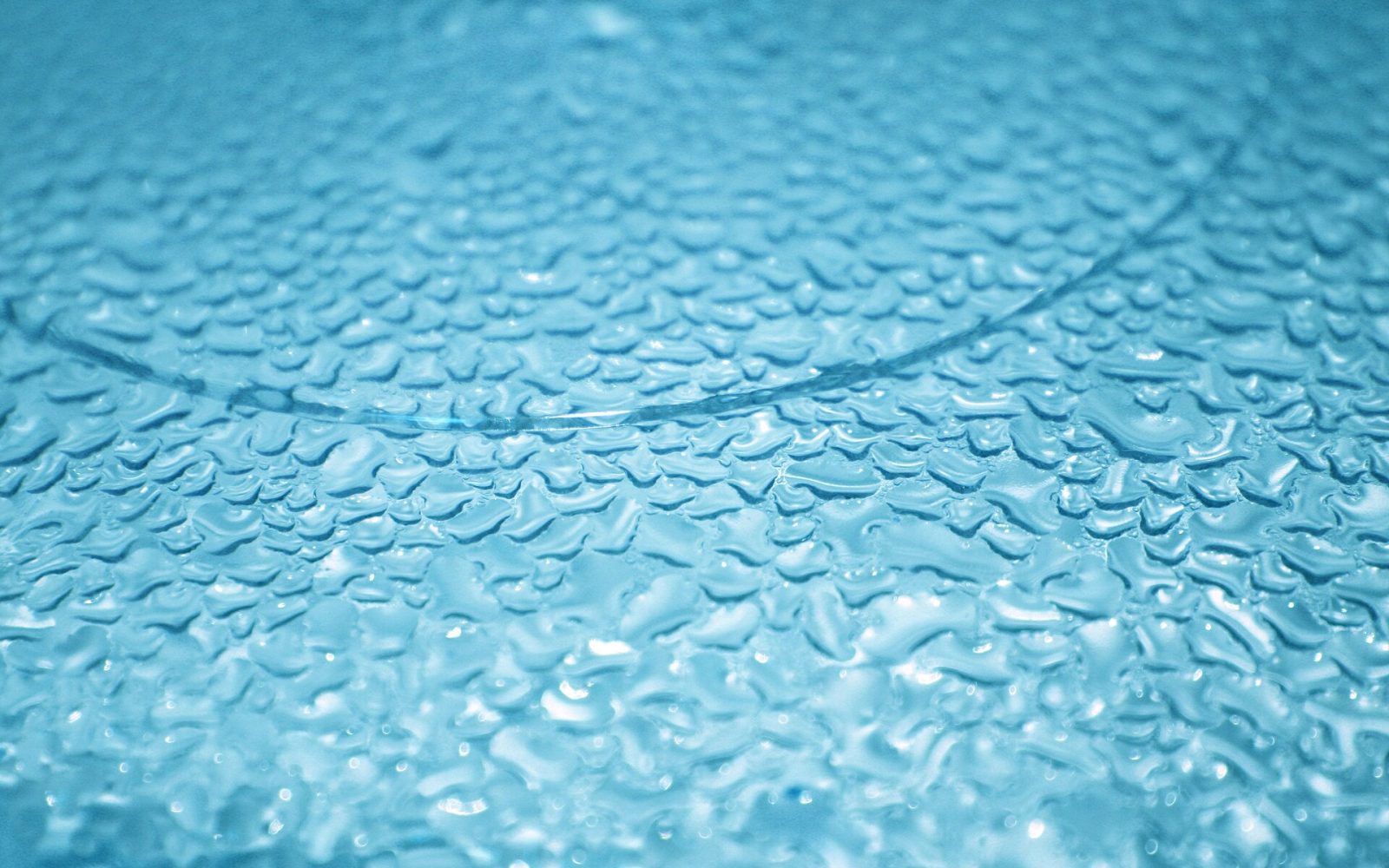
Combining nanoscale roughness with water-repellent chemistry can produce very high water contact angles, often described as the “lotus effect.” These surfaces are fragile under abrasion, which has limited their use in demanding service. Photocatalytic titanium dioxide works differently: under sunlight it breaks down organic dirt and makes the surface hydrophilic so rain sheets off.
Water beading looks impressive but is not the same as corrosion protection. Many hydrophobic nanocoatings are a few micrometers thick or less and cannot replace a properly specified protective coating system on steel or concrete.
Evaluating nanocoating claims
Ask the same questions you would of any coating:
- What is the binder, and what is the film thickness?
- What independent test data exist, such as abrasion (ASTM D4060), adhesion (ASTM D3359 or ASTM D4541) and corrosion testing, compared with a conventional control?
- How long does the effect last under real abrasion, washing and UV exposure?
- Does the product data sheet state the nanomaterial content and its form?
Request results against a control coating without the nano-additive. Without a side-by-side comparison, it is impossible to tell whether the nanomaterial or the base formulation is responsible for the performance.
Advantages and limitations
Advantages
- Add hardness or UV protection without losing transparency
- Very thin, efficient pretreatments with less waste
- Enable easy-clean and self-cleaning surfaces
- Active research toward smart and self-healing coatings
Limitations
- Marketing claims often outrun evidence
- Dispersion and stability are difficult in production
- Ultra-thin films offer limited wear life
- Health and environmental data still developing for some materials
Health and safety
Once bound in a cured film, nanoparticles are generally not readily released, but dry nano-powders during manufacturing and dust from sanding or blasting cured films can be inhaled. NIOSH has published recommended exposure limits for some engineered nanomaterials, including ultrafine titanium dioxide and carbon nanotubes. Use local exhaust ventilation and wet methods where feasible, follow the SDS, and select respiratory protection through your employer’s program.
Frequently asked questions
Are ceramic car coatings nanocoatings?
Most are thin silica- or siloxane-based films, often described as nanocoatings. They can improve gloss and ease of cleaning but are much thinner than paint.
Do nanocoatings prevent corrosion?
Some nano-additives and pretreatments improve corrosion performance as part of a full system, but a thin hydrophobic film alone is not a substitute for a protective coating system.
Is nano titanium dioxide the same as white pigment?
No. Pigmentary titanium dioxide uses larger particles to scatter light and hide; nanoscale titanium dioxide is used for UV absorption or photocatalysis and is largely transparent.
Educational reference. Coating performance varies by formulation. Always follow the manufacturer’s product data sheet, safety data sheet and your project specification.