Thermal Spray Metallizing
Metallizing sprays molten zinc, aluminum or their alloys onto blasted steel to create a sacrificial metal coating that can protect structures for decades, with no cure time and no size limit.
Key takeaways
- Metallizing melts zinc, aluminum or zinc-aluminum wire and sprays the droplets onto blast-cleaned steel, building a porous, mechanically bonded metal coating.
- Zinc and zinc-rich alloys protect steel galvanically; aluminum (TSA) forms a stable oxide and also offers sacrificial protection in many environments.
- Surface preparation is critical: white or near-white metal cleanliness and a sharp, angular profile are normally required.
- Coatings are usually sealed, and often topcoated, to fill porosity and extend life.
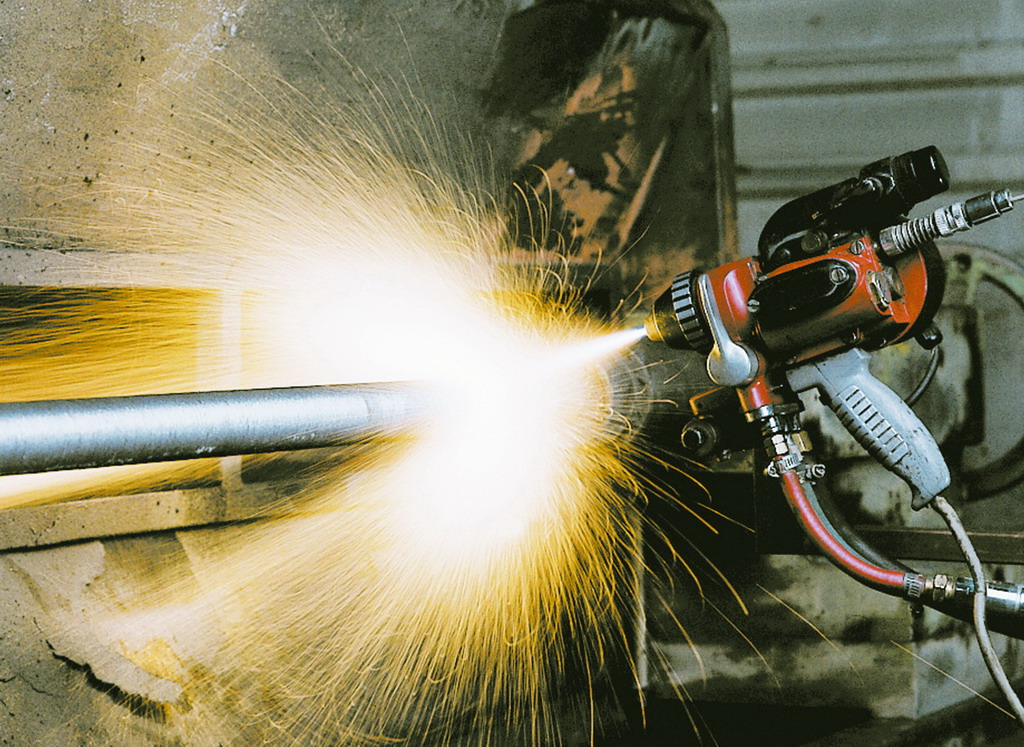
Thermal spray metallizing applies a metal coating to steel without immersing it in a bath. Wire or powder is fed into a heat source, melted and atomized by compressed air, and the molten droplets are propelled onto the prepared surface where they flatten and solidify into overlapping “splats.” The resulting layer is metallic, ready for service as soon as it cools, and can be applied in a shop or in the field to structures of any size.
For protective coatings work, the important materials are zinc, aluminum and zinc-aluminum alloys. Metallizing is often compared with hot-dip galvanizing and with zinc-rich primers: it delivers a pure-metal coating like galvanizing, but without the kettle size limits or heat distortion.
How metallizing works
Twin-wire arc spray
Two electrically charged wires meet at the gun, forming an arc that melts their tips. Compressed air atomizes the molten metal and propels it to the surface. Arc spray offers high deposition rates and good bond strength and is the most common process for large steel structures.
Flame wire spray
A single wire is melted in an oxy-fuel flame and atomized by compressed air. Equipment is lighter and more portable, making it useful for smaller jobs and repairs, though production rates are generally lower than arc spray.
Other processes
Plasma and high-velocity oxy-fuel (HVOF) spray are used mainly for wear-resistant and high-performance coatings, including the ceramic layers discussed in Ceramic & Ceramic-Filled Coatings, rather than for general corrosion protection.
Zinc, aluminum and alloys
| Material | Protection mechanism | Strengths | Typical uses |
|---|---|---|---|
| Zinc (TSZ) | Strongly sacrificial to steel | Excellent cathodic protection at damage; good in fresh water and many atmospheres | Bridges, water control structures, atmospheric steel |
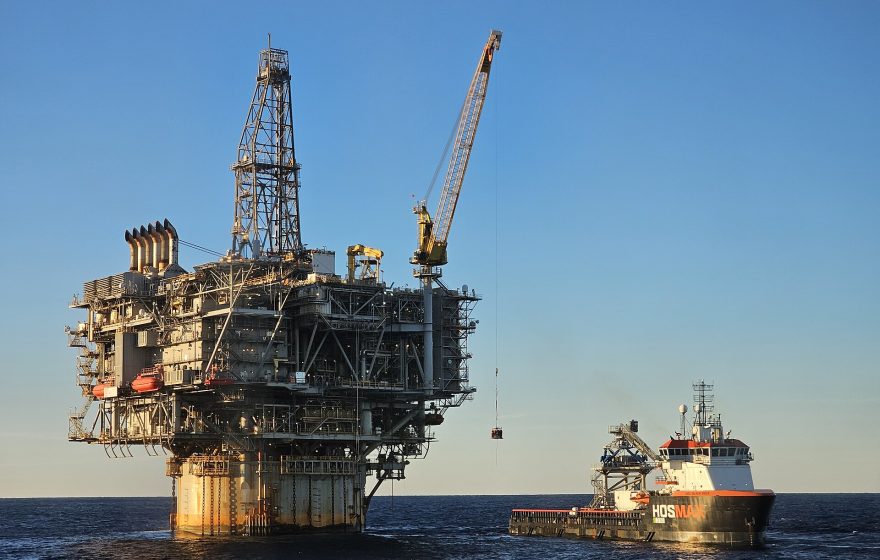
| Aluminum (TSA) | Barrier oxide plus sacrificial action in many electrolytes | Good in seawater, splash zones and higher temperatures; slow consumption | Offshore platforms, risers, marine steel, steel under insulation |
| 85/15 zinc-aluminum | Combined galvanic and barrier | Balances zinc’s sacrificial action with aluminum’s durability | Bridges, highway and general industrial steel |
Because zinc and aluminum are anodic to steel, small holidays and damage are protected by galvanic action, explained further in Cathodic Protection. Zinc is consumed faster in acidic or strongly alkaline conditions, while aluminum performs well in near-neutral environments including seawater.
Surface preparation and application
Thermal spray coatings bond mechanically, so the steel must be extremely clean with a sharp, angular profile. Industry guidance such as SSPC-CS 23.00/AWS C2.23M/NACE No. 12 and ISO 2063 typically call for white metal (SSPC-SP 5/NACE No. 1) or near-white metal (SSPC-SP 10/NACE No. 2) blast cleaning with angular grit, and profiles commonly in the range of about 2.5–4 mils (63–100 µm). Rounded shot alone does not provide adequate anchorage.
- Remove contaminants. Degrease and test for soluble salts where required.
- Blast. Use clean, angular abrasive to achieve the specified cleanliness and profile.
- Spray promptly. Apply the metal before any visible rust bloom or contamination, usually within hours; follow the specification’s time limits and humidity requirements.
- Build in crossing passes. Spray in overlapping, perpendicular passes to achieve uniform thickness.
- Inspect. Check thickness, appearance and bond, often with a bend test on coupons and pull-off testing.
- Seal. Apply a thin, penetrating sealer, then any specified topcoats.
Spray a bend coupon at the start of each shift with the same equipment and settings as production. A coupon that cracks or spalls in the bend test reveals poor parameters before they are repeated across the structure.
Sealing and topcoating
As-sprayed metallizing is porous. A low-viscosity sealer, often a thinned epoxy, vinyl or polyurethane, is applied to penetrate and fill the pores, slowing self-corrosion and improving appearance. Topcoats add color and extra barrier protection for aggressive service.
Sealers should be applied thinly enough to penetrate rather than form a thick surface film that can trap solvent or blister. Metallizing combined with organic coatings forms a duplex system, similar in principle to those described in Coating Galvanized Steel.
Advantages and limitations
Advantages
- Long-term galvanic protection with no cure time
- No size limit; can be applied in the shop or field
- Little heat input to the steel, so minimal distortion
- Can be applied in cold weather where liquid coatings struggle to cure
- Repairable in place with the same process
Limitations
- Demanding surface preparation and tight time windows
- Higher initial cost and slower production than many paint systems
- Requires trained operators and specialized equipment
- Line-of-sight process; difficult inside narrow cavities
- Zinc can be consumed quickly in acidic or strongly alkaline service
Inspection and safety
Thickness is measured with magnetic gauges as for other coatings on steel, following guidance such as SSPC-PA 2; see Dry Film Thickness Measurement. Typical specified thicknesses range from roughly 6–15 mils (150–375 µm) depending on material and service, so follow the project specification. Bond strength is commonly checked with pull-off testing to ASTM D4541 and qualitative bend tests on coupons.
Metallizing produces metal fumes, intense light, noise and, with arc spray, electrical hazards. Zinc fume can cause metal fume fever. Use local exhaust ventilation, appropriate respiratory protection, eye protection rated for the process and hearing protection, and follow the SDS and equipment manual.
Frequently asked questions
Is metallizing the same as galvanizing?
Both deposit zinc on steel, but galvanizing immerses the part in molten zinc and forms metallurgically bonded zinc-iron layers. Metallizing sprays molten droplets that bond mechanically and leaves no size limit.
How long does metallizing last?
Service life depends on material, thickness, sealing and environment. Properly applied and sealed coatings commonly provide decades of protection in atmospheric service.
Do I have to seal metallizing?
Sealing is usually recommended and often specified. It fills porosity, slows consumption of the metal and provides a base for topcoats.
Can metallizing be applied over existing coatings?
No. Old coatings must be removed and the steel blast-cleaned to the specified cleanliness and profile.
Educational reference. Coating performance varies by formulation. Always follow the manufacturer’s product data sheet, safety data sheet and your project specification.