Edge Corrosion
Why rust so often starts on sharp edges, corners, welds and cut ends — and how edge preparation, stripe coating and the right coating system stop it.
Key takeaways
- Liquid coatings pull away from sharp edges as they cure, leaving a film that can be a fraction of the thickness on adjacent flat surfaces.
- That thin film fails first, so rust lines along flange tips, cut edges, bolt holes and welds are often the earliest sign of trouble on coated steel.
- Rounding or chamfering edges, stripe coating and choosing coatings with good edge retention are the main defenses.
- Edge corrosion left untreated feeds rust creep under adjacent coating, so early spot repair is cheap insurance.
Walk around almost any coated steel structure a few years after painting and the first rust is rarely in the middle of a flat plate. It appears as thin orange lines on flange tips, around bolt holes, along flame-cut edges and at welds. This pattern — edge corrosion — is one of the most predictable failure modes in protective coatings, and one of the most preventable.
Edge corrosion is not a defect of a particular product so much as a consequence of physics and fabrication detail. Understanding why the film is thin at edges explains nearly every prevention measure written into modern specifications.
What edge corrosion looks like
- Linear rust following the outer edge of flanges, stiffeners, angles and plate ends.
- Rust rings around bolt holes, drilled holes and the edges of slotted connections.
- Rust spots along welds, especially at weld toes, spatter and undercut.
- Rust staining running down from edges onto otherwise sound coating.
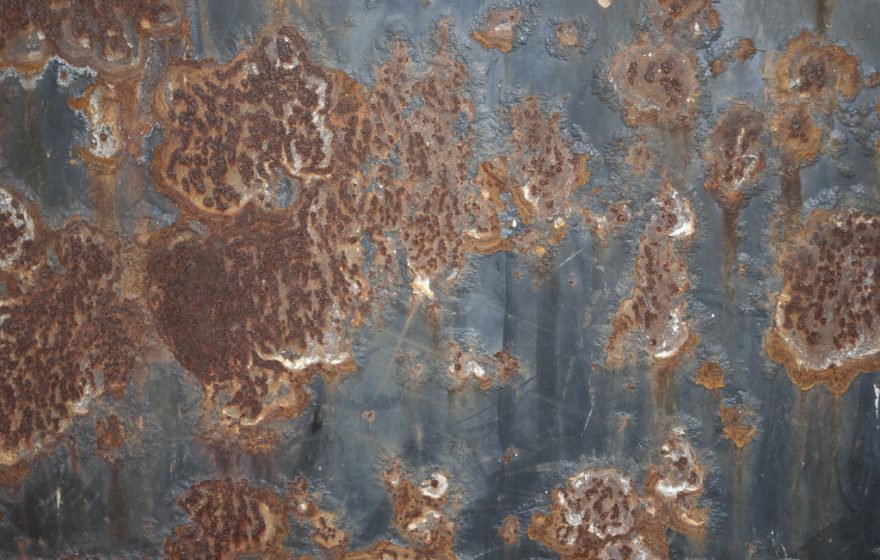
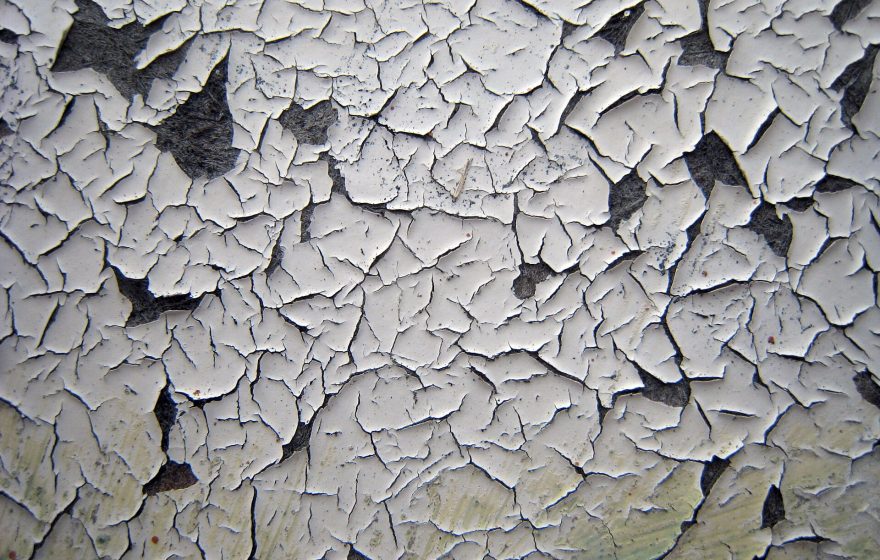
- Lifting coating next to the edge as corrosion products wedge under the film and progress as undercutting and rust creep.
Severity can be recorded with standard rust-grade photographs such as ASTM D610 or ISO 4628-3, but because edges represent a small fraction of total area, inspectors usually describe edge corrosion separately with notes on location and extent.
Why edges fail first
Surface tension pulls the film away
As a wet coating levels and shrinks during drying and curing, surface tension draws material away from convex sharp corners toward flatter areas. A square, as-sheared or flame-cut edge may end up with only a small fraction of the nominal film thickness, sometimes close to nothing on the very tip. This is often called poor edge retention.
Fabrication features concentrate risk
Flame-cut and plasma-cut edges can have hardened surfaces that blast poorly and give a shallow profile. Burrs, laminations, weld spatter and porosity create points the coating cannot cover. Welds may also retain flux residues and soluble salts that undermine adhesion.
Application habits
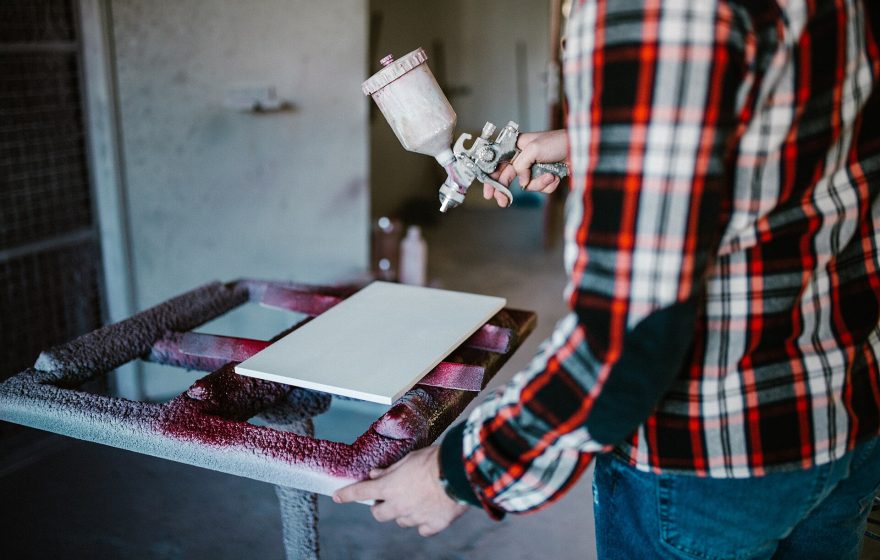
Spray applicators naturally aim at flat surfaces; edges, the inside of holes and back faces receive glancing passes and less material. Without a dedicated stripe coat, edges are commonly underbuilt.
Mechanical damage
Edges are the first point of contact during handling, lifting, transport and erection, so coating is chipped there more than anywhere else.
Diagnosing edge corrosion
Diagnosis is usually visual, but confirming the cause tells you whether the problem is preparation, application or design. Useful checks include:
- Edge profile. Is the edge as-cut and sharp, or rounded? A simple radius gauge or a fingertip (with gloves) will tell.
- Film thickness near the edge. Measure dry film thickness as close to the edge as the gauge allows and compare with the adjacent flat; destructive methods such as ASTM D4138 can show thickness at the tip itself.
- Stripe coat evidence. A cross-section or careful knife cut can show whether a stripe coat was applied.
- Weld and cut-edge quality. Look for spatter, undercut, porosity and hard, glazed flame-cut surfaces.
- Damage pattern. Fresh-looking chips at lifting points point to handling rather than thin film.
| Cause | Clues | How to check | Prevention |
|---|---|---|---|
| Sharp, unprepared edge | Continuous rust line on edge tip | Inspect edge radius | Grind or chamfer edges before blasting |
| No stripe coat | Thin film on edges, holes and welds | DFT near edge; cross-section | Specify and inspect stripe coats |
| Poor weld finish | Rust spots along welds and spatter | Visual weld inspection | Remove spatter, dress welds to an agreed grade |
| Hard flame-cut surface | Early lifting on cut edges | Profile check on cut face | Grind cut face before blasting |
| Handling damage | Chips at lifting and contact points | Damage mapping vs. rigging points | Padded slings, touch-up before shipment |
Repairing edge corrosion
Because edges are a small area, repair is usually targeted spot work rather than full recoating:
- Remove corrosion and loose coating. Clean back to firmly adhered coating using power tools to bare metal or spot blasting, depending on the specified grade.
- Round the edge. While the steel is exposed, grind sharp edges to a radius rather than recoating the same knife edge.
- Feather the surrounding coating. Taper the edges of the sound film so the repair blends without a ridge.
- Stripe coat. Brush a stripe coat of a compatible surface-tolerant primer into edges, corners and holes, working material onto the tip.
- Apply full coats. Bring the repair up to the specified system thickness, then inspect.
Use a contrasting color for the stripe coat. It lets the inspector confirm at a glance that every edge, hole and weld was striped before the next full coat goes on.
Preventing edge corrosion
Prepare the edges
Good practice is to remove sharp edges by grinding to a radius or chamfer before abrasive blasting. Many specifications follow ISO 8501-3, whose most stringent grade calls for rounded edges with a radius of at least about 2 mm (0.08 in); others require multiple passes with a grinder or a defined chamfer. The edge and weld preparation article covers grades and methods.
Stripe coat every edge
Stripe coating by brush or roller adds film where spray leaves it thin and works coating into crevices, holes and weld roots. One or two stripe coats are common on severe-exposure work.
Choose coatings with good edge retention
High-build, thixotropic and high-solids coatings tend to hold film on edges better than thin, low-viscosity products. Some manufacturers publish edge-retention data; compare products on the same basis and follow the product data sheet.
Design it out
Designers can specify rounded profiles, avoid unnecessary cut edges and crevices, and make sure surfaces are accessible for blasting and painting. ISO 12944-3 gives design guidance for corrosion protection by paint systems.
Grinding edges after blasting leaves a smooth, profile-free surface. Do edge work before final blasting, or re-blast ground areas, so the coating has an anchor pattern to grip.
Frequently asked questions
How much thinner is the coating on a sharp edge?
It varies with the product, viscosity and edge shape, but on sharp square edges the film can be a small fraction of the thickness on adjacent flat surfaces. Rounding the edge and stripe coating are the reliable fixes.
Do galvanized or metallized coatings suffer edge corrosion?
Less so. Hot-dip galvanizing forms a metallurgical coating that is often thicker at corners, and zinc protects small exposed areas sacrificially. Paint systems over galvanizing still benefit from good edge preparation.
Is a stripe coat required on every job?
Not every specification requires one, but for immersion, marine and other severe environments it is widely regarded as essential good practice.
Educational reference. Coating performance varies by formulation. Always follow the manufacturer’s product data sheet, safety data sheet and your project specification.