Isocyanate Safety
Why isocyanates in polyurethane, polyurea and polyaspartic coatings are a leading cause of occupational asthma — and how ventilation, supplied air, skin protection and training control the risk.
Key takeaways
- Isocyanates — found in polyurethane, polyurea, polyaspartic and spray foam systems — are a leading cause of occupational asthma; once a person is sensitized, very small exposures can trigger severe reactions.
- Exposure happens by breathing vapors and spray mist and through skin contact. Low-volatility, prepolymer-based products can still be hazardous when sprayed or heated.
- Isocyanates give little or no warning by odor at hazardous levels, so smell cannot be used to judge exposure or cartridge breakthrough.
- Control follows the hierarchy: substitute where possible, use spray booths and ventilation, restrict access, and provide appropriate respiratory protection — often supplied air for spraying — plus skin and eye protection.
- Always follow the product’s Safety Data Sheet (SDS), your employer’s safety program and local regulations.
Isocyanates are reactive chemicals containing the –N=C=O group. They are the “B side” or hardener in two-component polyurethane coatings, the isocyanate component of polyurea and polyaspartic systems, and a key ingredient of spray polyurethane foam and many adhesives. Their reactivity is what makes these coatings cure fast and perform well — and it is also what makes them hazardous to people. For the chemistry itself, see isocyanate chemistry.
This article is general safety information for coating professionals, not medical or legal advice. The SDS for each product, the employer’s written safety program and applicable regulations take precedence.
Where isocyanates are found
| Isocyanate | Type | Typical coating uses |
|---|---|---|
| HDI (hexamethylene diisocyanate) and its oligomers | Aliphatic | Polyurethane topcoats, automotive clearcoats, polyaspartics |
| IPDI (isophorone diisocyanate) | Aliphatic | Light-stable polyurethane coatings |
| MDI (methylene diphenyl diisocyanate) and polymeric MDI | Aromatic | Polyurea, spray foam, aromatic urethanes, adhesives |
| TDI (toluene diisocyanate) | Aromatic | Some coatings, moisture-cure urethanes, foams |
Many coatings use isocyanate oligomers or prepolymers rather than free monomer, which lowers vapor pressure. Lower volatility reduces vapor exposure when brushing or rolling at room temperature, but it does not make the product safe: oligomers are also respiratory sensitizers, and spraying turns the material into an inhalable aerosol regardless of volatility. Heated plural-component spraying adds vapor as well. Cutting, grinding, welding or burning cured polyurethane can also release isocyanates and other hazardous decomposition products.
Health effects
- Respiratory sensitization and occupational asthma. Repeated exposure can sensitize the immune system. Afterward, even very low exposures may cause wheezing, chest tightness and breathlessness, sometimes hours after work ends. Sensitization is generally considered permanent.
- Irritation. Eyes, nose, throat and lungs can be irritated at higher exposures.
- Skin effects. Isocyanates can cause skin irritation and allergic contact dermatitis. Skin exposure is also thought to contribute to the development of respiratory sensitization.
- Hypersensitivity pneumonitis. Less commonly, a flu-like inflammatory lung reaction has been reported.
Symptoms such as a persistent cough, wheezing or chest tightness that improve on days off and return at work should be reported promptly. A worker who is sensitized usually must be removed from further isocyanate exposure — continued exposure can lead to severe and potentially life-threatening attacks.
Regulations and guidance
Requirements vary by country, so check local rules. Examples of widely referenced frameworks:
- United States. OSHA has permissible exposure limits for some isocyanate monomers but not for many oligomers used in coatings, and has run a National Emphasis Program on occupational exposure to isocyanates. Respirator use is governed by 29 CFR 1910.134. NIOSH and other bodies publish recommended limits and guidance.
- European Union. Under a REACH restriction, industrial and professional users of products containing diisocyanates above a set concentration must have completed approved training before use (in force since August 2023).
- United Kingdom. HSE guidance expects suitable control and health surveillance for workers exposed to isocyanates, and expects air-fed respiratory protection when spraying isocyanate-containing paints in vehicle repair.
Controlling exposure
Use the hierarchy of controls, starting with the most effective measures.
- Eliminate or substitute. Consider isocyanate-free systems, such as epoxies, acrylics, or other chemistries that meet performance needs, and application by brush or roller instead of spray where practical.
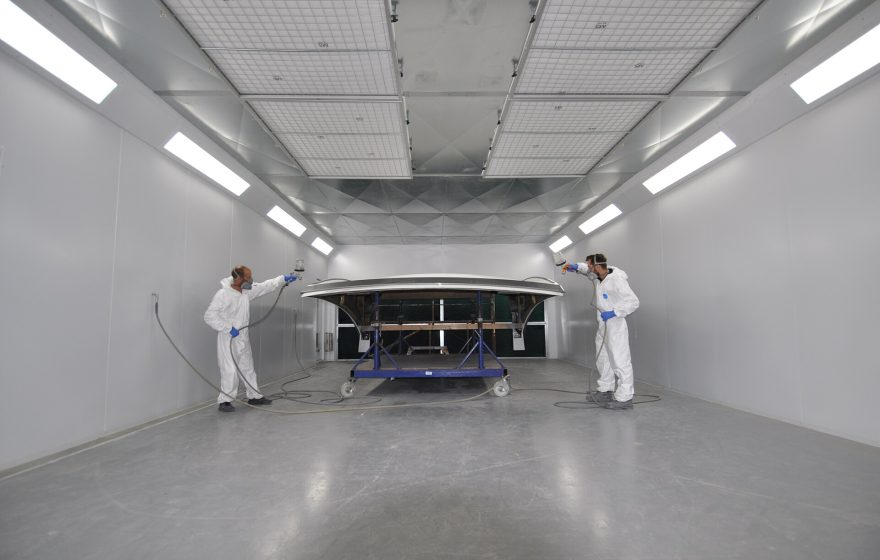
- Engineering controls. Spray in properly designed booths or enclosures; use local exhaust and general ventilation to capture mist and vapor, and maintain filters and airflow.
- Administrative controls. Establish exclusion zones and signage, restrict access to trained and protected workers, schedule spraying to minimize bystanders, observe re-entry times after spraying, and keep training current.
- Respiratory protection. Select respirators under a written program; for spraying, supplied-air respirators are commonly recommended. See respiratory protection.
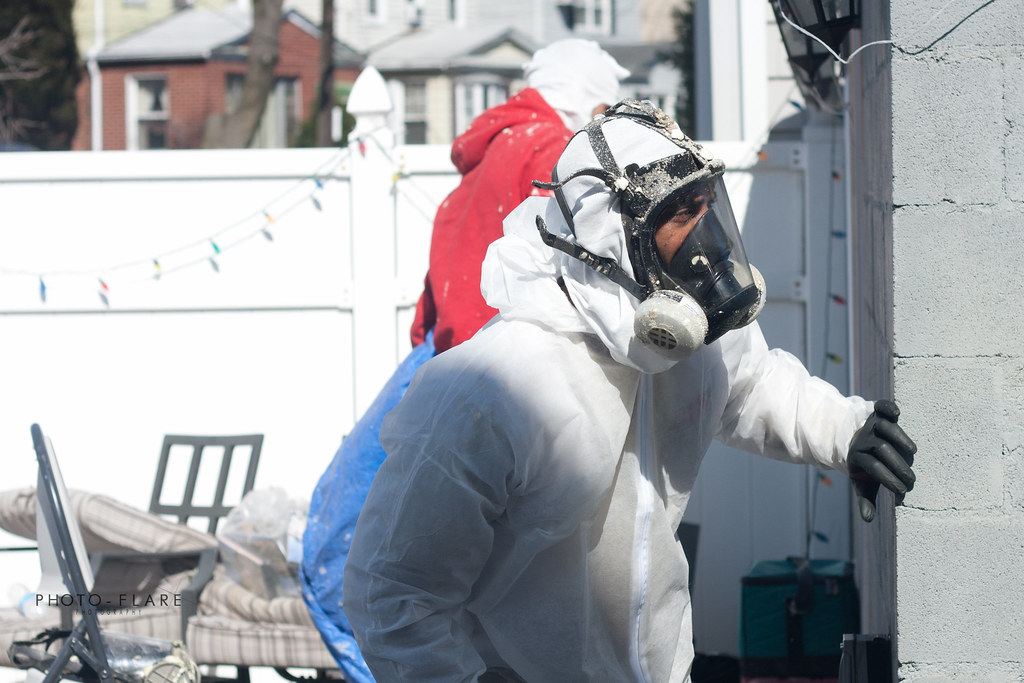
- Skin and eye protection. Wear chemical-resistant gloves of a type the SDS recommends, disposable coveralls with hoods, and eye protection or a full-facepiece respirator. See PPE for coating applicators.
Thin latex or vinyl gloves do not give reliable protection against isocyanate products and their solvents. Check the SDS and glove manufacturer’s chemical-resistance data, and change gloves at once if they are contaminated or damaged.
Safe handling, spills and waste
- Storage. Keep containers tightly closed and dry. Isocyanates react with moisture to form carbon dioxide, which can pressurize and rupture sealed containers.
- Spills. Evacuate unprotected people, ventilate, absorb with inert material and neutralize with a decontamination solution of the type described in the SDS. Do not seal neutralized waste in closed drums until reaction has finished.
- Equipment. Flush and clean plural-component equipment carefully and treat flushing solvents and residues as hazardous waste where required.
- Hygiene. Wash hands and face before eating, drinking or smoking, and keep contaminated work clothing out of homes and vehicles.
First aid
Follow the SDS. Typical guidance is to move an affected person to fresh air, remove contaminated clothing, wash skin with soap and water, flush eyes with water for several minutes, and seek medical attention for breathing difficulty or persistent symptoms.
Health surveillance and training
Many safety programs include medical evaluation before assignment, periodic respiratory questionnaires and lung function testing, and clear procedures for reporting symptoms. Training should cover the hazards, the specific products in use, how to read the SDS, correct use and limits of controls and PPE, and what to do in an emergency.
Frequently asked questions
Can I smell isocyanates?
Not reliably. Many isocyanates have poor odor warning properties, so you can be overexposed without noticing any smell.
Is an organic vapor respirator enough for spraying polyurethane?
Not necessarily. Many authorities recommend supplied air for spraying isocyanates. Respirator selection must follow your written program, the SDS and exposure assessment.
Are polyaspartic and polyurea coatings isocyanate-free?
No. Both normally use an isocyanate component and need the same precautions.
Is brushing or rolling safer than spraying?
Generally yes, because it produces far less aerosol, but skin protection and adequate ventilation are still needed.
Educational reference. Coating performance varies by formulation. Always follow the manufacturer’s product data sheet, safety data sheet and your project specification.