Orange Peel
Why sprayed coatings dry with a dimpled orange-skin texture, how to pin down the cause, and how to repair and prevent it on industrial and finish work.
Key takeaways
- Orange peel is a dimpled surface texture resembling the skin of an orange, caused by a wet film that did not level before it became too viscous to flow.
- The usual culprits are poor atomization, viscosity that is too high, the wrong gun distance, and solvents that evaporate too quickly for the conditions.
- On protective coatings it is mainly cosmetic; on finishes judged by appearance it is a defect that may need sanding and recoating or polishing.
- Prevention comes down to matching viscosity, thinner, equipment settings and technique to the product data sheet and the weather.
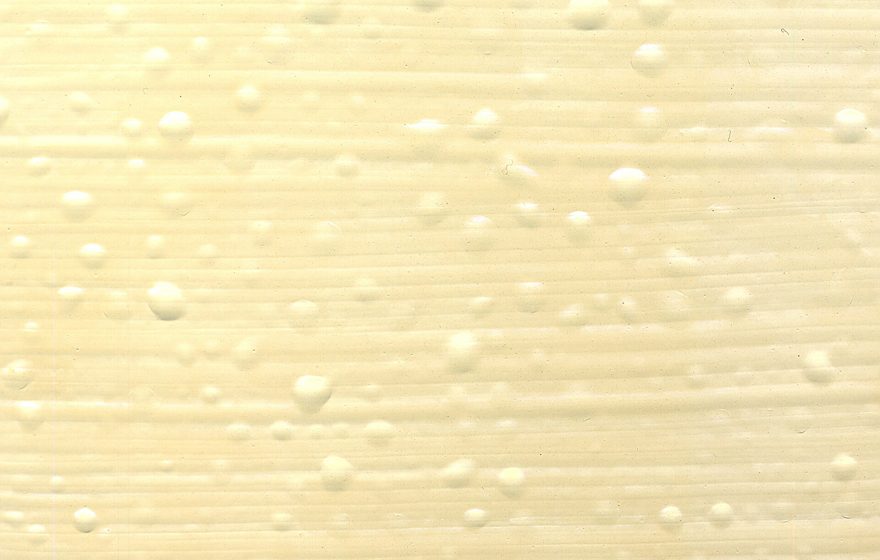
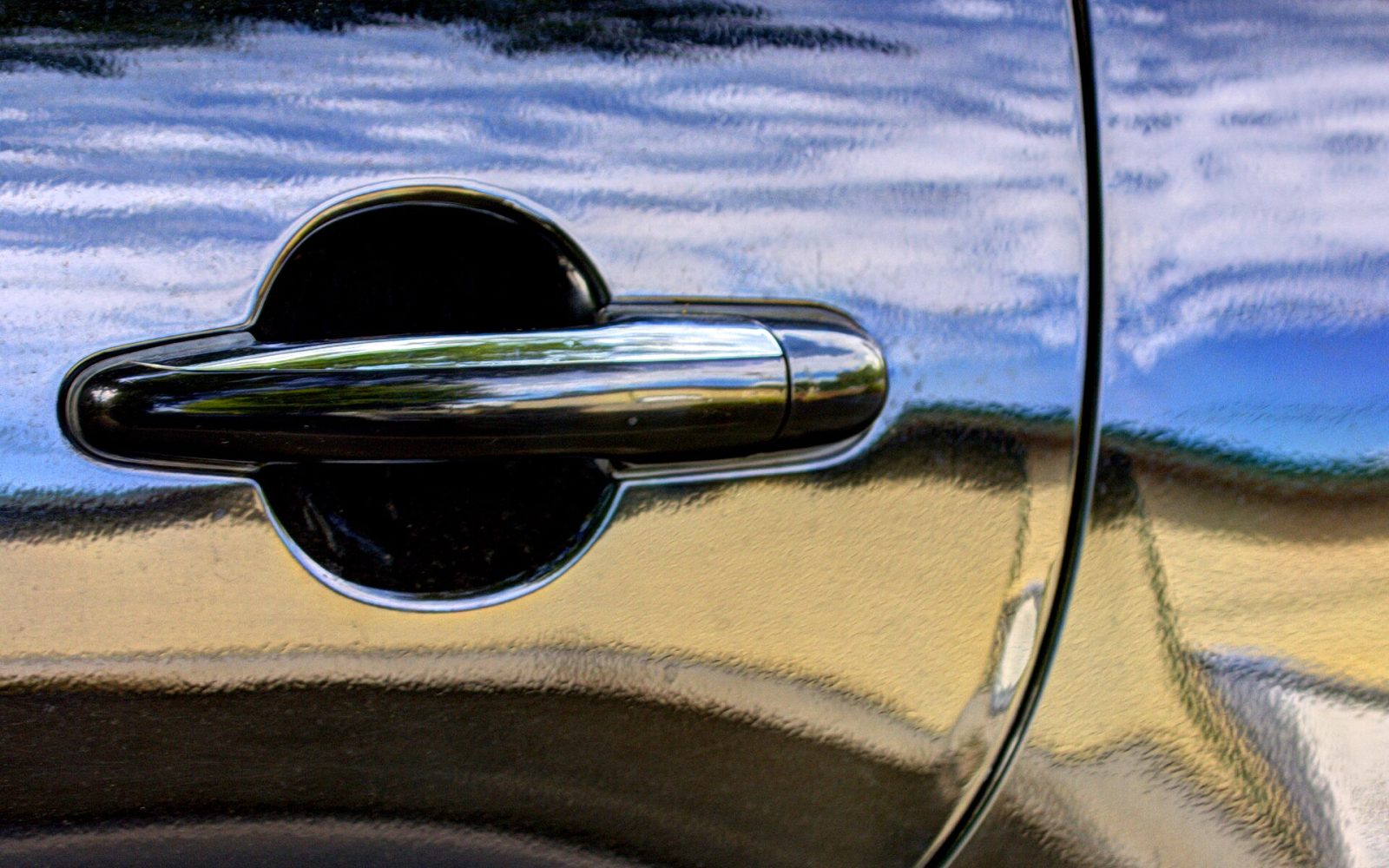
Orange peel is one of the most common appearance defects in spray-applied coatings. The surface shows a regular pattern of shallow hills and valleys that is most visible in gloss finishes viewed at a low angle or in reflected light. A slight texture is normal for many industrial spray finishes; the question is whether it exceeds what the specification or the owner’s reference panel allows.
What orange peel looks like
The texture can vary from a fine, barely visible waviness to a coarse pebbled surface. Typical features include:
- A uniform dimpled pattern across the sprayed area, rather than isolated spots.
- Blurred or distorted reflections of lights and straight edges.
- Lower apparent gloss or distinctness of image than a smooth panel of the same product.
- Heavier texture at the ends of spray passes or in areas sprayed from farther away.
Orange peel should not be confused with dry spray, which is rough, sandy and porous, or with wrinkling, which shows irregular ridges from uneven surface cure. Orange peel is a smooth, continuous film; it is simply not level.
Causes of orange peel
After atomized droplets land, surface tension pulls the wet film toward a flat surface. Leveling continues only while the film remains fluid. Anything that produces large droplets, or that makes the film thicken before it can flow, leaves the droplet pattern frozen in place. Leveling depends on the coating’s rheology, film thickness and solvent evaporation rate.
Equipment and atomization
- Fluid or air pressure too low for the material, producing coarse droplets.
- An airless tip that is worn or too large for the product, or an air cap and fluid nozzle mismatched to viscosity.
- Material too cold, raising viscosity; in heated plural-component systems, heaters set below recommended temperature.
Material and environment
- Viscosity too high because of under-thinning, cold storage or material near the end of its pot life.
- Thinner that is too fast for hot, windy or low-humidity conditions, so the film sets before it levels.
- High surface temperature, such as steel in direct sun, accelerating solvent loss.
Technique
- Gun held too far from the surface, so droplets lose solvent in flight.
- Gun held too close with high pressure, creating a turbulent, uneven deposit.
- Film applied too thin to flow together, or inconsistent overlap between passes.
Diagnosing the cause
Start by comparing the surface with the agreed standard: a reference panel, mock-up or the contract’s appearance criteria. Then work through the evidence systematically.
| Cause | Clues | Check | Prevention |
|---|---|---|---|
| Poor atomization | Coarse, uniform texture everywhere | Pump pressure, tip size and wear, spray pattern on test sheet | Set pressure to fully atomize; replace worn tips |
| High viscosity | Worse in morning or with cold material | Material temperature, viscosity cup reading | Condition material; thin within data sheet limits |
| Fast solvent evaporation | Worse in sun, wind or heat | Surface and air temperature, wind, thinner used | Use slower thinner approved by manufacturer |
| Gun distance | Varies by operator or reach | Observe technique, check access | Keep consistent distance; improve access |
| Film too thin | Texture with low wet film readings | Wet film gauge readings | Apply full wet coat in specified range |
| End of pot life | Texture worsens through the batch | Mix time vs. application time | Mix smaller batches; observe pot life |
For high-appearance finishes, instruments that measure gloss, distinctness of image or short- and long-wave texture provide objective comparison. See gloss and color measurement.
Spray a test panel or piece of cardboard before starting each batch. A quick look at the spray fan and the deposited film reveals tails, coarse atomization or excessive texture before it reaches the structure.
Repair options
Whether to repair depends on service and contract requirements. On tanks, structural steel and industrial floors, moderate orange peel rarely affects protection and may be accepted. Where appearance is specified, or where the texture is so coarse that the valleys fall below minimum film thickness, repair is needed.
- Confirm film thickness. Measure DFT to make sure valleys meet the minimum and the system is not overbuilt.
- Let the coating cure. Sanding soft film clogs abrasive and tears the coating.
- Level the surface. For finish coats, wet- or dry-sand with progressively finer abrasive until uniform; for industrial work, scuff-sand to remove peaks and create a profile for recoating.
- Clean. Remove sanding dust and contamination before recoating.
- Recoat or polish. Apply a corrected finish coat within the recoat window, or, for systems designed for it such as some automotive clearcoats, compound and polish.
Do not sand through to the underlying coat on a multicoat protective system without checking that the remaining thickness still meets the specification.
Prevention
- Follow the product data sheet for tip size, pressure, viscosity and thinner, and adjust for temperature using approved thinning practices.
- Condition materials to recommended temperature before mixing.
- Maintain consistent spray gun technique: perpendicular gun, steady distance, uniform overlap.
- Shield work from wind and direct sun, or schedule finish coats for cooler parts of the day.
- Agree on an appearance standard, such as a mock-up, before production work.
Frequently asked questions
Does orange peel reduce corrosion protection?
Usually not, provided minimum film thickness is met everywhere. It is mainly an appearance issue.
Can adding more thinner fix orange peel?
Sometimes, but only within the manufacturer’s limits. Over-thinning lowers film build and increases the risk of sags and VOC exceedances.
Why does orange peel appear in powder coatings?
Powder films must melt and flow during the oven cycle. Particle size, film thickness, cure schedule and electrostatic settings all affect leveling.
Is some orange peel acceptable?
Yes. Most spray finishes show slight texture. Acceptance should be judged against an agreed standard or mock-up.
Educational reference. Coating performance varies by formulation. Always follow the manufacturer’s product data sheet, safety data sheet and your project specification.