Acid Etching Concrete
Acid etching dissolves the cement paste at a concrete surface to open its pores. It is cheap and simple, but its light profile and residue risks limit it to light-duty coatings.
Key takeaways
- Acid etching applies a dilute acid that reacts with the cement paste, removing light laitance and opening the surface so coatings can penetrate.
- It produces only a light profile, at the low end of the ICRI CSP scale, and does not remove oil, grease, sealers, curing compounds or existing coatings.
- Thorough rinsing and neutralization are essential; residual acid salts and moisture are common causes of coating failure.
- Most industrial coating manufacturers prefer mechanical preparation. Use acid etching only where the product data sheet allows it.
Acid etching is the oldest and simplest way to prepare a concrete floor for coating. A dilute acid is spread over the slab, where it reacts with the alkaline cement paste and dissolves a thin layer of the surface. After scrubbing and rinsing, the floor is left slightly roughened, with open pores that a primer or sealer can soak into.
Because it needs no heavy equipment, acid etching remains common for small residential jobs and some garage floor coatings. For industrial and commercial floors, mechanical methods such as diamond grinding and shot blasting have largely replaced it.
How acid etching works
Hardened concrete is strongly alkaline. Its paste is made mostly of calcium silicate hydrate with calcium hydroxide and, near the surface, calcium carbonate from carbonation. When acid contacts the paste, it reacts with these compounds, producing soluble salts, water and, with carbonates, carbon dioxide gas. The visible fizzing is that gas escaping.
The reaction removes weak surface paste and light laitance and exposes fine aggregate, leaving a texture that ICRI 310.2R places at the light end of the concrete surface profile scale (roughly CSP 1–2). It does nothing to substances that the acid cannot dissolve or reach, which is the core weakness of the method.
Acids used for etching
| Acid | Strength of reaction | Notes |
|---|---|---|
| Hydrochloric (muriatic) | Strong, fast | Traditional choice; corrosive fumes; leaves chloride salts that must be rinsed off; can attack nearby steel |
| Phosphoric | Moderate | Less fuming; often sold in consumer etching kits |
| Sulfamic | Moderate | Supplied as a granular solid that is mixed with water; easier to transport and store |
| Citric and other organic acids | Mild | Lower hazard; slower and lighter etch |
Product concentrations and dilution ratios vary, so follow the etching product’s label and the coating manufacturer’s instructions. Always add acid to water, never water to acid.
The etching procedure
ASTM D4260 is the standard practice for liquid and gelled acid etching of concrete. In outline, the process looks like this:
- Clean first. Remove oil, grease, sealers, curing compounds and coatings by degreasing or mechanical means (see concrete surface preparation). Acid will not remove them.
- Pre-wet the slab. Dampen the concrete evenly, without standing puddles, so the acid does not soak in and react unevenly.
- Apply the acid. Spread the diluted solution uniformly with a plastic watering can or sprayer, working in manageable sections.
- Scrub during the reaction. Work the surface with a stiff bristle broom or floor machine while it fizzes, keeping it wet.
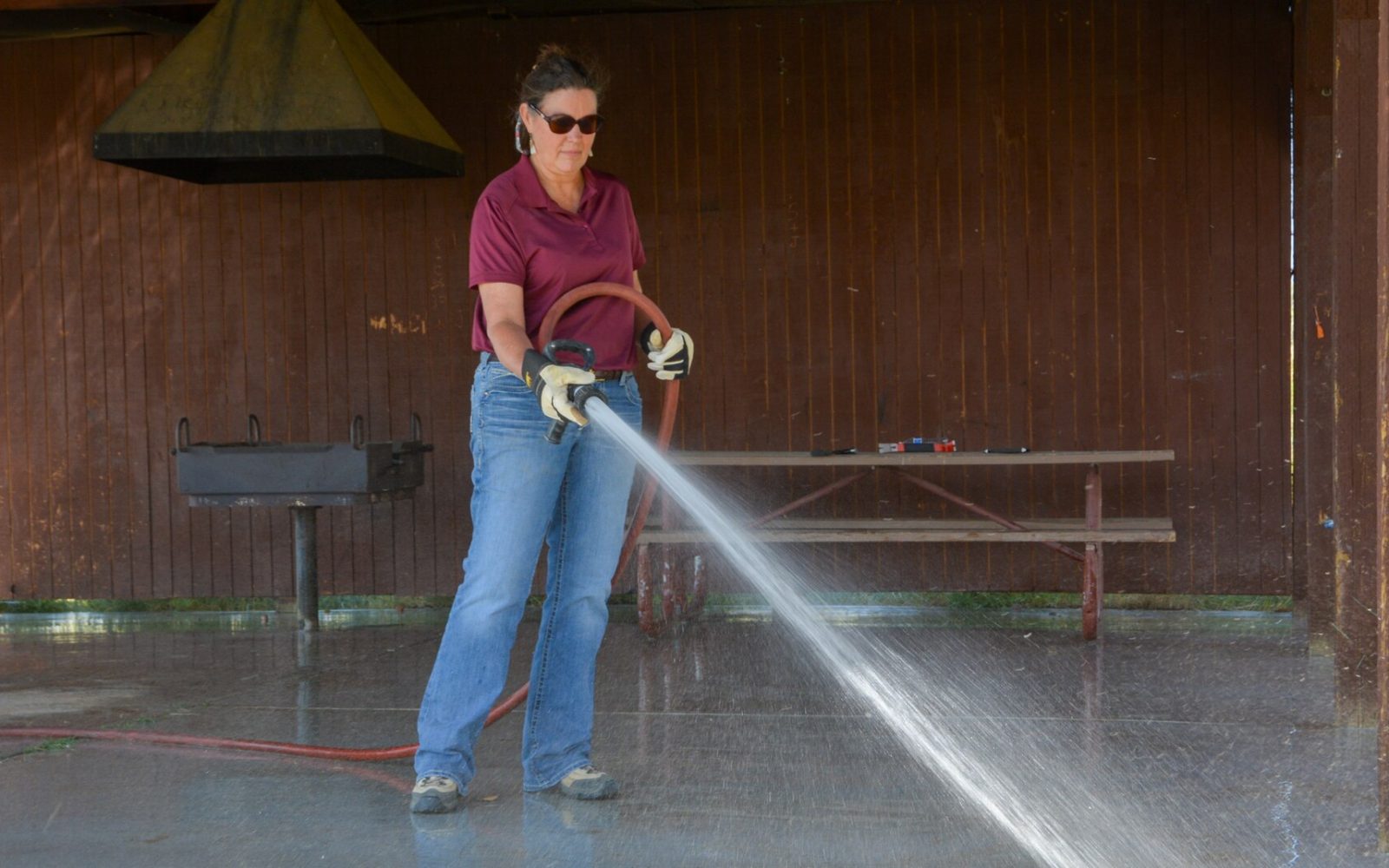
- Rinse thoroughly. Once the reaction stops, flush with plenty of clean water and remove the slurry with a squeegee or wet vacuum. Repeat rinses as needed.
- Neutralize and check pH. Where required, apply a neutralizing rinse, then check the surface pH against the clean rinse water as described in ASTM D4260 and the coating data sheet.
- Dry and verify. Let the slab dry fully, then confirm moisture levels, profile and cleanliness before priming.
Before etching, sprinkle water on the slab. If it beads instead of darkening the concrete, a sealer, curing compound or oil is present. Etching will not fix that; the surface needs grinding or blasting.
Advantages and limitations
Advantages
- Low cost and minimal equipment.
- No dust, so no silica dust from the etching itself.
- Easy to apply in small or awkward areas.
- Can remove light laitance and efflorescence.
Limitations
- Light profile only; unsuitable for thick or high-stress coatings.
- Does not remove oils, sealers, curing compounds or coatings.
- Uneven etch on troweled or variable concrete; dense power-troweled slabs may barely react.
- Adds large amounts of water that must dry out before coating.
- Residual salts and acid can cause blistering or poor adhesion.
- Acid fumes and runoff can damage nearby metal, plants and drains.
Why acid-etched floors fail
Many failures of DIY and light-duty floor coatings trace back to the etching step rather than the coating. The usual culprits are:
- Contamination left in place. Etching over oil or a cure-and-seal compound leaves a weak layer under the coating. The coating then peels in sheets (see floor coating failures).
- Incomplete rinsing. Soluble reaction salts and residual acid stay in the pores, interfering with adhesion and potentially drawing moisture to the bond line, which can lead to blistering.
- Coating a damp slab. Etching saturates the surface. Many coatings, particularly non-breathable epoxies and urethanes, will blister or lose adhesion if applied before the slab dries to within the specified moisture limits (see concrete moisture testing).
- Weak or over-etched surface. Repeated or overly strong etching leaves a friable, sandy surface that crumbles under the coating.
Hydrochloric acid residues leave chlorides in the concrete. Near reinforcing steel or metal fixtures, chlorides can promote corrosion. Avoid hydrochloric acid on reinforced structural elements and parking decks unless the specification explicitly allows it.
Safety and environmental precautions
Acids are corrosive to skin and eyes and can give off irritating fumes, particularly hydrochloric acid in enclosed spaces. Read the product’s safety data sheet and follow its directions on PPE, which commonly include chemical splash goggles or a face shield, acid-resistant gloves and boots, and respiratory protection where fumes are present. Provide ventilation, keep water available for flushing, and follow your employer’s safety program and local regulations.
Rinse water carries dissolved salts, acid and concrete fines. Many jurisdictions do not allow it to enter storm drains, so collect it with a wet vacuum and dispose of it according to local rules. Protect metal doors, frames, equipment and landscaping from splashes and fumes.
Frequently asked questions
Is acid etching good enough for an epoxy garage floor?
For thin, light-duty kits it can work if the slab is clean, unsealed and thoroughly rinsed and dried. For thicker epoxy, polyaspartic or polyurea systems, most manufacturers require diamond grinding or shot blasting.
How do I know the etch worked?
The surface should feel like fine to medium sandpaper, water should soak in quickly rather than bead, and the texture should resemble an ICRI CSP 1–2 chip. Check pH and moisture before coating.
How long should I wait to coat after etching?
Until the slab meets the coating’s moisture requirements. That can range from many hours to several days depending on temperature, airflow and slab conditions. Test rather than guess.
Can acid remove old paint from concrete?
No. Acid reacts with cement paste, not paint. Remove existing coatings with grinding, blasting or a suitable stripper first.
Educational reference. Coating performance varies by formulation. Always follow the manufacturer’s product data sheet, safety data sheet and your project specification.